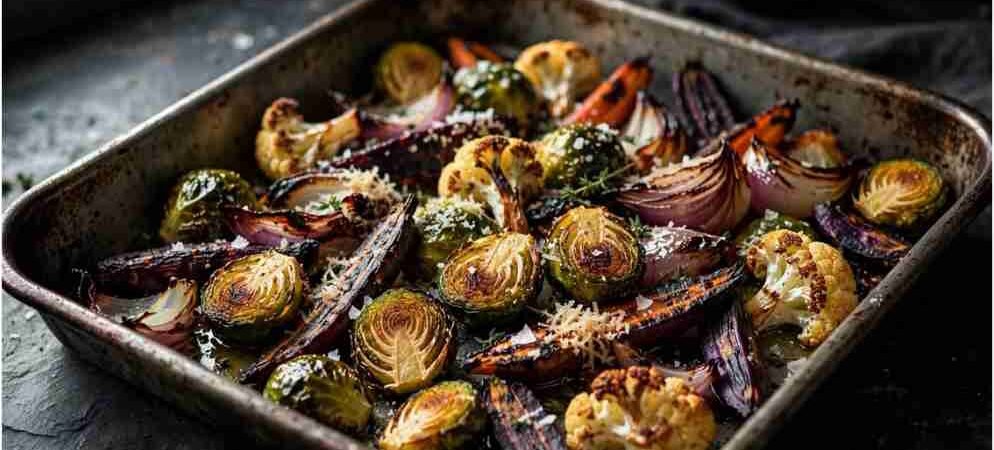
Most home cooks pull limp, waterlogged sheet pans from their ovens and wonder why their local bistro serves crisp, deeply charred produce bursting with savory sweetness. You do not need commercial combi-ovens to get restaurant style roasted vegetables on a Tuesday night. You only need to fix two mechanical oversights: inadequate thermal conduction and moisture stagnation.
Over a decade on restaurant lines taught me that browning vegetables is an active engineering problem, not a passive timer setting. Once you treat moisture removal as your primary goal, your kitchen results change forever.
Why Home Ovens Produce Soggy Veggies (The Thermodynamics)
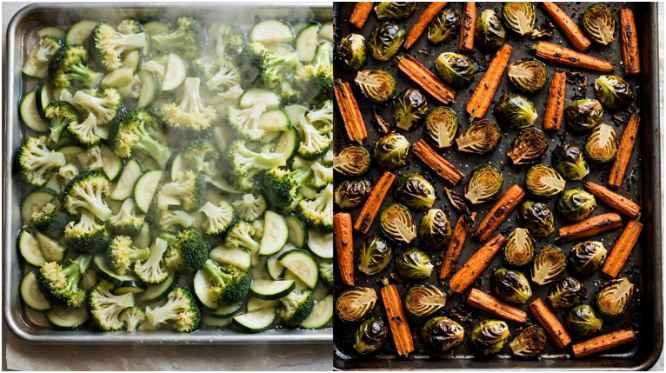
Vegetables consist mostly of water. A standard raw carrot sits at roughly 88% water, while zucchini exceeds 94%. When moisture escapes into a closed oven environment, it forms a localized vapor barrier.
If heat cannot drive that vapor away fast enough, your oven functions as a food steamer rather than a roaster. Understanding how to roast vegetables requires treating pan surface area as a scarce resource.
Crowding, Steam Traps, and the Evaporation Threshold
Crowding a baking sheet is the most common reason home vegetables turn mushy. When florets or cubes touch, escaping vapor gets trapped between their contact points. Trapped steam caps the surface temperature at 212°F (100°C), preventing the browning process from starting.
Spread vegetables so every individual piece maintains at least half an inch of clear space. If you are roasting more than 1.5 pounds of food, pull out a second rimmed half-sheet pan immediately.
Why You Must Preheat the Sheet Pan
Do not arrange raw vegetables on cold metal and slide the tray into the oven. Heavy commercial aluminum sheet pans take several minutes to absorb thermal energy. During those minutes, internal vegetable moisture heats up slowly and leaches onto the pan surface.
Leave your baking sheet inside the oven while it preheats to 425°F (220°C). According to dry-heat cooking guidance from the USDA Food Safety and Inspection Service, maintaining consistent high temperatures ensures steady, rapid moisture evaporation. Dropping oiled vegetables straight onto a preheated 425°F metal sheet flashes bottom moisture into steam instantly, searing the cell walls and creating a blistered crust.
The Chemistry of Caramelization: Fat, Salt, and High Convection
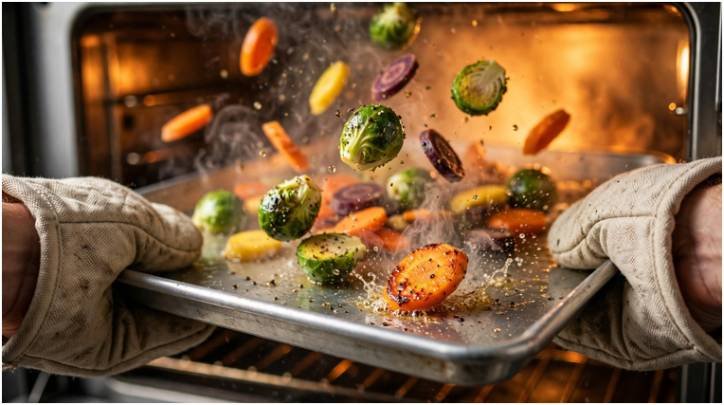
Professional cooks brown vegetables using two distinct reactions: caramelization (sugar pyrolysis) and the Maillard reaction (the bonding of amino acids and reducing sugars).
Peer-reviewed research cataloged by the National Center for Biotechnology Information highlights that the Maillard reaction requires dry, high-heat conditions above 285°F to generate deep flavor compounds. Liquid water blocks that threshold entirely.
MOISTURE EVAPORATION
Raw Veggie Surface ———————–> Surface Desiccation
(85-95% Water) (At 212°F / 100°C) (Bone-dry outer layer)
|
v
Blistered, Crisp Crust <——————- 425°F Thermal Conduction
(Savory Melanoidins) (Maillard Phase: (Oil conducts heat
Sugars + Proteins) directly into pan)
Oil serves as a thermal conduit, bridging microscopic gaps between rough vegetable surfaces and the flat pan. You need roughly two tablespoons of oil per pound of raw produce. Skip unrefined, extra virgin olive oil for high-temperature sheet pans; its free fatty acids burn and turn bitter. Use neutral avocado, refined olive, or cold-pressed canola oil with a smoke point above 450°F.
Apply salt inside a mixing bowl rather than over the baking sheet. Salt pulls free water out through osmosis. In commercial prep, letting dense vegetables sit salted in a colander for ten minutes before drying and oiling removes up to 6% of excess surface water, accelerating browning by nearly five minutes.
The Staggered Timing Method for Mixed Pan Roasts
Throwing a diced bell pepper on the exact same tray as raw butternut squash yields burned pepper skins and chalky squash cores. You can master how to sauté vegetables using quick pan tossing, but oven roasting demands chronological batching based on vegetable density.
| Vegetable Tier | Examples | Cook Time (425°F / 220°C) | Prep Strategy |
| Dense Roots | Carrots, Parsnips, Beets, Potatoes | 35–45 minutes | Cut into uniform 1-inch pieces; start first |
| Cruciferous | Brussels Sprouts, Broccoli, Cauliflower | 20–25 minutes | Cut-side down on hot pan surface |
| Tender / High-Water | Zucchini, Bell Peppers, Red Onions | 15–20 minutes | Add to pan during the final cook phase |
Step-by-Step Execution: Master Technique
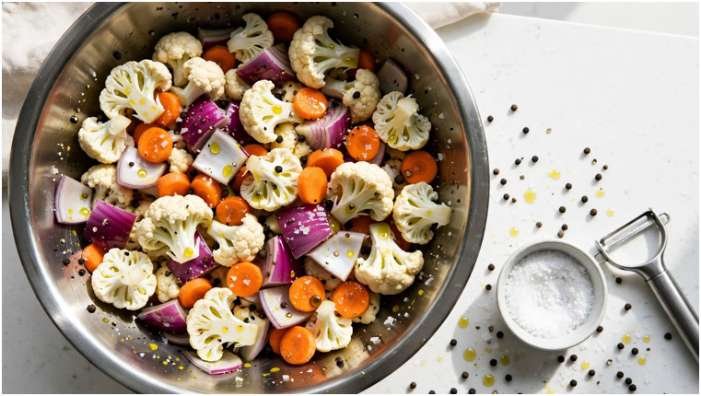
- Preheat Pan and Oven: Adjust your oven rack to the lower-middle position. Place an unlined, heavy-gauge rimmed half-sheet pan inside. Preheat to 425°F (220°C).
- Wash, Cut, and Dry: Cut produce into uniform bite-sized pieces. Dry every piece with clean kitchen towels. Residual surface water creates steam.
- Coat Thoroughly: Toss vegetables in a bowl with two tablespoons of high-heat oil per pound, one teaspoon of kosher salt, and cracked black pepper. Coat all facets until they look glossy.
- Deploy with Flat Sides Down: Pull the searing-hot pan out with heavy oven mitts. Scatter vegetables quickly across the tray. Turn halved Brussels sprouts, broccoli stalks, and carrot flats directly against the metal.
- Roast Undisturbed: Return the pan to the oven. Do not touch or shake it for the first 12 to 15 minutes. This creates an even, caramelized crust.
- Rotate and Finish: Turn pieces using a thin metal fish spatula. Roast for another 8 to 12 minutes until fork-tender with dark, blistered edges.
As professional kitchen guidelines from the Culinary Arts Academy Switzerland stress, culinary browning depends on precise contact time. Resist the urge to flip constantly.
The Acid-Umami Finish That Professional Kitchens Never Skip
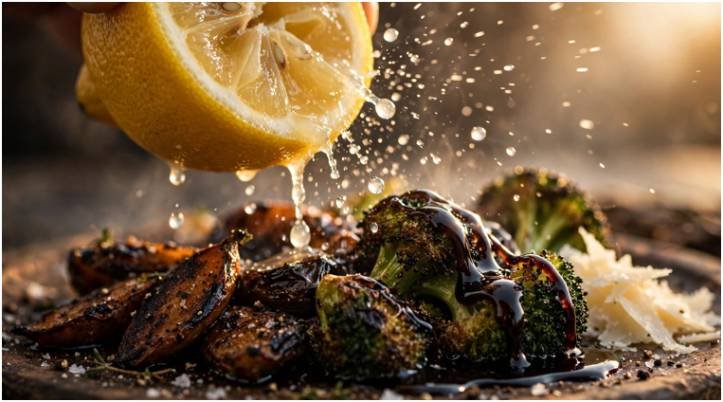
Home cooks pull their vegetables from the oven and bring them straight to the dinner table. Kitchen lines never do this. High-temperature roasting intensifies sweet, earthy notes, but the fat demands an acid counterweight.
While the sheet pan is sizzling hot, finish with one of these additions:
- Bright Citrus: Squeeze fresh lemon juice directly over the hot vegetables. The steam carries the bright citrus oil throughout the mix.
- Aged Acidity: Drizzle dark, syrupy balsamic reduction along the pan lines.
- Sharp Umami: Grate aged Pecorino Romano or Parmigiano-Reggiano over hot vegetables so it melts into the blistered crevices.
Frequently Asked Questions About Roasting Vegetables
1. Why are my roasted vegetables always soggy instead of crispy?
Your oven heat is too low or your pan is crowded, which causes the vegetables to steam in their own moisture.
2. Should I use parchment paper or aluminum foil when roasting?
Roast directly on bare, preheated metal for maximum crispiness; parchment paper creates a slight moisture barrier that softens bottoms.
3. What is the best oven temperature for roasting vegetables?
Set your oven to 425°F (220°C) to sear exterior surfaces quickly while tenderizing dense vegetable interiors.
4. Can I mix root vegetables and leafy crucifers on the same pan?
Yes, but stagger your cook by roasting dense roots for twenty minutes before adding quicker-cooking crucifers.
Put the Soggy Sheet Pan Era Behind You
Crispy, blistered roasted vegetables are not an accident of fancy restaurant equipment. They stem from simple physics: dry surfaces, high conduction, and ample breathing room.
Grab your heaviest sheet pan, slide it into a cold oven, crank the dial to 425°F, and let pure heat unlock flavors hiding in your produce bin. Inspect your pan halfway through, listen for that active sizzle, and do not forget the fresh lemon juice finish before serving.