
I’ve always liked summer cooking more when it feels loose rather than scheduled. When produce is colorful, and nobody wants to spend an hour beside a hot stove, simple meals taste better. I find myself reaching for tomatoes, corn, cucumbers, herbs, berries, and peaches because they need very little help to become something worth putting on the table.
I’ve also noticed that the best summer recipes tend to work twice. A grilled chicken dinner can become tomorrow’s salad, while tomato pasta can feed friends without turning dinner into a production. That flexibility matters on busy weeknights and becomes even more useful when people arrive, drinks are poured, and the cookout needs to feel relaxed.
What Makes a Summer Recipe Work?
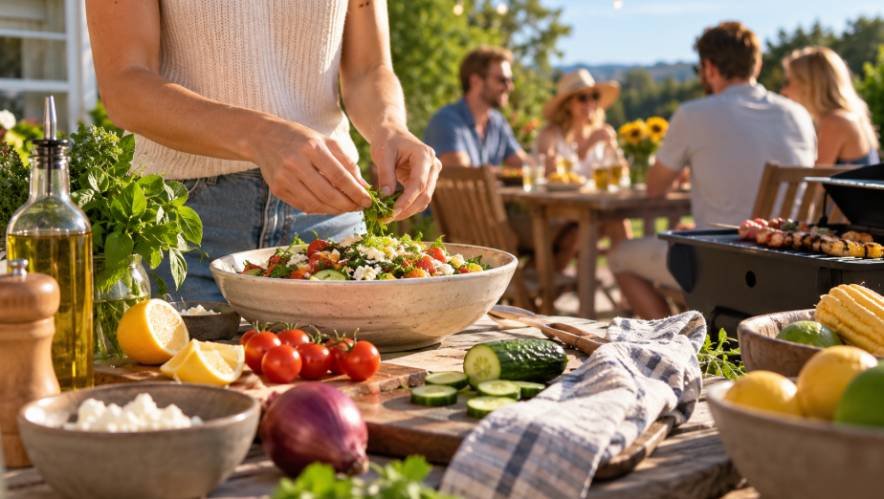
Good summer food starts with ingredients that already have plenty of flavor. Ripe tomatoes, sweet corn, crisp cucumbers, stone fruit, berries, and fresh herbs can carry a dish without complicated sauces or long cooking times. The goal is to use heat where it adds something and skip it elsewhere.
Summer Recipes for Easy Weeknight Dinners
Weeknights call for recipes that leave room for real life. Grilled chicken, shrimp skewers, tacos, flatbreads, pasta salads, and grain bowls work because their components can be prepared separately and assembled quickly.
Batch cooking is another practical approach. Grill extra chicken or steak, then refrigerate leftovers for another meal. Cook more quinoa, rice, or pasta and turn it into cold salads, bowls, or wraps later.
No-cook meals deserve a place here as well. Watermelon, tomato, and feta make an easy combination, while chickpea salad, Caprese salad, or chicken salad made with leftover or rotisserie chicken can become a complete meal. These choices help during heat waves when the oven feels unnecessary.
If you are building a broader rotation around produce and changing seasons, a seasonal cooking guide can help organize ideas without making meals repetitive.
Summer Recipes Made for Backyard Gatherings
A backyard gathering works best when the menu does not depend on one dish arriving at exactly the right moment. Choose a main that can stay warm briefly, then surround it with sides that are comfortable at room temperature.
Grilled chicken, shrimp, steak, burgers, and vegetable skewers all work well as centerpieces. Skewers are useful because guests can choose different combinations, while marinating proteins earlier means less last-minute work.
For sides, think beyond a standard bowl of greens. Corn salad, pasta salad, grilled zucchini, cucumber salad, or bean salad can add different textures and temperatures. A simple vinaigrette keeps food bright.
Dessert can follow the same principle. Fresh berries with whipped cream, sliced peaches with yogurt, watermelon wedges, or chilled fruit crisp keep the meal seasonal without creating another complicated project.
Build Around the Produce at Its Best
Summer recipes become easier when produce does most of the work. At a farmers market or grocery store, look for what is ripe, abundant, and reasonably priced, then build the meal around it.
Corn can move from the grill into a salad. Tomatoes can become bruschetta, a pasta topping, or the base of a chilled salad. Zucchini can be grilled in thick slices, shaved into ribbons, or added to skewers. Peaches and nectarines work with greens, grilled meats, soft cheese, or a simple dessert.
Fresh herbs are another shortcut. Basil, mint, cilantro, parsley, and dill can change a basic meal. Chop herbs with lemon zest, olive oil, salt, and pepper, then spoon the mixture over grilled vegetables, chicken, fish, or grains.
For cooks transitioning between seasons, spring recipes produce great meals that make it easier to use overlapping produce rather than treating every season as a separate menu.
Keep the Kitchen Cool Without Losing Flavor
The easiest way to reduce kitchen heat is to move some cooking outdoors, but not every meal needs a grill. A slow cooker can handle certain proteins without filling the kitchen with oven heat, while countertop appliances work well for smaller portions.
Cold meals are even simpler. Keep cooked grains, hard-boiled eggs, washed greens, chopped vegetables, and dressing ready in the refrigerator. With those basics, dinner can come together in minutes.
Make-ahead cooking also changes the rhythm of summer dinners. Prepare sauces, dressings, marinades, chopped vegetables, and proteins earlier in the day. For gatherings, choose dishes that improve after sitting briefly rather than recipes that demand immediate serving.
How to Make Summer Meals Feel Complete
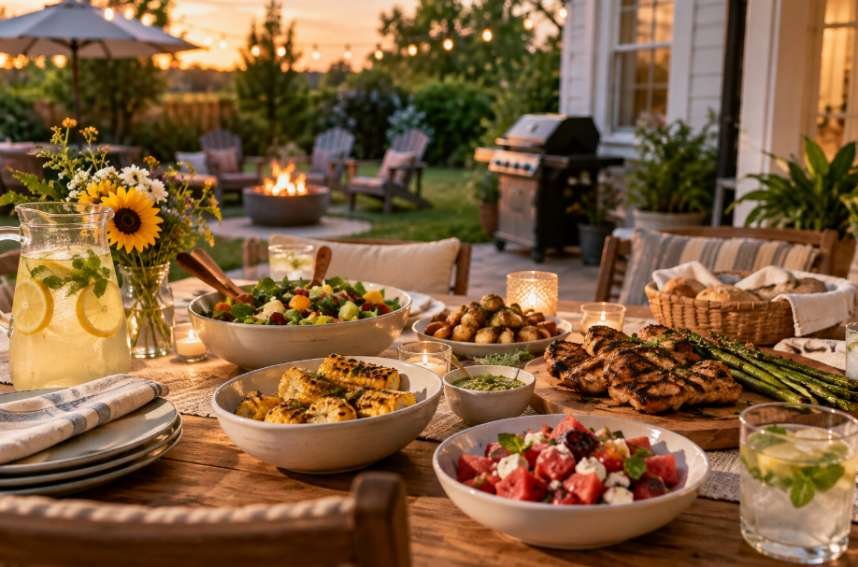
A satisfying summer menu does not need six different recipes. Start with one substantial main, add two contrasting sides, and finish with fruit or a light dessert. That is usually enough.
Think about balance before adding more food. If the main is smoky and rich, choose something crisp and acidic. If the meal is mostly grilled, add a chilled salad. If the sides are light, include a protein or hearty grain. This makes the table feel generous without extra work.
Frequently Asked Questions
1. What are the easiest summer recipes for busy weeknights?
Grilled chicken, shrimp salads, pasta salads, grain bowls, tacos, and no-cook combinations are excellent choices because they come together quickly and adapt to available ingredients.
2. What summer recipes work well for a crowd?
Choose grilled meats, skewers, corn salads, pasta salads, bean salads, and fruit-based desserts. Make-ahead sides are especially useful because they reduce last-minute cooking.
3. How can I keep summer cooking from heating the house?
Use the outdoor grill, prepare chilled meals, rely on cooked or prepared ingredients, and batch-cook proteins and grains when the kitchen is cooler.
4. What ingredients are best for summer recipes?
Tomatoes, corn, zucchini, cucumbers, berries, peaches, watermelon, avocados, and fresh herbs are versatile choices for salads, grilled dishes, sides, and desserts.
The Summer Cooking Habits Worth Keeping
The best summer recipes are rarely about showing off. They are about making good food while leaving enough time to sit outside, talk with friends, help the kids, or simply finish dinner before the evening disappears. Seasonal ingredients make that easier because freshness can replace complicated technique, while make-ahead components take pressure off the person cooking.
Once a few dependable combinations become familiar, meals start to feel less like tasks and more like flexible templates that change with whatever looks best at the market.
That may be the real pleasure of summer cooking: less fuss, more freshness, and a table that feels easy to return to. It leaves room for people around the table.