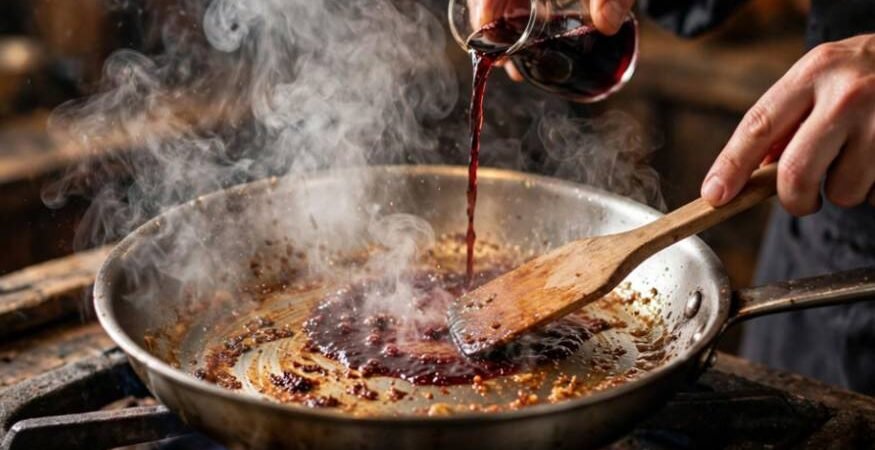
I ruined my first pan sauce by walking away from the stove for thirty seconds. The fond turned from deep brown to black, and dinner tasted like ash. Learning how to deglaze a pan the right way fixed that mistake for good. It’s the fastest way to turn a dirty skillet into the best part of the meal, and once you’ve done it a few times, you’ll never rinse a hot pan without thinking twice.
What Deglazing Actually Does
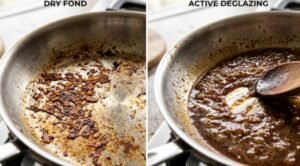
Deglazing loosens the browned bits, or fond, stuck to a pan after searing meat or vegetables. Those bits form through the Maillard reaction, the same browning process that gives a seared steak its crust.
Add liquid to a hot pan, and it lifts that fond off the metal and dissolves it straight into a sauce. Skip this step, and you’re washing your best flavor down the drain instead of eating it. The pan also cleans up faster, since fond left to dry becomes much harder to scrub off later.
How to Deglaze a Pan, Step by Step
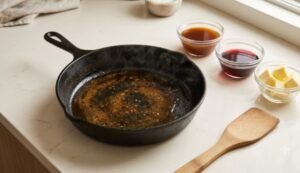
The technique itself takes about five minutes, and it works the same way whether you’re finishing a weeknight chicken breast or a holiday roast.
Learning how to sear steak first also helps, because properly seared meat leaves behind the flavorful fond needed for an effective pan sauce.
Remove the Food and Ditch the Extra Fat
Pull your protein onto a resting plate first. The same rule applies whether you’re learning to sear steak or browning pork chops: don’t let the meat sit in a hot pan while you fuss with the sauce. Tilt the pan and pour off excess grease, leaving about a tablespoon behind. That thin layer of fat carries flavor without making the sauce greasy.
Add the Liquid and Listen for the Sizzle
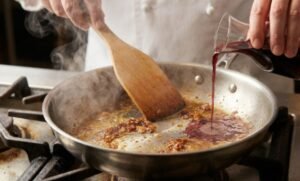
Keep the pan on medium-high heat and pour in half a cup to a cup of cold liquid. It will hiss and throw off a cloud of steam immediately — that’s the fond starting to release. Wine, stock, and even plain water all work as a deglazing liquid, though each one shifts the final flavor in a different direction.
Scrape, Simmer, Reduce
Grab a wooden spoon or silicone spatula and scrape the pan bottom while the liquid bubbles. Every brown fleck should lift free within a minute. Let the liquid simmer until it reduces by about half. That reduction concentrates the sugars and proteins into a glossy, restaurant-style sauce.
Choosing the Right Deglazing Liquid
The liquid you pick sets the flavor direction for the whole dish. I default to dry white wine for chicken and pork, and a beefy stock when red meat is on the plate. Acidic liquids brighten rich dishes, while stock leans savory and mild.
| Liquid | Best For | Flavor Note |
| Dry white wine | Chicken, pork, fish | Bright acidity, cooks off quickly |
| Dry red wine | Beef, lamb | Deep, slightly tannic body |
| Stock or broth | Gravies, stews | Savory depth, low acidity |
| Citrus juice or vinegar | Fish, stir-fries | Sharp, punchy brightness |
| Water | Onions, quick cleanup | Lifts fond, adds no flavor |
Crucial Deglazing Mistakes That Ruin Your Sauce
- Deglazing Burnt Char: Deep amber fond produces savory richness; charred, black crust produces acrid bitterness. If your pan residue turned pitch-black and smells acrid, discard it and soak the pan. Deglazing will not salvage burnt food.
- Pouring High-Proof Spirits Over an Active Flame: Deglazing with brandy, bourbon, or rum directly over an open gas burner ignites airborne alcohol vapor into high flare-ups. Always take the skillet completely off the heat before pouring liquor.
- Flooding the Pan: Drowning your skillet in 2 cups of liquid dilutes the fond concentration and boils your sauce rather than reducing it cleanly. Start with ½ cup to ¾ cup of liquid.
- Using Cooking Wines: Supermarket “cooking wines” carry high sodium levels and preservative additives. Always deglaze with a drinkable, dry table wine you would happily enjoy in a glass.
My Tested Trick: Timing the Reduction by Liquid Type
Most guides tell you to “reduce by half” without saying how long that takes. I timed it myself on a 10-inch stainless pan over medium-high heat, using one cup of liquid each time, to give a real benchmark instead of a guess.
| Liquid | Time to Reduce by Half |
| Dry white wine | About 4 minutes |
| Chicken stock | About 7 minutes |
| Water | About 9 minutes |
Wine reduces fastest because alcohol evaporates before water does. Stock and water need longer, since there’s less sugar to caramelize and thicken the mixture. If your sauce still looks thin at the four-minute mark, that’s normal — keep it moving over the heat.
Master the Pan, Claim the Flavor
Deglazing proves that the messiest-looking skillet often holds the most culinary promise. Once you stop treating pan fond like stubborn residue and start treating it like concentrated flavor, making restaurant-caliber pan sauces becomes second nature. Serve those sauces alongside restaurant-style mashed potatoes for a rich, classic pairing that makes the most of the finished pan sauce.
Frequently Asked Questions
1. Can I deglaze a pan with plain water?
Yes, cold water dissolves fond cleanly, though it will not provide the acidity or aromatics found in dry wine and savory stocks.
2. What is the difference between fond and burnt bits?
Fond is a rich, translucent amber-to-chestnut brown composed of caramelized proteins, while burnt bits are blackened, bitter carbon that ruins sauce flavor.
3. Do I need to turn the heat off before deglazing?
Keep the burner on medium-high for non-alcoholic liquids, but turn off gas flames before pouring high-proof spirits to avoid sudden flare-ups.
4. Can I deglaze non-stick cookware?
No, non-stick coatings inhibit the adhesion required to develop fond, and metal spatulas can permanently damage non-stick surfaces.