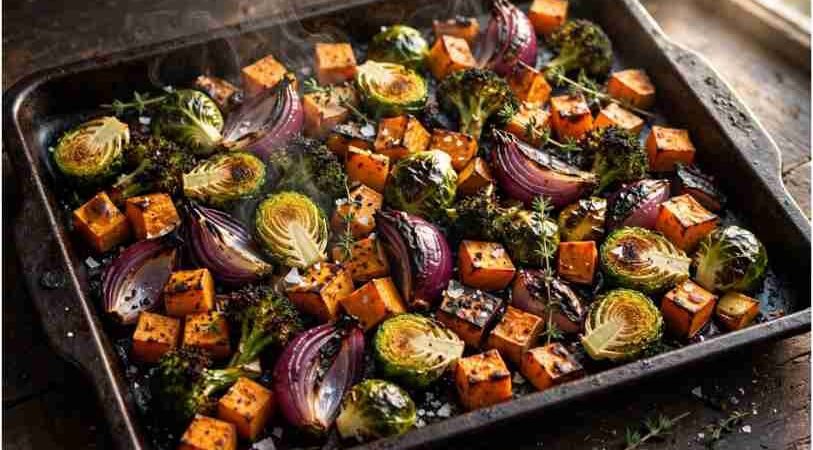
Roasting vegetables sounds straightforward until you pull a pan of pale, soggy carrots or limp broccoli from your oven. Learning how to roast vegetables properly comes down to moisture management, contact heat, and oil chemistry.
Once I stopped crowding my sheet pans and dialed in oven temperatures to 425°F, my weeknight side dishes transformed from sad, boiled mush into deeply caramelized, crunchy bites. This guide delivers crisp edges, tender interiors, and rich sweetness across every category of produce.
The Chemistry of Caramelization: Why Most Roasted Veggies Turn Soggy
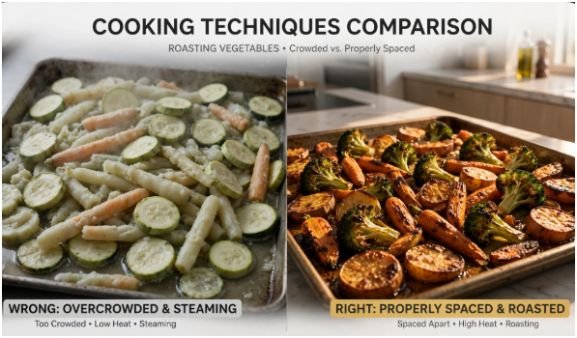
Vegetables consist mostly of water—frequently exceeding 85% to 92% of their total raw weight according to USDA FoodData Central. When you trap that moisture against cold metal or pile food in dense layers, steam builds instantly. Steam prevents surface temperatures from climbing above 212°F (100°C), making it impossible to form the crust you crave.
Evaporating Water to Unlock the Maillard Reaction
Surface browning relies on the Maillard reaction and natural sugar caramelization, which require temperatures above 300°F (150°C). In my kitchen trials, vegetables must shed roughly 25% of their total raw water weight before browning truly begins.
If your oven operates below 400°F, or if you wash vegetables without drying them thoroughly on clean kitchen towels, that water lingers on the tray. It braises the vegetables instead of roasting them.
Choosing High-Heat Fats Over Low Smoke Points
Oil is not just for flavor; it serves as a thermal conduit between dry oven air and vegetable cellular walls. Coat vegetables with oils that maintain stability at sustained high heat, such as avocado oil, neutral high-oleic sunflower oil, or quality extra virgin olive oil.
Avoid low-smoke-point fats like unclarified butter during the roasting phase, as milk solids scorch and leave a bitter film.
Step-by-Step System for Flawless Roasted Vegetables
Great roasting does not require culinary school training. If you are exploring essential cooking techniques for beginners, learning proper pan spacing and thermal prep is the most forgiving place to start.
Step 1: Prep and Cut for Equal Cooking Rates
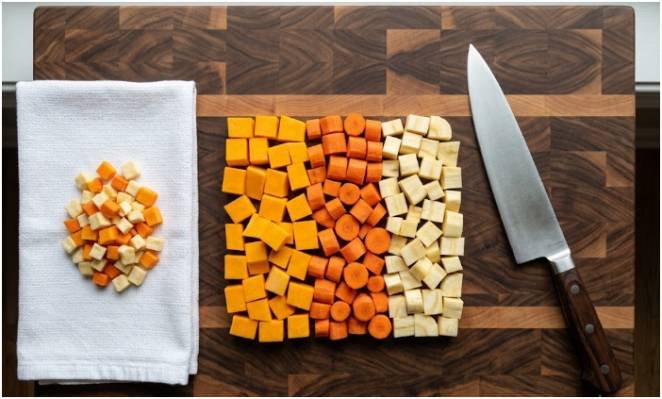
Uniform cuts produce uniform results. Cut dense root varieties into small 0.75-inch cubes, while leaving softer summer vegetables in larger 1.5-inch pieces. Slicing harder vegetables smaller balances the total time required for cell breakdown, allowing mixed pans to finish evenly.
| Prep Factor | Critical Target | Why It Matters |
| Surface Moisture | Bone dry | Water droplets cause immediate steaming rather than browning. |
| Cube Dimensions | 0.75″ roots, 1.5″ soft squash | Compensates for natural water volume and structural density. |
| Parchment vs. Foil | Bare sheet or parchment | Foil traps dampness; bare heavy metal yields the deepest sear. |
Step 2: Bowl-Toss With Exact Oil Ratios
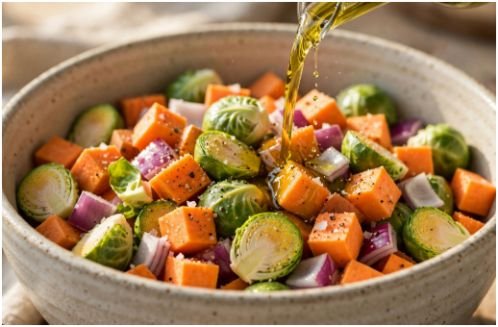
Never drizzle oil directly onto vegetables while they sit on the pan. You end up with oily puddles under some chunks and bare spots on others. Dump your diced produce into a large mixing bowl. Measure 1 to 2 tablespoons of oil per pound of prepared vegetables.
Toss by hand until every crevice glistens with an even, translucent sheen. Season with coarse kosher salt, freshly cracked black pepper, and dried aromatics. Skip raw minced garlic at this stage; it chars into bitter black specks after 15 minutes. Use granulated garlic powder instead.
Step 3: Use the Hot-Pan Contact Technique
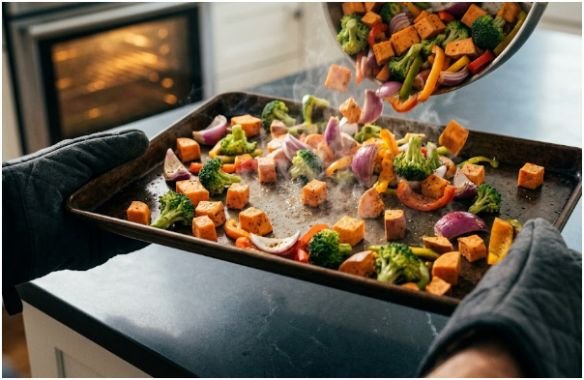
Here is my favorite kitchen test: leave your heavy rimmed baking sheet inside the oven while it preheats to 425°F. Once the oven signals it is hot, carefully pull the smoking tray out and tumble your oiled vegetables directly onto the searing metal.
They will sizzle instantly. Spread them in a single layer with a solid finger-width of space around each piece. Culinary authorities like Serious Eats champion this rapid contact searing because it immediately caramelizes the bottom before the interior turns to mush.
Vegetable Roasting Reference Timelines and Temperatures
Different plant families break down at distinctly different rates. Use this roasting time matrix (calibrated at 425°F / 220°C) adapted from culinary standards at The Kitchn to schedule multi-tray dinners:
| Category | Typical Vegetables | Prep Sizing | Roasting Duration |
| Root Vegetables | Potatoes, parsnips, carrots, beets | 0.75-inch cubes | 30 to 45 minutes |
| Cruciferous | Brussels sprouts (halved), broccoli, cauliflower | Medium florets | 18 to 25 minutes |
| Soft Summer | Zucchini, yellow squash, bell peppers | 1.5-inch segments | 12 to 20 minutes |
| Slender Stems | Asparagus, thin green beans | Whole, trimmed ends | 10 to 18 minutes |
| Fungi & Alliums | Cremini mushrooms, sliced red onions | Halves or thick wedges | 20 to 35 minutes |
Pro-tip: Flip your vegetables just once, roughly two-thirds of the way through the total cooking time. Moving them too often ruins the hard-earned crust.
Post-Roast Flavor Boosts to Elevate Every Batch
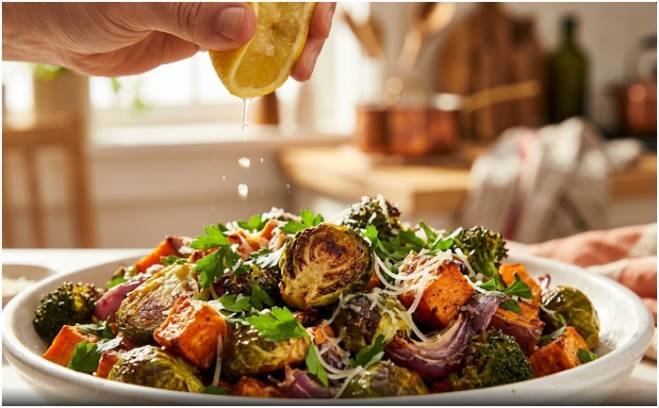
Once your vegetables emerge crisp and tender, layer on fresh brightness to cut through the rich caramelized fats:
- Acid balance: A squeeze of fresh lemon juice or a splash of aged sherry vinegar cuts the earthy char.
- Pan fond salvage: If juices caramelize along the roasting sheet, remove the vegetables and deglaze a pan with a splash of dry white wine or warm vegetable stock to yield a glossy sauce.
- Pungent herbs: Toss the hot vegetables with finely chopped flat-leaf parsley, chives, or grated hard pecorino cheese.
Frequently Asked Questions About How to Roast Vegetables
1. Why are my roasted vegetables soggy instead of crunchy?
Your pan is overcrowded or your vegetables were wet when they entered the oven.
2. Can I roast frozen vegetables without thawing them first?
Yes, roast frozen vegetables at 450°F on a preheated sheet pan with extra oil to flash-evaporate surface ice.
3. Should I cover vegetables with aluminum foil while roasting?
Never cover them, because enclosing the pan traps escaping steam and boils the vegetables.
4. What is the best oven temperature for roasting vegetables?
425°F (220°C) is ideal for balancing exterior caramelization with interior tenderness.
Time to Ditch the Mushy Trays
Bland, mushy vegetables belong in the past. Space your vegetables out, preheat your pans, and let high heat do the heavy lifting. Grab a sturdy rimmed sheet pan tonight, crank your dial to 425°F, and turn simple produce into the best part of dinner.