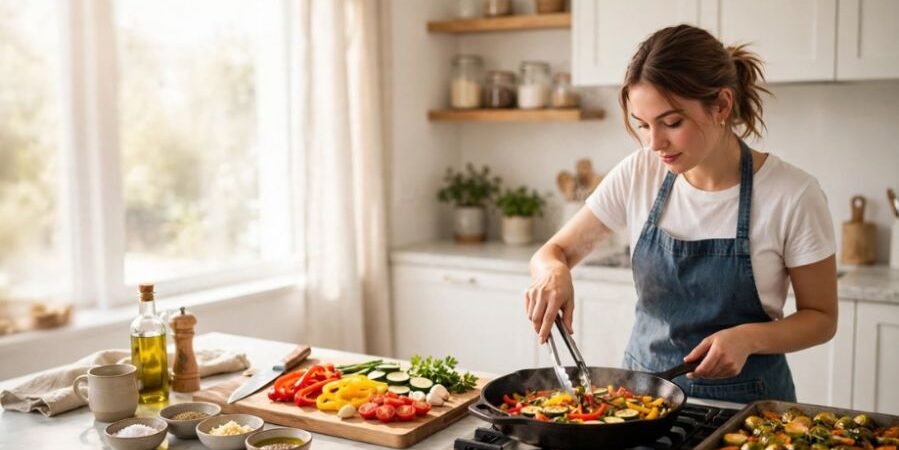
A recipe can tell you what to add, yet it cannot always explain why dinner turned soggy, bland, or uneven. Learning a few cooking techniques for beginners solves those problems and makes almost any recipe easier.
When I began cooking, I focused on ingredients. Experience taught me that preparation, heat, timing, and observation matter just as much. Master those four areas, and you will depend less on rigid instructions.
Build a Safer, Faster Prep Routine
Set Up Your Mise en Place
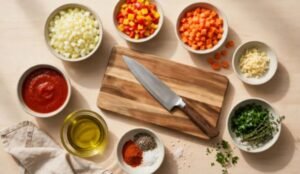
“Mise en place” means putting everything in place before cooking begins. Read the complete recipe, gather your equipment, measure ingredients, and chop vegetables before heating the pan.
This habit prevents rushed cutting and forgotten ingredients. It also protects food from burning while you search for a spice.
Place frequently used tools within reach. Keep raw meat separate from produce and ready-to-eat foods. The FDA recommends washing hands with soap for at least 20 seconds. It also advises cleaning boards, knives, and counters after preparing each food item.
Learn Basic Knife Skills
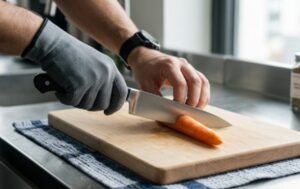
Place a damp kitchen towel beneath the cutting board to reduce movement. Grip a chef’s knife near the base of its blade. Curl the fingers of your other hand into a claw, keeping the fingertips behind your knuckles.
Accuracy matters more than speed. Cut ingredients into similar sizes so they finish cooking together. Start with slices, cubes, thin julienne strips, and small brunoise-style dice.
A sharp knife usually requires less pressure than a dull one. However, it still demands attention. Keep the blade pointed away from your body and never try to catch a falling knife.
Five Basic Cooking Methods Every Beginner Needs
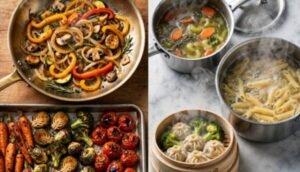
The most useful cooking techniques for beginners fall into two groups. Dry-heat methods encourage browning, while moist-heat methods cook food with water, broth, or steam.
| Technique | Heat type | What happens | Best beginner uses |
| Sautéing | Dry | Food cooks quickly in a little fat | Onions, peppers, chicken pieces |
| Roasting | Dry | Oven air browns the surface | Potatoes, carrots, whole chicken |
| Simmering | Moist | Gentle bubbles cook food slowly | Sauces, soups, beans |
| Boiling | Moist | Vigorous bubbles cook food rapidly | Pasta, potatoes |
| Steaming | Moist | Hot vapor surrounds the food | Broccoli, fish, dumplings |
Sautéing and Roasting
For sautéing, preheat the pan before adding food. Add enough oil to coat its surface lightly. The ingredients should sizzle without smoking violently.
Leave space around each piece. Crowding traps escaping moisture, which causes food to steam instead of brown. Cook in two batches if necessary.
Roasting uses circulating dry heat. Spread vegetables in one layer and leave gaps between them. Turn them once for more even color. For meat and poultry, USDA guidance says to use an oven temperature of at least 325°F when roasting.
Simmering, Boiling, and Steaming
A simmer produces small, steady bubbles. It suits sauces, soups, and foods that need gentle cooking. A rolling boil moves the liquid forcefully and works well for pasta.
Steaming keeps ingredients above the water. Cover the pot so vapor stays trapped, but ensure the water does not touch the food.
Beginners often boil a sauce that should simmer. Excess heat can toughen meat, break delicate ingredients, or reduce liquid too quickly. Lower the burner when bubbles become aggressive.
Master Temperature and Pan Control
Heat is not an on-off switch. I think of it as a three-step ladder:
| Heat level | Best purpose | Visual cue |
| Low | Melting and gentle sauces | Little movement |
| Medium | Eggs and steady cooking | Soft, controlled sizzling |
| Medium-high | Sautéing and browning | Immediate, lively sizzling |
Preheat cookware for one or two minutes, then test it with a small ingredient. If nothing happens, wait. If oil smokes heavily, remove the pan briefly and reduce the burner. For more practical guidance, read How to Cook Better: 4 Professional Kitchen Habits.
Pat meat dry before cooking. Surface water absorbs heat and delays browning. After placing meat in the pan, allow it to form a crust before moving it.
Color cannot confirm food safety. Use an instant-read thermometer in the thickest section. USDA minimums include 145°F plus a three-minute rest for whole cuts of beef and pork, 160°F for ground meats, and 165°F for poultry.
Season Food in Layers
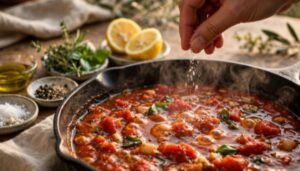
Good seasoning develops during cooking. Add a small amount of salt at several stages instead of dumping it in at the end.
Season onions as they soften. Taste a sauce after it reduces because evaporation concentrates salt. Finish with acid, fresh herbs, or black pepper when the dish needs brightness.
Before adding more salt, ask what the food lacks. A squeeze of lemon may fix a dull dish. A small amount of fat can soften harsh acidity. Water or unsalted stock can rescue an over-reduced sauce.
This tasting habit is one of the most valuable cooking techniques for beginners because it builds judgment rather than dependence on measurements.
Practice With One Complete Dinner
Try roasted potatoes, sautéed green beans, and chicken cutlets. For more simple meal ideas, explore these easy homemade recipes for fast, healthy dinners.
First, heat the oven to 425°F. Cut potatoes into equal one-inch pieces, coat them lightly with oil, and leave space on the baking sheet. Roast until browned and tender.
While they cook, trim the beans and season the chicken. Pat each cutlet dry. Sauté the chicken without crowding the pan, then confirm it reaches 165°F.
Remove the chicken and let it rest. Sauté the beans in the same pan. Add a spoonful of water and cover briefly if they need softening. Finish with lemon juice.
The useful insight is sequencing: start the slowest food first and prepare faster items during inactive cooking time. This turns three separate tasks into one coordinated meal.
Common Beginner Cooking Problems
| Problem | Likely cause | Practical correction |
| Food looks pale | Wet surface or crowded pan | Dry ingredients and cook in batches |
| Garlic tastes bitter | Heat was too high | Add garlic later and cook briefly |
| Vegetables cook unevenly | Pieces differ in size | Make cuts more uniform |
| Sauce tastes watery | Too much liquid | Simmer uncovered |
| Meat becomes dry | Cooked by time alone | Check early with a thermometer |
| Food tastes flat | Salt alone cannot balance it | Try acid, herbs, or a little fat |
Frequently Asked Questions
1. What cooking technique should a beginner learn first?
Start with sautéing because it teaches preparation, heat control, timing, and visual observation.
2. What are the easiest cooking techniques for beginners to practice?
Sautéing, roasting, simmering, boiling, and steaming cover most everyday meals.
3. How can a beginner improve cooking skills quickly?
Cook one familiar dish repeatedly and change only one variable, such as heat, cut size, or seasoning.
4. What basic equipment does a new cook need?
Begin with a chef’s knife, stable cutting board, skillet, saucepan, sheet pan, tongs, and instant-read thermometer.
Your Kitchen Era Starts Now
I would not chase complicated recipes yet. Pick one simple dinner and repeat it until you recognize the sounds, aromas, and textures without guessing.
Strong cooking grows through controlled repetition. Prepare first, manage heat deliberately, taste often, and measure safety with a thermometer. Your smoke alarm does not need to become the dinner bell.