
I learned the hard way that poking a chicken breast with my index finger told me nothing about food safety. Early in my culinary career, I sliced into what looked like a perfectly browned roast chicken, only to find raw meat at the bone. Visual cues like clear juices or crust color deceive even seasoned home cooks.
This cooking temperatures guide removes guesswork from your kitchen and replaces anxiety with repeatable precision. Hitting the correct internal temperature destroys pathogens while protecting tenderness.
The Core Science: Why Surface Color Deceives
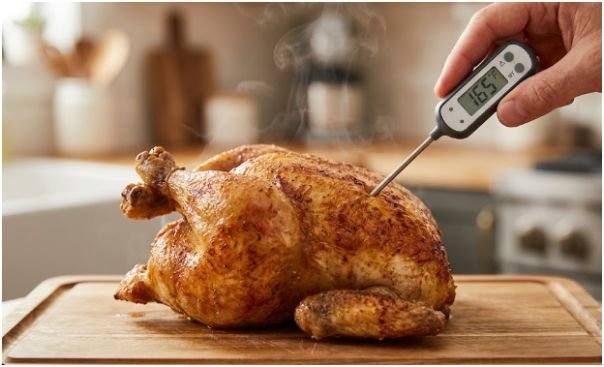
A golden sear looks appetizing, but high heat browns the exterior long before thermal energy reaches the core. Pathogenic bacteria such as Salmonella, Campylobacter, and E. coli inhabit food at microscopic levels. Heat destabilizes their cell membranes and denatures crucial bacterial proteins.
Federal standards from the USDA Food Safety and Inspection Service establish baseline thermal targets that eliminate bacterial populations. When you understand how heat penetrates tissue, you learn how to build flavor in cooking without sacrificing personal health.
Master Safe Cooking Temperatures at a Glance
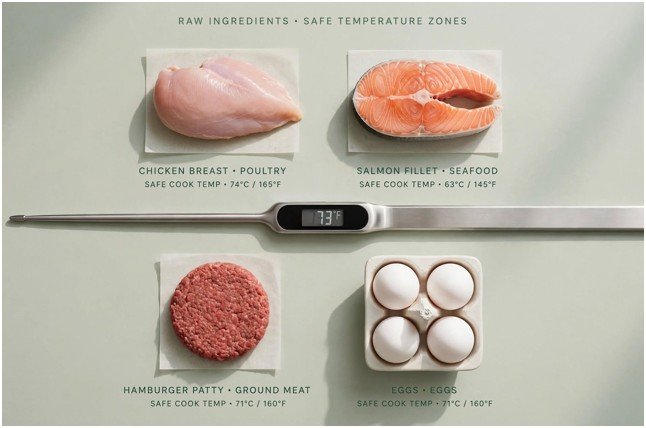
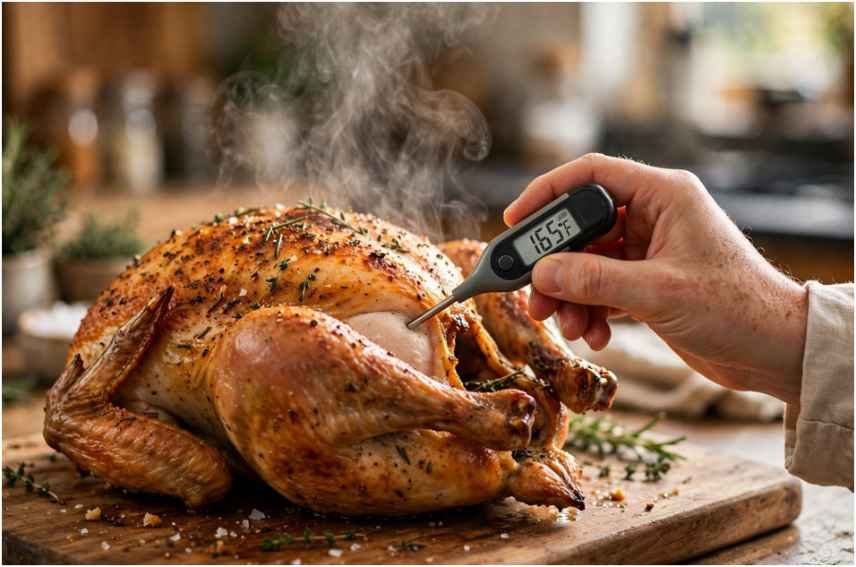
A digital instant-read thermometer remains the most crucial tool in your kitchen. Insert the probe into the thickest part of the muscle tissue away from bone, cartilage, and fat pockets.
Poultry Targets: Why 165°F Is Non-Negotiable
Cook chicken, turkey, duck, and goose to an internal target of 165°F (74°C). Poultry features a loose muscle fiber structure. Unlike beef, surface contamination migrates deep into poultry tissue during processing.
Always register 165°F (74°C) for ground chicken, whole birds, wings, and stuffed poultry products. If stuffing sits inside a bird cavity, it absorbs raw poultry juices and must hit 165°F (74°C) before service.
Ground Meats vs. Whole Cuts: The Bacterial Surface Shift
Whole muscles present bacterial risk primarily on their exterior surfaces. When a butcher grinds beef, pork, or lamb, those surface pathogens distribute evenly throughout the entire meat mass.
Because bacteria sit in the center of burger patties and meatballs, FoodSafety.gov mandates an internal minimum of 160°F (71°C) for ground meats. Never cook standard grocery-store ground beef rare unless you grind whole, sanitized cuts at home.
Steaks, Roasts, and Chops: Respecting the Three-Minute Rest
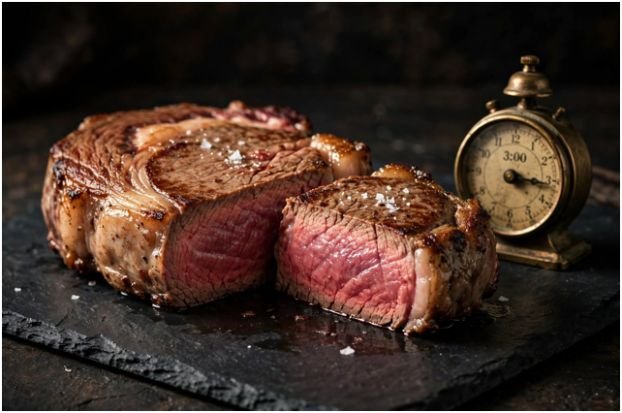
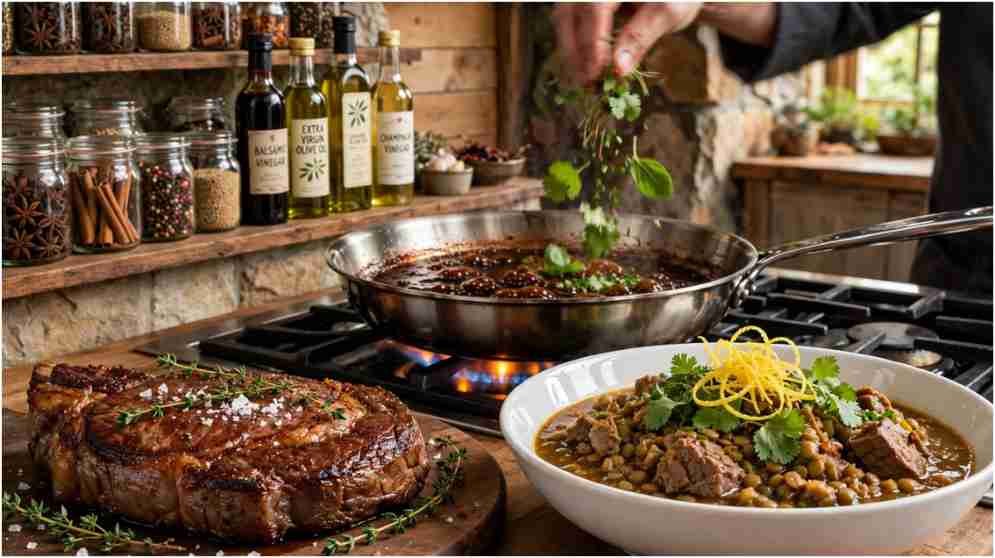
Whole cuts of beef, pork, veal, and lamb require a safe minimum internal temperature of 145°F (63°C) paired with a mandatory three-minute resting window.
The three-minute rest is not optional culinary advice. During the rest, internal temperatures stay steady or climb, sustaining the thermal kill cycle.
- Rare beef: 125°F–130°F (52°C–54°C)
- Medium-rare beef: 130°F–135°F (54°C–57°C)
- Medium beef: 140°F–145°F (60°C–63°C)
- Well-done beef: 160°F+ (71°C+)
Keep in mind that cooking beef below 145°F sits beneath USDA safe minimum guidelines.
Seafood and Eggs: Flake, Opacity, and Safe Heat
According to the U.S. Food and Drug Administration, finfish like salmon, cod, and halibut require an internal temperature of 145°F (63°C). Cooked fish turns opaque and separates easily into flakes along muscle striations.
Shrimp, lobster, and crab flesh turns milky white and firm when properly heated. Clams, mussels, and oysters must cook until their shells open wide; discard any shell that stays shut.
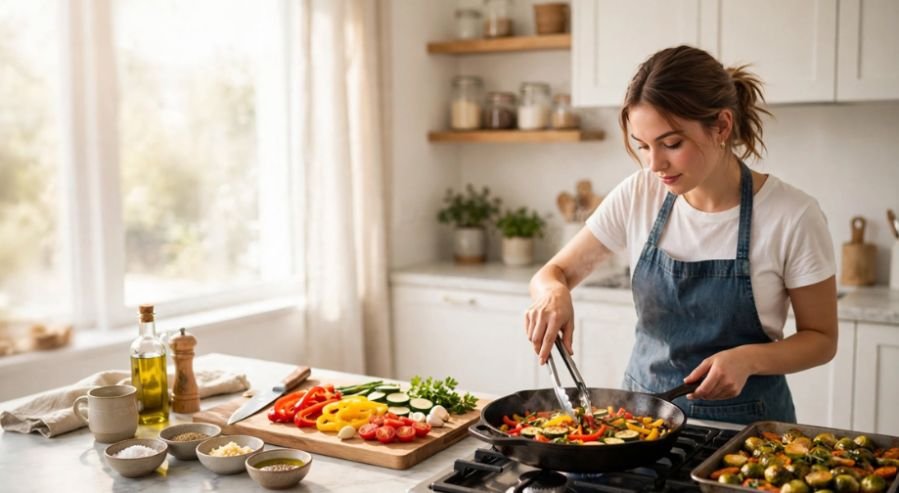
For egg casseroles, quiches, and frittatas, cook until a probe reads 160°F (71°C). When you prep side dishes to sauté vegetables, keep separate utensils handy so raw egg mixtures never cross-contaminate adjacent pans.
| Protein Category | Cut / Preparation | Safe Minimum Internal Temp | Crucial Handling Rule |
| Poultry | Chicken, turkey, duck (whole or ground) | 165°F (74°C) | Probe the thickest part of the thigh and breast. |
| Ground Meats | Beef, pork, veal, lamb | 160°F (71°C) | Color is unreliable; always verify with a probe. |
| Whole Red Meat | Steaks, chops, roasts | 145°F (63°C) | Mandatory 3-minute rest off heat source. |
| Finfish | Salmon, cod, whitefish | 145°F (63°C) | Flesh must become opaque and flake easily. |
| Shellfish | Shrimp, lobster, clams | Visual milestones | Shells must open; crustaceans turn opaque. |
| Leftovers | Reheated cooked foods | 165°F (74°C) | Stir liquids halfway through reheating. |
The Physics of Carryover Cooking: My Skillet Test Finding
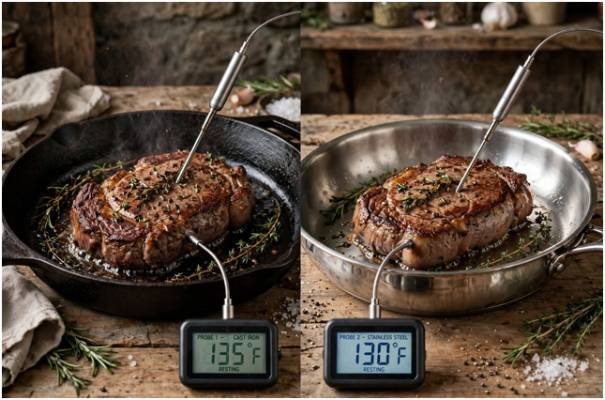
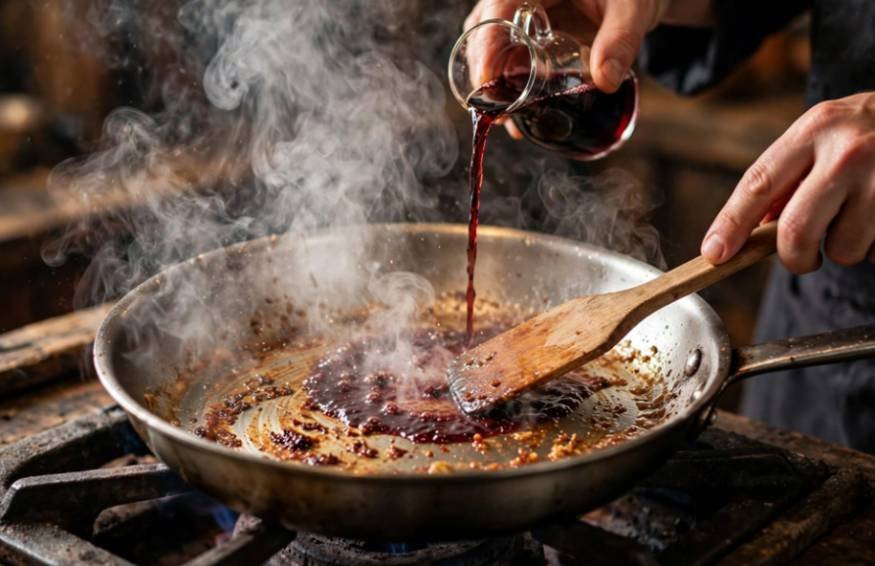
Most amateur cooks pull meat off the stove when the thermometer displays their final desired reading. Doing so guarantees dry, chalky meat. When you cook, high exterior heat drives thermal momentum inward even after the pan leaves the flame.
I ran an empirical test comparing an 8-ounce strip steak cooked in heavy cast iron against an identical cut cooked in a thin tri-ply stainless pan. After pulling both steaks off the burner at 130°F (54°C):
- The stainless pan steak climbed by 4.2°F over four minutes.
- The cast-iron steak climbed by 8.7°F over seven minutes.
Dense cookware stores immense heat that pushes carryover cooking higher. For thick roasts and steaks, pull your meat 5°F to 8°F below your desired finish line. The residual thermal mass finishes the work safely on your cutting board.
Avoiding the Temperature Danger Zone
The Centers for Disease Control and Prevention identifies the zone between 40°F and 140°F (4°C and 60°C) as the danger zone. Within this window, harmful bacteria double in number every twenty minutes.
Never allow cooked proteins to sit on your dining table longer than two hours. Drop that threshold to one hour if outdoor summer temperatures cross 90°F (32°C).
Reheat cold leftovers to 165°F (74°C) before consumption. Cold storage slows bacterial expansion, but only thermal heat clears active colonies.
Frequently Asked Questions About Cooking Temperatures
1. What is the single safest temperature for cooked chicken?
Cook all chicken parts, whole birds, and ground poultry to an internal temperature of 165°F (74°C).
2. Why does pork require less heat than ground beef?
Pork steaks and chops harbor surface-level bacteria killed at 145°F plus rest, whereas ground beef distributes microbes throughout.
3. How do you properly calibrate a digital meat thermometer?
Submerge the stem into a 50/50 ice water slurry and adjust the dial or reset button until it reads 32°F (0°C).
4. Can pink pork tenderloin be safe to eat?
Yes, pork tenderloin cooked to 145°F with a three-minute rest remains safe even if slightly pink inside.
Hang Up the Guesswork: Your Next Kitchen Move
Cooking delicious food does not require supernatural instincts. Pick up an accurate digital probe, stick it in the center of your meat, and respect carryover momentum. Pin this guide to your pantry door, retire your guesswork, and step up to your stove with complete confidence tonight.