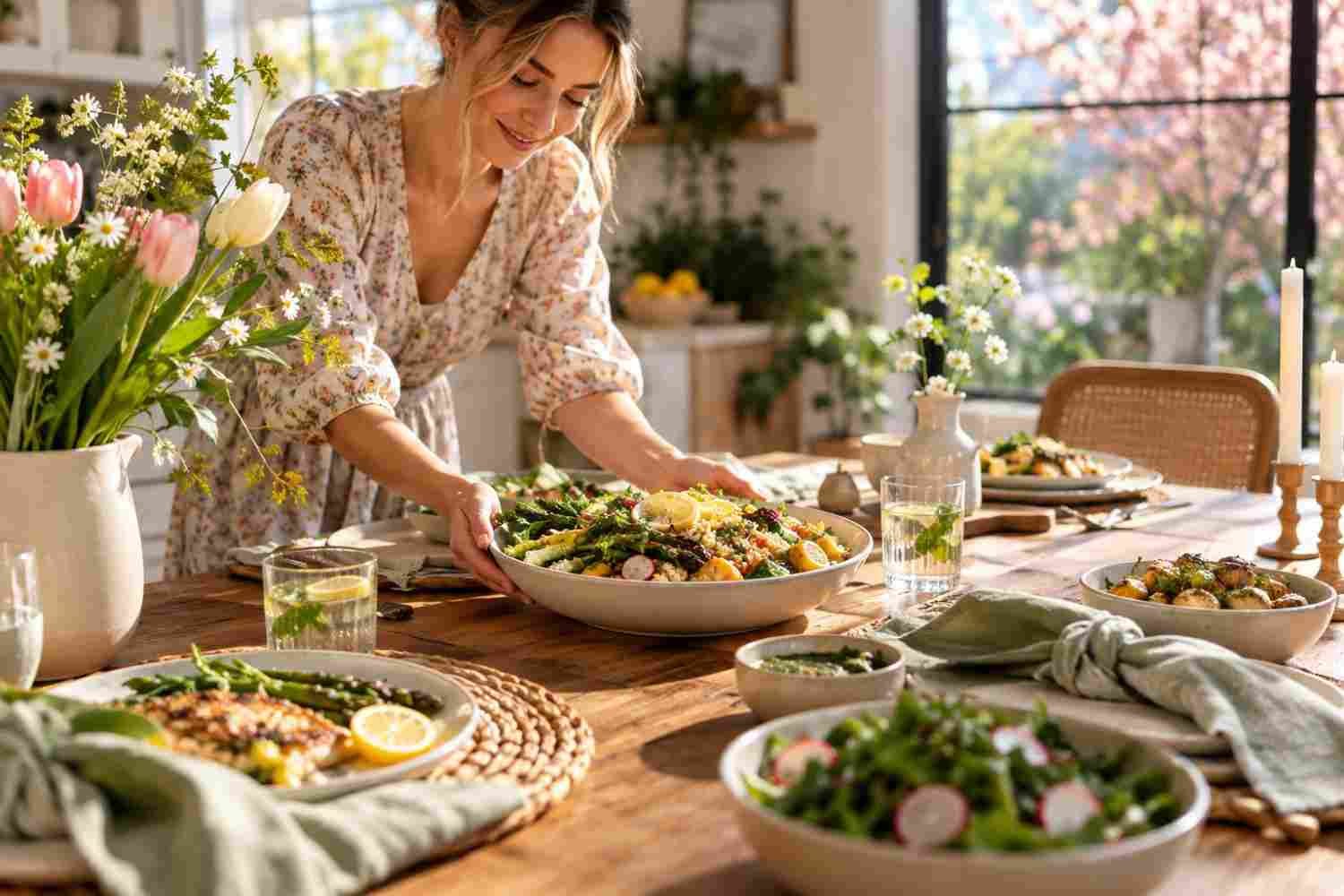
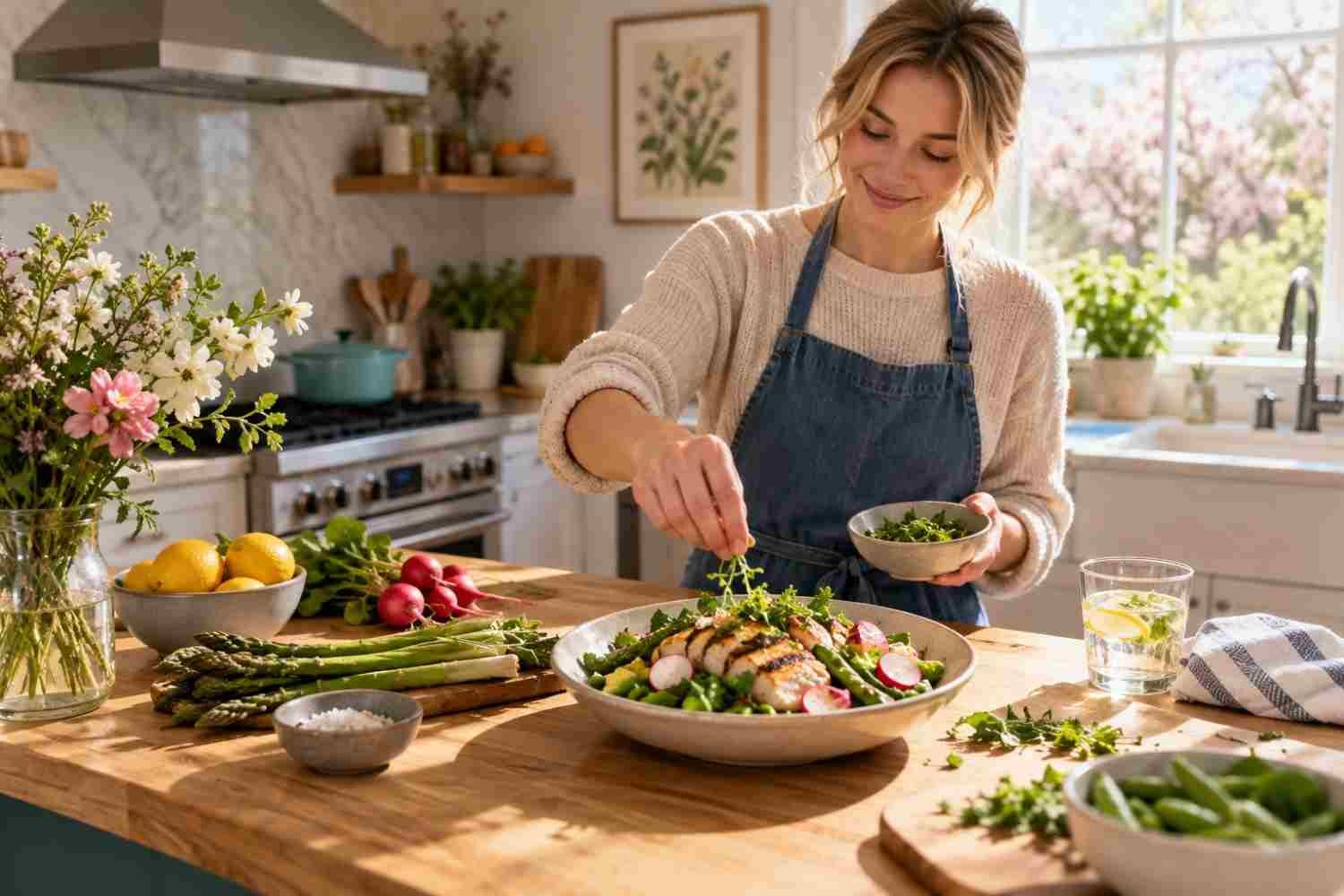
Creative Spring Dinner Ideas to Refresh Your Dinner Routine
I noticed my dinner routine changes almost as soon as the first warm evenings arrive. After months of cold-weather staples, I start wanting meals that feel crisp, colorful, and less heavy. Spring produce makes that shift surprisingly easy.
Spring cooking does not require learning a new collection of recipes. A familiar pasta, bowl, skillet, or taco can feel different with asparagus, peas, herbs, and lemon. The trick is choosing seasonal ingredients that bring freshness without complicating dinner.
What Makes a Dinner Feel Like Spring?
Spring dinners usually have a different balance than winter meals. They can still be warm and satisfying, but brighter ingredients do more work. Asparagus, peas, snap peas, radishes, spinach, artichokes, and herbs add color and crunch.
Lemon juice, vinegar, and tangy yogurt keep creamy sauces and rich proteins from feeling heavy. Herbs such as dill, parsley, basil, mint, and chives add another layer of freshness.
That combination creates meals that feel seasonal without becoming complicated.
Spring Dinner Ideas That Keep Pasta Fresh
Pasta is an easy starting point because it works with almost anything in the refrigerator. Toss noodles with asparagus, peas, spinach, herbs, and lemony olive oil. Parmesan adds richness without taking over the dish.
Orzo cooks quickly and works somewhere between pasta and a grain. Try it with asparagus and peas, then finish with lemon, dill, and Parmesan.
Gnocchi offers another shortcut. Crisp it in a skillet with snap peas, radishes, or spinach, then add pesto and lemon. It feels comforting while keeping the fresh character of the season.
Add shrimp, salmon, chicken, or white beans when you want more substance.
Build Better Spring Bowls
Grain bowls make it easy to combine contrasting textures and flavors. Start with farro, quinoa, brown rice, or another grain, then add vegetables, protein, and a bright dressing.
Try roasted asparagus with radishes, white beans, greens, and lemon vinaigrette. Add roasted sweet potatoes and chicken, or use tofu, chickpeas, or lentils.
A good bowl needs contrast: creamy with crisp, warm with cool, and savory with acid. That balance keeps simple ingredients from tasting flat.
Spring also makes leftovers useful. Herbs can brighten pasta or sandwiches the next day, while roasted vegetables can become taco filling, pizza toppings, or an omelet.
Skillets, Tacos, and Fast Weeknight Wins
When cleanup is the deciding factor, a skillet dinner can save the evening. Chicken thighs with lemon, potatoes, asparagus, and dill are an easy example. The approach also works with salmon, shrimp, or tofu.
Fish tacos are another natural fit. Season white fish with chili powder and cumin, then serve it in warm tortillas with cabbage, radishes, avocado, and lime. A yogurt-lime sauce adds creaminess without heaviness.
For a meatless option, sauté mushrooms, snap peas, spinach, and chickpeas with garlic and smoked paprika. Spoon the mixture over rice or tuck it into tortillas.
If planning meals around fall comfort food, spring can be a lighter extension of the same idea. Keep the satisfying formats you enjoy, but change the produce, sauces, and finishing touches.
How to Spring-ify Meals You Already Make
You do not need a new recipe every night. Small swaps can change the character of familiar meals.
Replace heavy marinara on pizza with pesto, shaved asparagus, spinach, or herbs.
Add lemon zest, snap peas, celery, and dill to chicken or tuna salad.
Finish creamy skillet sauces with lemon juice or vinegar to sharpen the flavor.
The same principle works with sandwiches, roasted potatoes, rice dishes, and burgers. Think about what is missing rather than replacing everything. A crunchy vegetable, fresh herb, acidic dressing, or seasonal topping may be enough.
For easier shopping, choose seasonal vegetables, one protein, one grain or pasta, and flavor builders such as lemons, herbs, garlic, and Parmesan.
Make Spring Dinners Work for Real Life
Seasonal cooking sounds appealing until a weeknight gets busy. That is why the most useful spring dinner ideas are flexible. Frozen peas, jarred pesto, and leftover chicken can all shorten the path to dinner.
Roast vegetables while pasta cooks, or prepare extra grains for tomorrow’s bowl. Small bits of advance work make fresh meals easier.
A creamy pasta, crisp chicken cutlet, or warm grain bowl still belongs on the table. Add something fresh and acidic alongside it.
If you normally reach for winter soup recipes, keep that same instinct for cozy, practical dinners, but shift the ingredients toward greens, peas, herbs, citrus, and quick-cooking vegetables.
FAQs: Creative Spring Dinner Ideas to Refresh Your Dinner Routine
1. What vegetables work best for spring dinners?
Asparagus, peas, snap peas, radishes, spinach, artichokes, scallions, and spring greens are versatile choices. Use them raw, roasted, sautéed, or folded into pasta and grain dishes.
2. What are easy spring dinner ideas for busy weeknights?
Try one-pan chicken with vegetables, lemony orzo, fish tacos, grain bowls, or pasta with peas and asparagus. Frozen vegetables and prepared pesto can shorten prep.
3. How can I make a regular meal taste more seasonal?
Add one or two spring ingredients instead of rebuilding the recipe. Fresh herbs, lemon zest, peas, asparagus, radishes, or a bright vinaigrette can change the whole dish.
4. Can spring dinners still be comforting?
Absolutely. Pasta, gnocchi, chicken, potatoes, and creamy sauces can still feel comforting. Balance them with seasonal vegetables, herbs, and citrus for a fresher finish.
Why Seasonal Cooking Does Not Have to Be Complicated
Spring dinners can make familiar food feel new. You do not need an elaborate recipe, specialty ingredients, or hours of prep. Seasonal vegetables, a reliable protein, and something bright can change an ordinary weeknight meal.
That is what makes this season so useful in the kitchen. Spring lets you keep the comforting formats you already love while making them fresher, sharper, and more colorful. A simple dinner can feel special when the ingredients reflect what is happening outside.