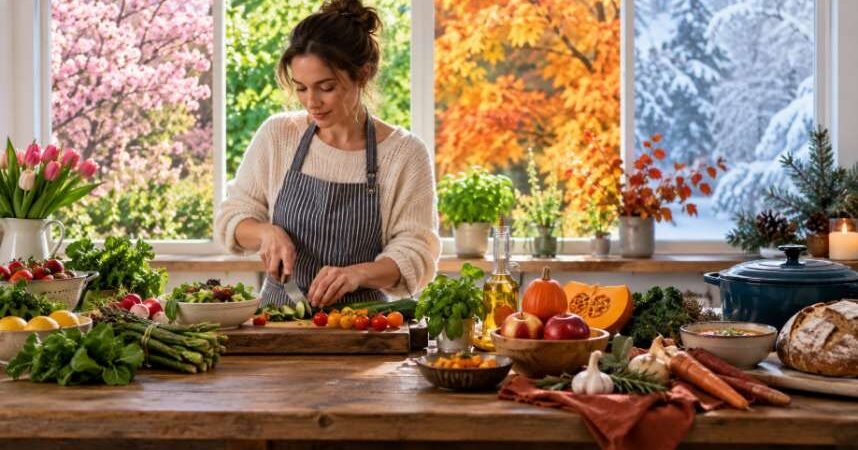
I used to think seasonal cooking meant waiting for a short list of vegetables to appear at the market, then finding a recipe for each one. After paying closer attention to what actually looked good from week to week, I realized it was much looser than that. A bunch of asparagus, ripe tomatoes, or a box of peaches could change the direction of dinner without requiring a complicated plan.
I also noticed that the best seasonal meals often needed less work. When produce is fresh and full of flavor, a hot pan, a little oil, salt, acid, and a handful of herbs can be enough. That shift made seasonal cooking feel less like a rulebook and more like a useful way to decide what deserves attention in the kitchen.
What Seasonal Cooking Really Means
Seasonal cooking means building meals around ingredients that are naturally available at a particular time of year. The exact calendar depends on where you live, because growing conditions, weather, and regional agriculture can move harvests forward or backward. A produce chart is only a starting point.
Shop with flexibility. Choose one or two appealing seasonal items first, then build the meal around them. That might mean turning summer tomatoes into pasta sauce or roasting fall squash alongside chicken and grains.
Seasonal cooking does not mean abandoning pantry staples. Rice, pasta, beans, spices, eggs, and frozen vegetables can provide structure while fresh produce supplies changing flavors.
Cook With the Seasons
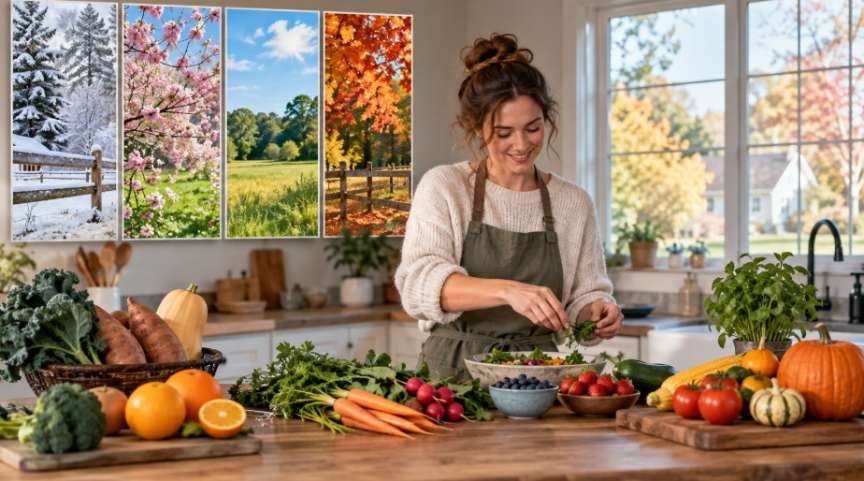
Spring: Keep Things Bright and Quick
Spring produce suits lighter cooking. Asparagus, peas, radishes, spinach, lettuce, mushrooms, and herbs bring crisp textures and fresh flavors. Quick sautéing, steaming, blanching, or roasting helps preserve their character.
Asparagus can be roasted, shaved into salads, folded into pasta, or sautéed with garlic. Chives, mint, parsley, and cilantro can finish dishes without making them feel heavy.
Summer: Let Peak Produce Lead
Summer brings an abundance of tomatoes, zucchini, corn, cucumbers, peppers, peaches, berries, melons, and eggplant.
Grilling is an obvious choice for corn, zucchini, peaches, and peppers, while tomatoes and cucumbers often need little more than salt, herbs, olive oil, and vinegar. When produce is excellent, resist the urge to bury it under sauces or long cooking times.
A flexible plan might include grilled vegetables one night, tomato pasta the next, and a grain bowl using leftovers. This reduces waste without repetition.
Fall: Bring Out Deeper Flavors
As temperatures drop, the kitchen shifts toward roasting, braising, simmering, and baking. Apples, pears, sweet potatoes, pumpkin, squash, carrots, parsnips, potatoes, mushrooms, and hearty greens suit substantial meals.
Roasting concentrates sweetness and creates browned edges. Squash, onions, and carrots can become a side dish, grain-bowl topping, or soup base. Apples and pears work in salads, pork dishes, oatmeal, or desserts.
Winter: Work With What Stores Well
Winter can still offer plenty of flavor. Root vegetables, potatoes, onions, cabbage, kale, turnips, sweet potatoes, squash, and citrus can carry meals when summer produce is scarce. Some produce remains available because it stores well after harvest.
Citrus is especially useful in colder months. Lemons, oranges, and grapefruit brighten soups, roasted vegetables, grains, and braises. A squeeze of lemon can lighten a rich meal.
Match the Method to the Ingredient
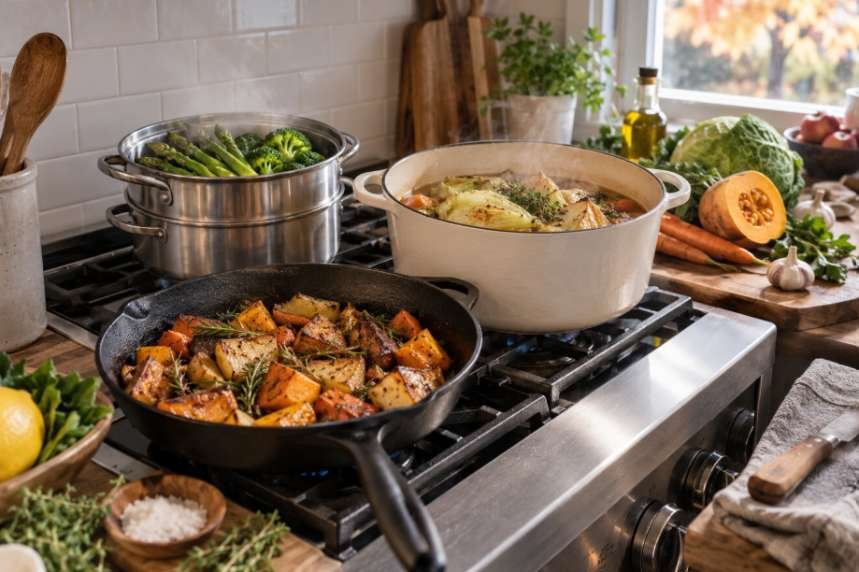
Good seasonal cooking is less about mastering dozens of recipes and more about recognizing what an ingredient needs. Tender greens usually benefit from quick heat. Firm roots can handle longer roasting. Delicate berries may need no cooking at all. Mushrooms respond well to enough heat to drive off excess moisture and encourage browning.
Think about texture as much as flavor. Crisp vegetables can balance creamy beans or grains. Fresh herbs can cut through richness, while acid can wake up foods that taste flat.
This is where seasonal recipes with ingredients you love become more useful as inspiration rather than strict instructions.
Make Seasonal Cooking Easier
The biggest practical mistake is buying more seasonal produce than the household can use. Start with realistic quantities. If something looks irresistible, consider how it can appear in two meals before buying more.
Storage matters, too. Some produce lasts longer when kept dry, while others need refrigeration. Learn the basics and use delicate produce first.
Efficient preparation also starts with a well-maintained knife. Learning how to sharpen kitchen knives can make chopping, slicing, and trimming seasonal produce easier and more consistent.
It also helps to keep a few flexible meal formulas nearby: vegetables plus grains and a protein, roasted produce with eggs, pasta with vegetables and herbs, soup built from a base of onions and whatever needs using, or a simple salad finished with nuts and cheese. These formulas make substitutions easy.
Most importantly, do not treat seasonality as perfection. Frozen, canned, and dried produce remain useful when fresh options are unavailable. Seasonal cooking works best when it makes everyday meals easier, more flavorful, and less wasteful rather than adding another set of rules.
Frequently Asked Questions
1. What is seasonal cooking?
Seasonal cooking means choosing ingredients that are naturally available during a particular time of year and building meals around them. Availability varies by region and weather.
2. Why does seasonal produce taste better?
Produce picked near peak maturity can have stronger flavor, better texture, and more aroma. Buying it close to harvest can also reduce the time it spends in storage or transit.
3. How can I start cooking seasonally?
Begin with one or two ingredients that look especially fresh, then choose a familiar meal format around them. You do not need to change your entire grocery routine at once.
4. Can I cook seasonally on a budget?
Yes. Buying abundant produce in season can help lower costs, especially at farmers markets or during local harvest periods. Frozen and preserved ingredients can also stretch seasonal purchases.
Let the Season Shape the Meal
Seasonal cooking creates freedom. Instead of asking what recipe must be followed, the better question is what looks good right now and what simple treatment will let it shine. It makes shopping more interesting, eases planning pressure, and builds a stronger instinct for flavor.
Over time, the seasons begin to provide a natural rhythm for the kitchen: crisp greens and herbs arrive, tomatoes and stone fruit take over, squash and apples replace them, and sturdy roots carry things forward.
A seasonal kitchen does not need to be perfect. It simply pays attention, adapts, and cooks what is worth eating now.