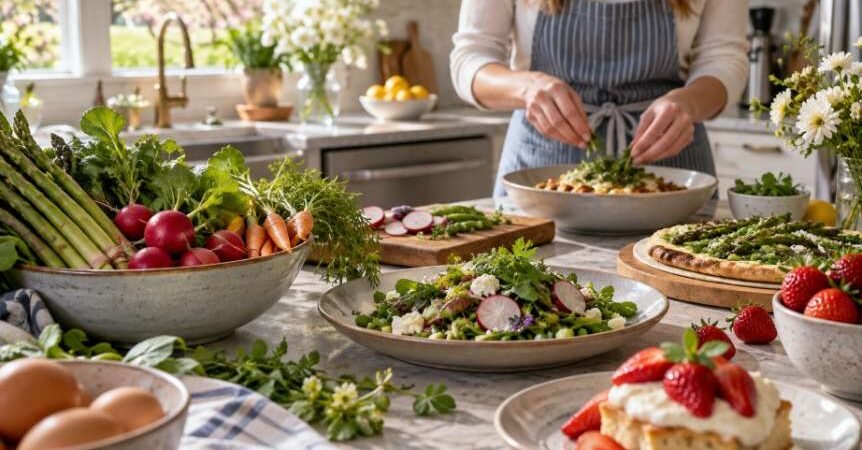
I notice the first real shift into spring cooking when the produce aisle starts looking greener and less predictable. After months of relying on potatoes, squash, and heavier greens, asparagus, snap peas, radishes, and tender herbs suddenly make dinner feel lighter without making it feel like diet food. That change makes me rethink what belongs on the table.
I also find that spring rewards a different approach to cooking. Instead of burying fresh ingredients under rich sauces, I let their color, crunch, and mild sweetness do more work. Lemon, herbs, or a sharp dressing can turn a simple vegetable into something worth building a meal around.
What Makes Spring Recipes Stand Out?
Good spring recipes usually begin with ingredients that do not need much convincing. Asparagus can be roasted until the tips turn crisp, peas can be folded into pasta, and radishes can bring a cool bite to a salad. Spring vegetables are often best when cooking stays simple.
That does not mean every meal has to be a salad. The best spring cooking has range. A vegetable-packed quiche can work for brunch, a skillet pasta can become a weeknight dinner, and a strawberry dessert can finish the meal. The common thread is freshness, not a particular style of dish.
Seasonality also makes the cooking more flexible. Depending on location and timing, spring markets may offer asparagus, peas, carrots, spinach, lettuce, fennel, leeks, chives, mint, strawberries, and rhubarb. That variety makes ingredient swaps easy.
Fresh Spring Vegetables Take Center Stage
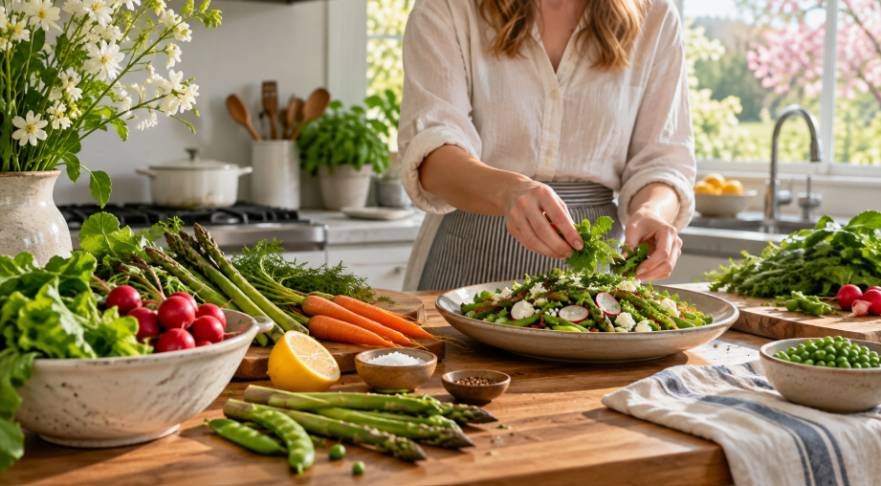
Asparagus is an obvious starting point because it works across almost any meal. Roast it beside chicken, shave it into a salad, fold it into pasta, or serve it with eggs. Its grassy flavor pairs well with lemon, Parmesan, garlic, and herbs.
Peas and snap peas bring a different kind of freshness. Snap pea salad becomes more interesting with a savory dressing, mint, and salty cheese. Fresh peas can brighten pasta, grain bowls, or a vegetable frittata.
Radishes deserve more attention than they usually get. Their peppery crunch balances creamy ingredients, roasted vegetables, or grain bowls. Slice them raw, pickle them quickly, roast them, or serve them with butter and salt.
For more ideas beyond individual ingredients, seasonal recipe ideas can help broaden the rotation while keeping the focus on produce that fits the time of year.
Spring Meals That Actually Feel Like Meals
Lighter cooking does not mean sacrificing satisfaction. Pair vegetables with eggs, beans, chicken, fish, grains, pasta, or cheese for a substantial meal.
Pasta gives delicate vegetables a sturdy base. Peas, asparagus, spinach, fennel, or spring onions work with noodles, olive oil, Parmesan, and lemon. A chicken ragù with peas and fennel offers another direction, keeping the comfort of pasta while bringing in seasonal ingredients.
Quiche and frittatas are practical. Asparagus, spinach, spring onions, and chives can be combined with eggs and cheese, creating something that works for breakfast, lunch, dinner, or leftovers. They are forgiving when the refrigerator holds vegetables that need attention.
Fresh Salads and Simple Sides
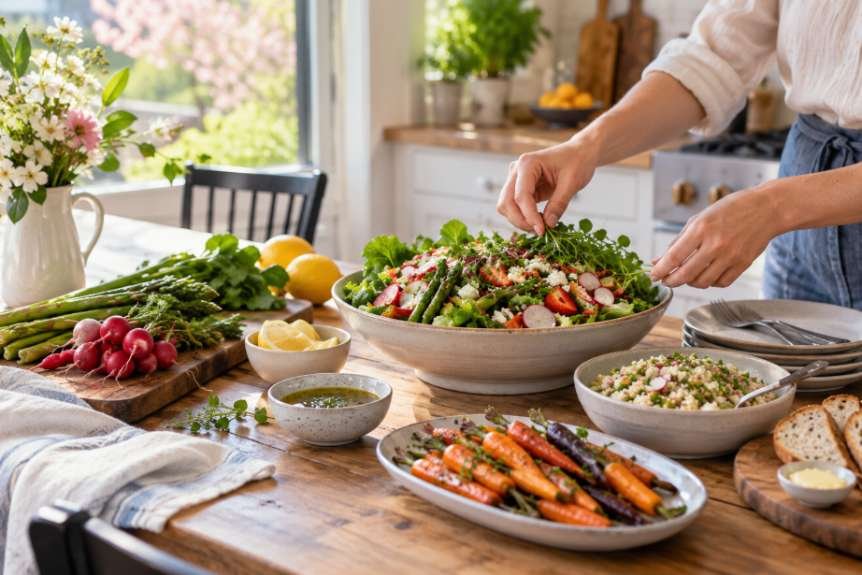
Spring salads do not have to be bowls of leaves with a token vegetable. Build texture deliberately. Combine tender greens with crisp radishes, sweet strawberries, toasted nuts, feta, or a sharp vinaigrette. That contrast makes a simple salad feel complete.
The same approach works for side dishes. Roasted carrots can take on more character with herbs and yogurt. Asparagus can be finished with lemony breadcrumbs. Peas can be mixed with mint and butter. Greens become more interesting with a warm component, crunchy topping, and enough acidity.
These combinations make spring cooking easier because there is no need to follow a rigid recipe. A few dependable pairings can carry several meals easily at home. A good spring meal also benefits from contrast. Think crisp against creamy, sweet against salty, and warm against cool. Those small differences keep simple ingredients from tasting flat, and they make familiar combinations feel intentional without demanding complicated techniques or a long ingredient list.
Don’t Forget Spring Fruit
Strawberries get most of the attention, but their usefulness goes beyond shortcake. They work in salads, salsa, and pair with balsamic vinegar, black pepper, nuts, and soft cheese.
Rhubarb brings a sharper flavor. Its tartness works in pies, crisps, compotes, sauces, and some savory dishes. Because its texture changes quickly, timing matters if you want some bite.
Spring desserts can also feel different from winter baking. Many spring sweets get their character from fruit, citrus, tang, and freshness.
A Better Way to Cook With Seasonal Produce
Improve spring meals by treating vegetables according to their texture. Delicate peas need little heat, while carrots can handle roasting. Radishes are crisp raw but sweeter when cooked. Add herbs near the end so their flavor remains noticeable.
Acidity is useful, too. Lemon, vinegar, or vinaigrette can wake up vegetables without a heavy sauce. Olive oil adds richness, while herbs such as mint, chives, parsley, and dill can make familiar ingredients taste completely different.
A simple seasonal cooking guide can help when planning around what appears at markets. The goal is not a strict calendar. Regional growing conditions vary, so notice what looks fresh, affordable, and abundant, then build meals around it.
Frequently Asked Questions
1. What vegetables are best for spring recipes?
Asparagus, peas, radishes, carrots, spinach, lettuce, fennel, leeks, and spring onions are useful choices. Availability varies by region.
2. What is an easy spring dinner?
Try pasta with asparagus and peas, a vegetable frittata, lemony chicken with greens, or a grain bowl with roasted vegetables.
3. How can spring vegetables taste more flavorful?
Use simple techniques such as roasting, quick sautéing, blanching, or grilling, then finish with lemon, herbs, olive oil, or a bright dressing.
4. What fruits are good for spring desserts?
Strawberries and rhubarb are classic choices. They work especially well in pies, crisps, tarts, compotes, and simple fruit-forward desserts.
Why Fresh Cooking Feels Better in Spring
Spring cooking simplifies decisions. When produce is crisp, colorful, and flavorful, dinner does not need an elaborate plan. Vegetables, a reliable protein, something starchy, and a bright finishing touch can be enough. That makes spring recipes practical on evenings when there is little interest in spending hours at the stove.
The appeal is the freedom to cook with what looks good now. That habit lasts beyond spring, turning seasonal produce into an everyday source of better meals.