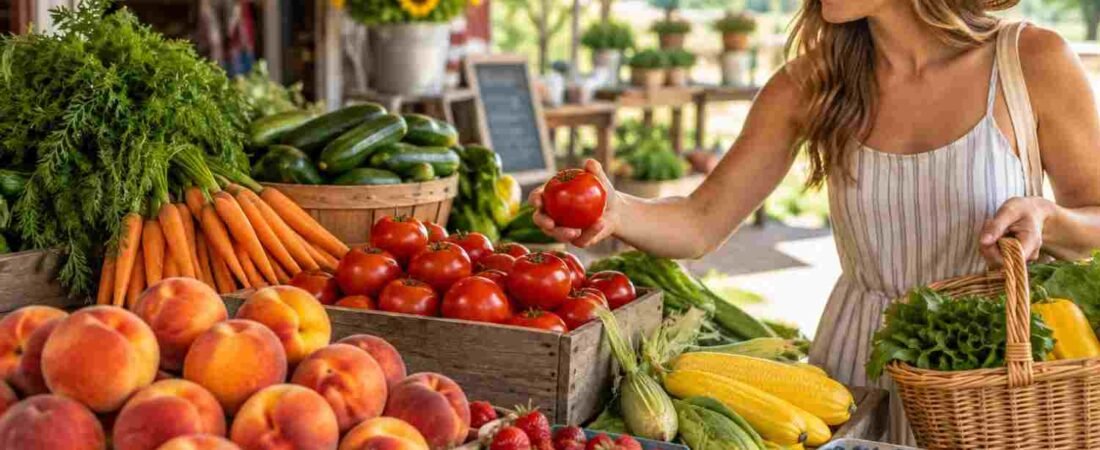
I used to think buying summer produce was mostly a matter of finding the brightest display and filling a basket. After a few disappointing peaches and bland tomatoes, I started paying closer attention to weight, fragrance, firmness, and the small signs that reveal whether something is actually ready to eat.
I also noticed that the best-looking piece of produce is not always the best choice. A melon can look perfect and still lack flavor, while a slightly imperfect tomato can be good. Shopping well became less about chasing perfection and more about knowing what each fruit or vegetable should feel, smell, and look like at its peak.
What Counts as Summer Produce?
Summer produce is the fruit and vegetables harvested during the warmer growing months, although the exact season depends on where it is grown. Weather, regional climate, and farming conditions can shift harvest windows, so a crop that peaks in June in one state may arrive later somewhere else.
That variation makes seasonal shopping interesting. Pay attention to what local farms and markets are bringing in. Peaches, berries, melons, tomatoes, sweet corn, zucchini, cucumbers, peppers, eggplant, and green beans are common warm-weather choices, but availability can change throughout the season.
Start With the Produce That Looks and Smells Alive
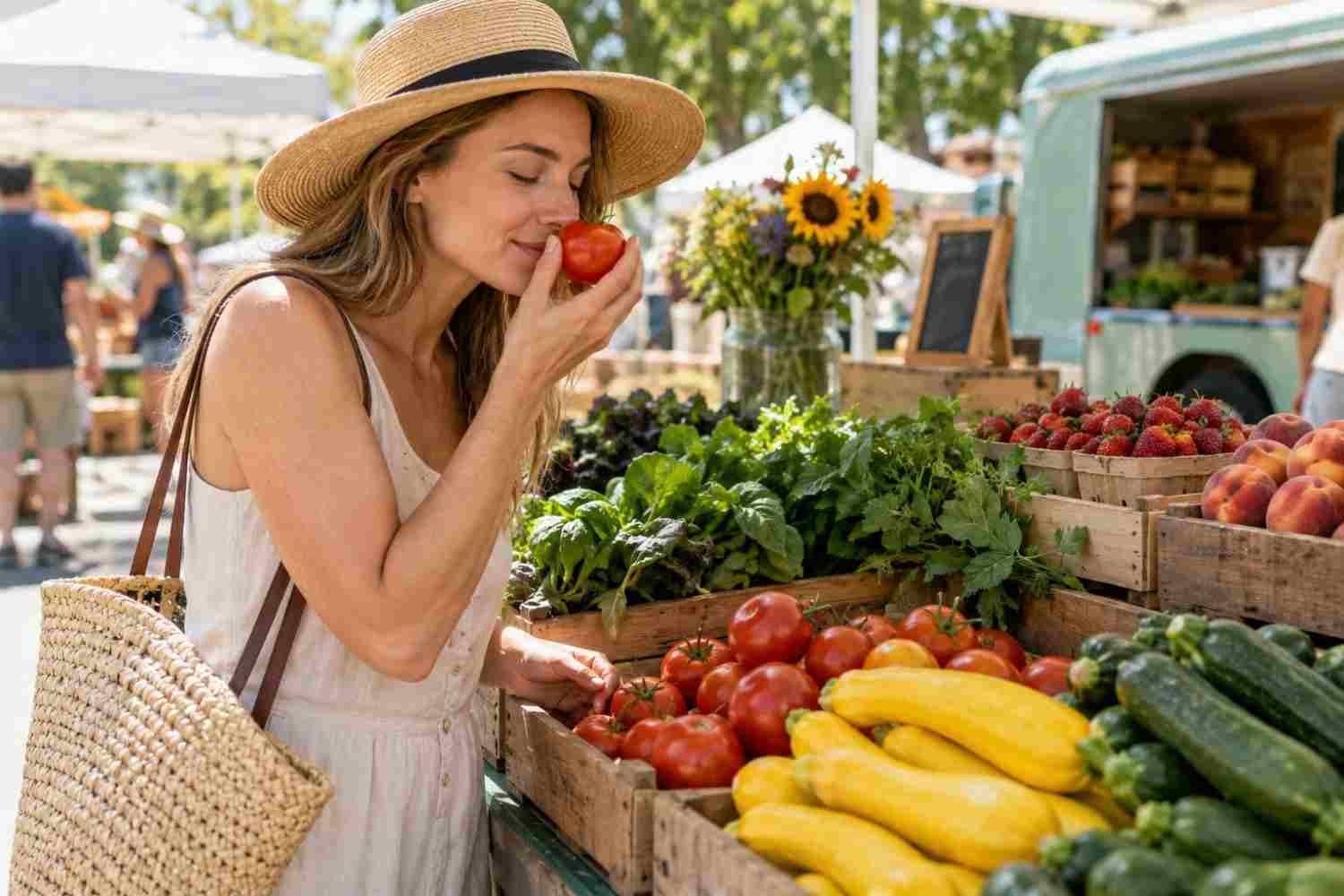
Color is a useful clue, especially with fruit. Peaches should have rich coloring without green areas, while cantaloupes often develop warmer golden tones beneath their netting as they ripen. The stem aroma is another useful sign.
Weight can tell you plenty. Watermelon, tomatoes, and zucchini should feel substantial for their size. That extra heft often suggests good moisture content. For corn, bright green husks and slightly sticky silks are better signs than dry, faded husks.
Texture matters, but ideal firmness depends on the food. A peach should yield slightly when pressed gently, while zucchini should remain firm and have glossy skin. Tomatoes should feel firm but not rock-hard, particularly if you want to eat them soon.
A Closer Look at Popular Summer Picks
Cantaloupe is easiest to judge by scent. Look for a sweet aroma and a golden cast beneath the netted skin. Avoid melons with soft spots or bruising.
Peaches should feel fragrant and have a little give. Very firm fruit may need more time at room temperature. For immediate eating, choose fruit that is already slightly soft but not mushy.
Watermelon should have a symmetrical shape and feel heavy for its size. A creamy or yellow field spot can be a useful ripeness clue. Skip melons with bruises, cuts, or unusually soft areas.
Sweet corn is best when the husks look fresh and green and the silks still look moist. Once home, cook it promptly if possible, because sweetness gradually declines after harvest.
Tomatoes should have strong color, a pleasant garden-like fragrance, and enough weight to feel juicy. Depending on the variety, some unevenness is perfectly fine.
Zucchini is best when small to medium, glossy, and firm. Oversized squash can become watery or develop tougher seeds and texture.
These choices pair especially well with other seasonal foods. A bowl of tomatoes, cucumbers, herbs, and spring vegetables can become a lunch, while grilled zucchini and corn can turn into a side without much preparation.
Think About What You Will Actually Eat
The smartest purchase is not necessarily the largest one. Before filling the cart, consider how many meals you can make over the next few days. Delicate berries and ripe peaches need more immediate attention than sturdier vegetables.
This is where seasonal ingredients become useful. Ripe tomatoes can improve sandwiches, pasta, or salads, while zucchini works in frittatas, stir-fries, or grilled platters. Buying around planned meals makes it easier to enjoy produce at its best instead of discovering forgotten vegetables at the back of the refrigerator.
Store Summer Produce With Some Intention
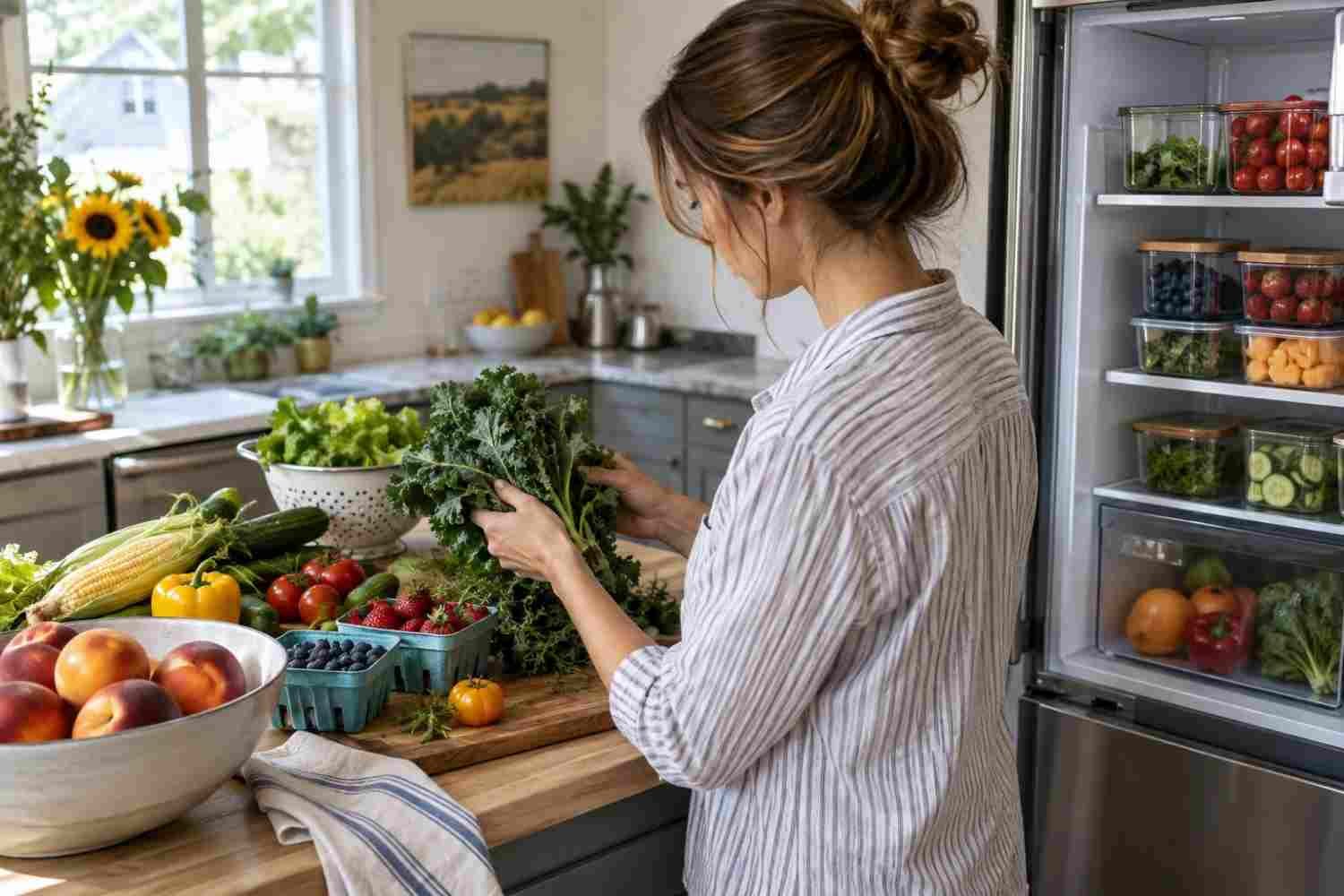
Storage can determine whether a purchase stays good. Some ripe fruits benefit from refrigeration once they reach the desired softness, while others are better left at room temperature until ripe. Tomatoes generally keep their best texture and flavor outside the refrigerator until they are fully ripe.
Keep delicate produce away from unnecessary moisture, and avoid washing everything immediately if you will not use it soon. For items that need refrigeration, airflow and a dry environment can help prevent premature spoilage.
Planning helps. If peaches are firm, give them time on the counter. If they are already fragrant and soft, move them to the refrigerator and eat them soon. Treat every item according to its stage of ripeness rather than following one storage rule for the whole kitchen.
Let the Season Shape the Meal
Summer produce does not need complicated recipes. Corn can be grilled with lime, tomatoes can become salad, zucchini can be charred, and peaches pair well with yogurt. Watermelon works in refreshing salads, while cantaloupe needs little more than a knife and a cold refrigerator.
Build meals around freshness rather than heavy preparation. When produce is flavorful, a little salt, acid, heat, or fresh herbs can be enough.
Why Better Shopping Makes Summer Taste Better
Choosing produce well changes what happens after you leave the market. Paying attention to aroma, weight, color, texture, and seasonality can mean fewer disappointing purchases and more ingredients that are ready when you need them. It also encourages a more flexible approach to cooking, because the best meal may begin with whatever looks good that day.
There is satisfaction in bringing home food that already has character. When summer produce is ripe and handled with care, cooking can become simpler, fresher, and far more enjoyable.
FAQs: A Practical Guide to Choosing the Best Summer Produce
1. How can you tell if summer produce is fresh?
Look for vibrant color, suitable firmness, clean skin, and a fresh aroma. Weight is another useful clue for foods such as melons, tomatoes, and squash.
2. Should summer fruit be refrigerated?
It depends on ripeness and the specific fruit. Firm peaches can ripen on the counter, while ripe peaches should be refrigerated if they will not be eaten soon.
3. What summer vegetables are easiest to use?
Tomatoes, corn, zucchini, cucumbers, and peppers are versatile choices. They work well in salads, grilled dishes, sandwiches, pasta, and simple sides.
4. Does local produce always taste better?
Not automatically, but locally grown produce may reach markets closer to harvest.