Surveys from the U.S. Department of Agriculture reveal that home cooks throw away roughly one-third of the fresh vegetables they buy due to rapid spoilage. Simmering those wilting aromatics into nourishment is the ultimate zero-waste kitchen strategy. Building a rotation of homemade soup recipes is not just an exercise in culinary comfort—it is a practical lesson in food chemistry, smart budgeting, and foundational technique.
Understanding how salt, acid, and heat transform simple ingredients allows you to bypass rigid formulas. Whether you want to clear out the crisper drawer or master classic velvet textures, learning a few fundamental building blocks unlocks endless variations at the stove.
The Core Mechanics of Simmering: Why Technique Beats Formulas
Every great pot of soup relies on extraction and concentration. When you sweat vegetables in fat, heat breaks down tough cellular walls, releasing sugars that lightly caramelize and form a flavor base.
Adding water or broth creates a solvent, drawing soluble proteins and aromatic compounds out of the solids and into the liquid. For another example of how technique can elevate simple ingredients, explore restaurant-style pasta.
Maintaining a gentle simmer around 185°F to 200°F is critical. High heat turns proteins tough, breaks delicate emulsions, and causes cloudy broth. Low heat extracts deep flavor without destroying the structural integrity of tender ingredients.
Salt management dictates the final profile. Sodium penetrates plant tissues during cooking, drawing out moisture and enhancing natural sweetness. Adding salt at the end of the cooking process leaves it sitting on the surface, producing a harsh, unbalanced bite.
3 Foundational Base Recipes to Build On
These three foundational soups give you flexible starting points for easy vegetarian recipes, whether you are using fresh vegetables, pantry staples, or ingredients that need to be used before they spoil.
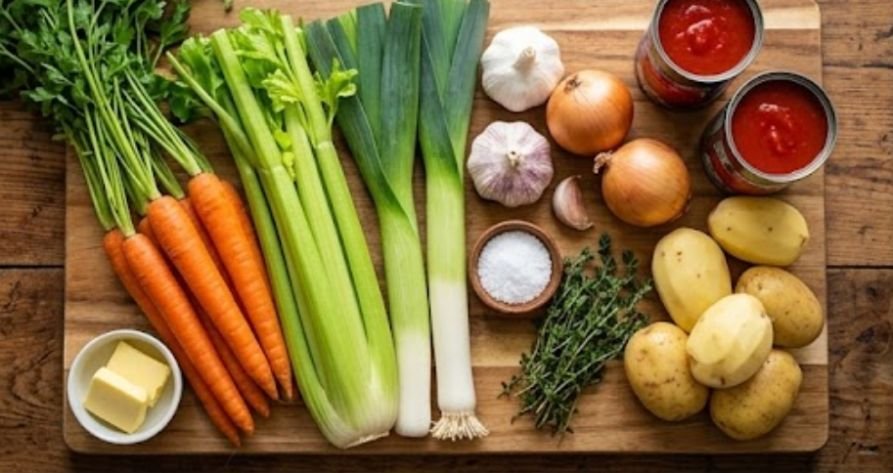
1. The High-Fiber Garden Broth
This lightweight, vegetable-forward recipe relies on a classic aromatic foundation—known in French cooking as mirepoix—to build a rich flavor base without heavy cream or long meat reductions.
- Prep Time: 15 minutes
- Cook Time: 20 minutes
- Yield: 4 servings
Ingredients:
- 1 large yellow onion, diced small
- 2 medium carrots, sliced into rounds
- 2 stalks celery, chopped
- 3 cloves garlic, minced
- 3 cups green cabbage, shredded
- 6 cups low-sodium vegetable stock
- 2 tbsp unsalted butter
- 1 tsp coarse kosher salt
- ½ tsp cracked black pepper
- Optional: 1 tbsp cornstarch mixed with 2 tbsp cold water (slurry)
Step-by-Step Method:
- Warm the butter in a heavy-bottomed Dutch oven over medium heat. Add the minced garlic and diced onions, stirring occasionally until translucent (about 3 minutes).
- Toss in the carrots, celery, and shredded cabbage. Cook for 2 to 3 minutes until the vegetables soften slightly and become fragrant.
- Pour in the stock, salt, and black pepper. Bring the liquid to a light boil, then immediately lower the burner to a gentle simmer.
- Cook uncovered for 15 minutes, or until the carrots are tender when pierced with a fork.
- Optional Thickening Step: Stir in the cold cornstarch slurry and simmer for 2 additional minutes until the broth takes on a glossy body. Serve hot.
2. Roasted Herb and Tomato Bisque
Tomatoes are rich in natural glutamates, which deliver deep savory flavor. Balancing their high natural acidity requires fat, heat control, and a touch of dairy.
- Prep Time: 10 minutes
- Cook Time: 30 minutes
- Yield: 4 servings
Ingredients:
- 1 medium yellow onion, chopped
- 3 cloves garlic, smashed
- 2 tbsp unsalted butter
- 1 can (28 oz) crushed tomatoes
- 2 cups low-sodium vegetable stock
- 3 sprigs fresh thyme
- ½ cup heavy cream
- Salt and black pepper to taste
Step-by-Step Method:
- Melt the butter over medium heat in a non-reactive stainless steel saucepan. Add the chopped onions and garlic, sweating them for 5 minutes until soft without browning.
- Pour in the crushed tomatoes, stock, and whole thyme sprigs.
- Reduce heat to low, cover the pot partially, and let it simmer gently for 30 minutes to meld the flavors.
- Remove the pan from the heat source and discard the woody thyme sprigs.
- Stir in the heavy cream. Use an immersion blender directly in the pot to process the mixture until silky smooth. Season with salt and pepper before serving.
3. Rustic Potato and Leek Velouté

Starchy potatoes function as a natural thickening agent, eliminating the need for flour-based roux or commercial thickeners while creating a luxurious texture.
- Prep Time: 20 minutes
- Cook Time: 35 minutes
- Yield: 6 servings
Ingredients:
- 3 large leeks (white and light green parts only), thoroughly washed and sliced
- 1 medium yellow onion, diced
- 3 tbsp unsalted butter
- 2 lbs Russet or Yukon Gold potatoes, peeled and cut into ½-inch cubes
- 4 cups low-sodium vegetable stock
- ⅓ cup heavy cream
- Sea salt and white pepper to taste
Step-by-Step Method:
- Melt the butter in a large soup pot over low heat. Add the sliced leeks and onions. Sweat gently for 10 minutes, ensuring they do not take on color.
- Add the cubed potatoes and pour in the stock, ensuring the vegetables are fully submerged.
- Raise the heat to bring the stock to a simmer, then drop to low, cover, and cook for 15 to 20 minutes until the potato cubes fall apart under a fork.
- Off the heat, pass a slotted spoon through the pot to transfer half the cooked potatoes into a bowl. Mash them coarsely with a fork, then return them to the pot.
- Finish by stirring in the heavy cream and seasoning with sea salt and white pepper.
Comparing Soup Categories: Texture, Shelf Life, and Techniques
Selecting the right technique depends on your available time, ingredients, and storage goals.
| Soup Type | Primary Thickening Agent | Active Prep Time | Stovetop Cooking Time | Reheating & Freezing Stability |
| Clear Broth & Vegetable | Reduction or optional starch slurry | 10–15 Minutes | 15–20 Minutes | Freezes exceptionally well up to 3 months; vegetables retain texture. |
| Emulsified Puree (Tomato/Herb) | Blended solids plus heavy cream | 10–15 Minutes | 30 Minutes | Freezes well before adding dairy; cream may separate if frozen and thawed. |
| Starch-Based Puree (Potato/Root) | Gelatinized plant starches | 20 Minutes | 35 Minutes | Best consumed within 4 days; high-starch purées can turn grainy when frozen. |
Kitchen Safety, Storage, and Common Misconceptions

Navigating food safety guidelines from the U.S. Food and Drug Administration is essential when storing large batches of home-cooked food.
- The Cooling Danger Zone: Leaving a deep pot of hot liquid on the counter to cool slowly allows bacteria to multiply rapidly between 40°F and 140°F. Divide hot liquid into shallow, wide containers so it cools quickly before refrigeration.
- Freezing Dairy: Soups containing heavy cream or milk often split when thawed. To prevent curdling, freeze your soup base without dairy, then stir in cream after reheating.
- Over-Blending Starches: Using a high-speed blender on potato-heavy soups ruptures plant cell walls, releasing excess starch that turns the liquid gummy. Use a hand-masher or food mill for high-starch root vegetables.
- Rescuing Over-Salted Broth: Adding a raw potato to absorb excess sodium is a persistent kitchen myth. The most reliable fix is simply diluting the pot with unsalted stock or water.
Frequently Asked Questions
1. How long can I keep homemade soup in the refrigerator?
According to guidelines from FoodSafety.gov, store cooked soups in sealed containers for three to four days. Freeze larger portions if you need long-term storage.
2. Can I substitute dried herbs for fresh herbs?
Yes. Dried herbs are more concentrated than fresh ones. Use one teaspoon of dried herbs for every tablespoon of fresh herbs called for in a recipe.
3. How do I fix a broth that tastes flat or bland?
Add a splash of acid, such as fresh lemon juice or apple cider vinegar. Acid brightens muted flavors instantly without requiring extra salt.
Mastering the Stovetop
Reclaiming control over your kitchen begins with a simple pot of water, fresh vegetables, and gentle heat. Moving past strict, step-by-step formulas allows you to convert everyday staples into flavorful meals while reducing home food waste.
Building delicious homemade soup recipes comes down to controlling basic variables: sweat aromatics slowly, simmer gently, balance acidity, and season at every stage. Once you master these basic principles, any combination of ingredients in your refrigerator can become a satisfying meal.