

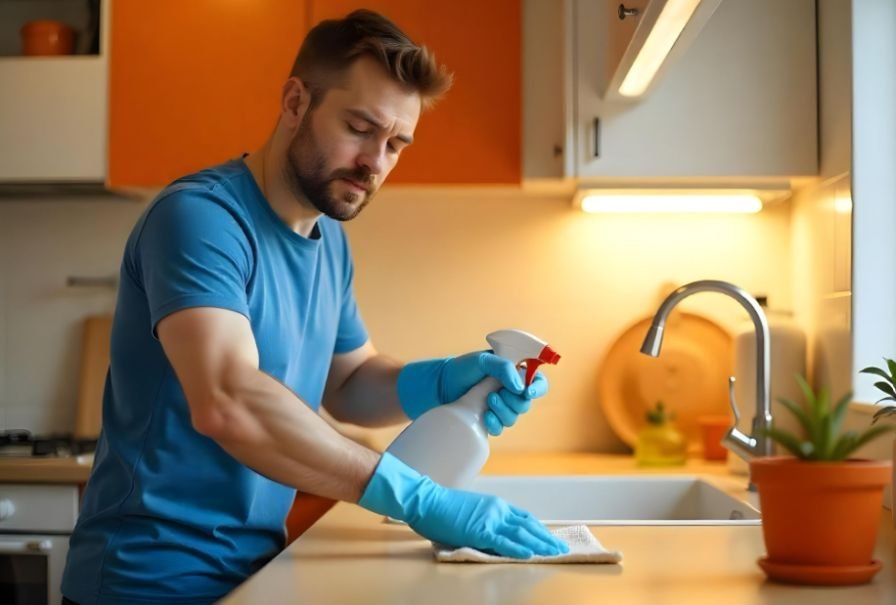
A spotless kitchen does not require hours of scrubbing. I get better results by cleaning from top to bottom, handling spills quickly, and using DIY methods only when they are safe for the surface. These kitchen cleaning tips combine appliance care, grease removal, sink maintenance, and smart daily habits for an American home.
What Is the Best Order for Cleaning a Kitchen?
I start high and finish low. I clear clutter and wipe upper cabinet fronts, shelves, and the range hood before moving to countertops, appliances, the sink, and finally the floor. That way, crumbs and grease do not fall onto areas I already cleaned.
Dish soap, microfiber cloths, baking soda, white vinegar, and lemons can be useful, but they are not safe for every material. I check manufacturer guidance before using acidic or abrasive products on stone, quartz, stainless steel, nonstick coatings, or specialty finishes.
How Can You Clean Kitchen Appliances Faster?
How Do You Steam-Clean a Microwave?
For dried microwave splatter, I place a microwave-safe bowl of water with lemon slices inside and heat it for three to five minutes. After the steam loosens residue, I wipe the interior with a microfiber cloth. Covering food before reheating helps prevent the mess.
Covering food also helps leftovers stay fresher and reduces the chance of food being forgotten or discarded. Simple ways to reduce food waste can make kitchen routines more efficient while helping you get more value from the groceries you already buy.
How Should You Degrease an Air Fryer?
Once the basket cools, I wash it with hot water and dish soap. If the manual allows it, a small amount of baking soda can help loosen stubborn grease. I use a soft brush or toothbrush so I do not scratch the nonstick coating, and I never immerse the electrical base.
How Do You Freshen a Refrigerator and Descale a Kettle?
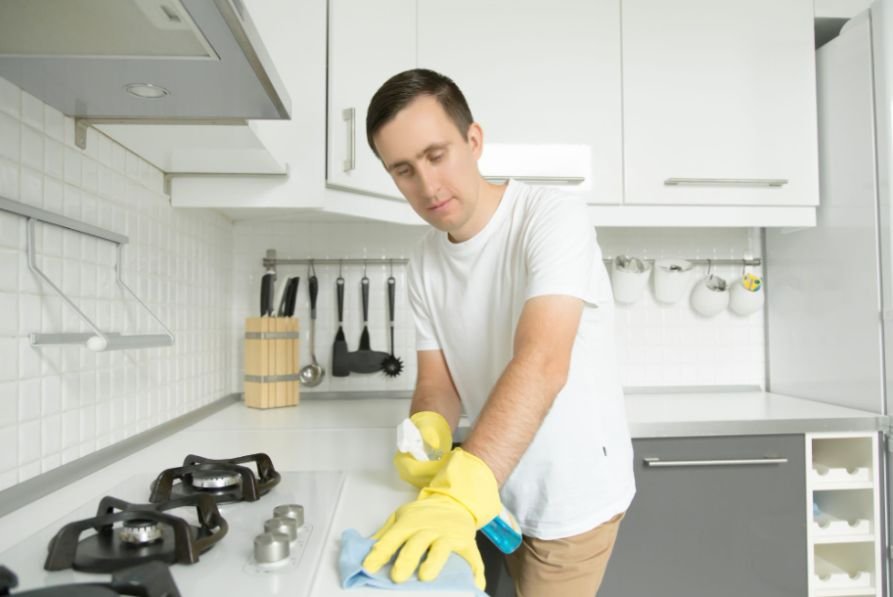
Before grocery shopping, I remove expired food and crumbs, then wipe the refrigerator with a compatible mild cleaner.
Regular refrigerator checks also make it easier to spot ingredients that need to be used soon. Learning how to keep food fresh longer can help extend the useful life of produce, leftovers, and other everyday groceries.
Where permitted, cleaning with vinegar diluted in water with a drop of dish soap can work, while an open box of baking soda can help absorb food odors.
For the kettle scale, I boil water with lemon slices, let it cool, and rinse thoroughly if the maker allows it.
How Do You Remove Grease and Tough Countertop Stains?
On a cooled stovetop, I start with dish soap and water. For compatible surfaces, a paste of baking soda, a few drops of dish soap, and water can help soften greasy buildup before wiping.
Turmeric can leave visible marks on white or pale countertops. Some DIY guides suggest applying plain white toothpaste for about 15 minutes, then rinsing with dish soap. I use this only as a spot treatment after testing it and checking the countertop maker’s instructions, especially with quartz or natural stone.
For stainless steel, I prefer a microfiber cloth. A one-part vinegar to two-parts water solution can help with fingerprints on compatible finishes. On a dry stainless-steel sink, a very light dusting of flour can also be buffed away as an optional finishing trick for extra shine.
How Do You Clean a Sink, Drain, and Faucet?

After dishes, I give the sink a quick reset. On compatible sink materials, baking soda works as a mild abrasive, so I sprinkle a little into the basin, scrub gently from top to bottom, and rinse well.
To freshen a drain, I sometimes use baking soda followed by lemon juice. The fizz may help with light residue and odors, but I do not rely on it for a serious clog.
For hard-water scale around a faucet head, a small bag of white vinegar secured around the aerator can soften deposits during a short soak. I rinse afterward and avoid this method on acid-sensitive finishes.
What Daily Habits Keep a Kitchen Cleaner?
I wash pots, pans, and utensils while food cooks, cover food in the microwave, use a splatter guard when frying, wipe spills while they are fresh, and keep counters uncluttered.
I also separate cleaning tools. Cutting a tiny corner off the sponge reserved for heavy grime makes it easy to distinguish from the dishwashing sponge. I replace worn or smelly sponges instead of spreading old residue.
How Often Should You Deep Clean a Kitchen?
Daily cleaning should cover dishes, counters, obvious stovetop splashes, the sink, and visible crumbs. Weekly, I clean appliance exteriors, backsplash areas, cabinet handles, switches, floors, and spaces around countertop appliances.
Monthly or as needed, I inspect the oven, refrigerator drawers, pantry shelves, range-hood filter, dishwasher filter, trash can, baseboards, and areas beneath movable appliances. Breaking these chores into a schedule keeps deep cleaning manageable.
What Kitchen Cleaning Mistakes Should You Avoid?
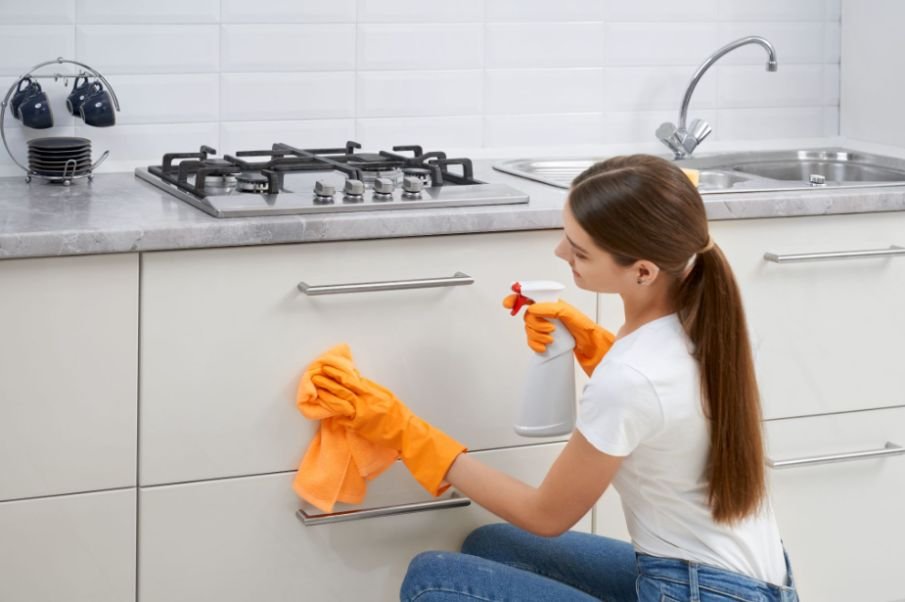
The biggest mistake is treating every surface the same. Vinegar can damage some stone, abrasive powders can mark delicate finishes, and aggressive scrubbing can harm nonstick coatings.
I also avoid mixing bleach with cleaners, especially ammonia-based or acidic products such as vinegar, because dangerous gases can form. And I do not postpone fresh spills; a two-minute cleanup now can save much more work later.
Frequently Asked Questions
1. What are the easiest kitchen cleaning tips for busy households?
Start with a 10-minute nightly reset. Wash or load dishes, wipe counters, clean stovetop spills, rinse the sink, put food away, and sweep crumbs.
2. Can I Use Vinegar on Every Kitchen Surface?
No. Vinegar is acidic and may damage certain natural stone, specialty finishes, or appliance coatings. Check the manufacturer’s care instructions first.
3. How Can I Make My Kitchen Smell Fresher Naturally?
Remove food waste promptly, clean the sink and drain, check the refrigerator for spoiled food, wash the trash can when needed, and use baking soda in the refrigerator to absorb odors.
Final Thoughts
I have found that consistency matters more than aggressive scrubbing. Cleaning from top to bottom, controlling splatter, washing as I cook, and following a simple schedule keeps grease manageable. I also match DIY cleaners to the surface instead of assuming “natural” always means safe. That keeps the kitchen easier to maintain while protecting its finishes and appliances.