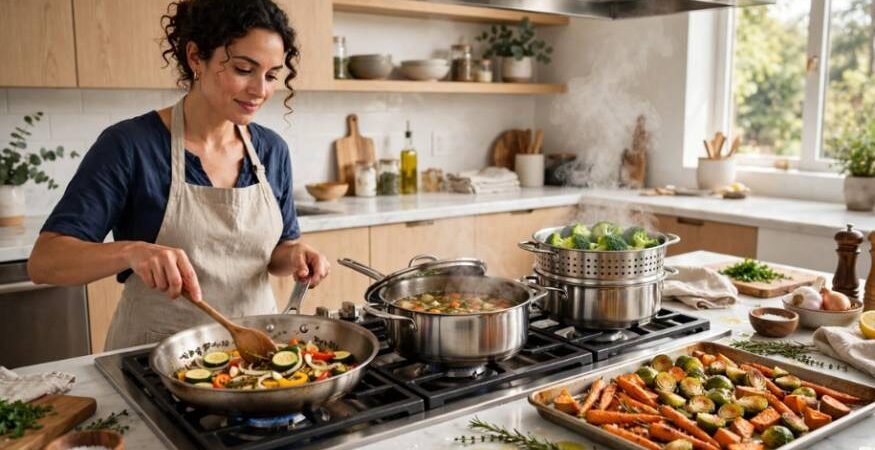
When my meals began tasting consistently good, it was not because I collected more recipes. I learned how heat, moisture, and timing change food. Mastering basic cooking techniques gives you that same control, from browning chicken to keeping vegetables crisp.
Most cooking methods fall into three groups: dry heat, moist heat, and combination cooking. Once you understand those groups, recipes become easier to interpret and adjust.
Start With Preparation, Not Heat
Organize Your Ingredients
I prepare every ingredient before heating the pan. This practice is called mise en place, meaning “everything in its place.”
Measure seasonings, chop vegetables, and open containers in advance. Keep raw meat separate from ready-to-eat ingredients. The FDA recommends washing hands for at least 20 seconds and using separate cutting surfaces for produce and raw meat.
Preparation matters because many basic cooking techniques move quickly. A hot pan will not wait while you search for garlic.
Cut and Dry Food Correctly
Uniform pieces finish cooking at roughly the same time. If carrot chunks vary widely, smaller pieces soften before larger ones become tender.
Surface moisture also changes results. I pat meat, tofu, and rinsed vegetables dry before searing. Water must evaporate before browning begins. Too much moisture cools the pan and creates steam.
For more foundational knife and preparation advice, see these cooking techniques for beginners.
Dry-Heat Cooking Methods for Browning
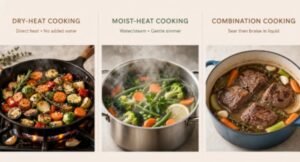
Dry-heat methods use a hot pan, oven, grill, or cooking fat. They work well when you want crisp edges, concentrated flavor, and a browned exterior.
Sautéing and Stir-Frying
Sautéing cooks small pieces in a thin layer of fat over medium-high heat. Heat the pan first, add oil, and then add food without overcrowding it.
Stir-frying uses higher heat and near-constant movement. Prepare every ingredient before starting. Add dense vegetables first and delicate ingredients later.
These basic cooking techniques work best with food cut into even, bite-sized pieces. If the pan becomes watery, cook in smaller batches.
Searing
Searing creates a deeply browned surface on meat, fish, mushrooms, or tofu. Preheat the pan, dry the ingredient, and leave it undisturbed until it releases easily.
Searing does not “seal in” juices. Its main purpose is building flavor and texture. After forming the crust, reduce the heat or transfer the pan to an oven.
Roasting and Baking
Both methods surround food with dry oven heat. Roasting commonly describes meats and vegetables. Baking usually refers to breads, cakes, casseroles, and other structured dishes.
Spread vegetables in one layer and leave space between pieces. Crowded vegetables trap vapor and soften instead of roasting. As a useful benchmark, halved Brussels sprouts can roast at 400°F for about 18–25 minutes, depending on size.
Moist-Heat Cooking Methods for Gentle Results
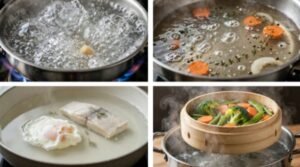
Moist-heat methods transfer energy through water, stock, sauce, or steam. They suit delicate foods and dishes where browning is not the main goal.
Boiling and Simmering
Boiling produces large, vigorous bubbles at about 212°F at sea level. Use it for pasta, potatoes, and other sturdy ingredients.
A simmer stays below boiling, usually around 180–200°F. Small bubbles rise gently. I use simmering for soups and sauces because it develops flavor without breaking ingredients apart.
Knowing the difference is central to basic cooking techniques. A hard boil can make meat tough, cloud stock, and reduce sauces too fast.
Steaming and Poaching
Steaming cooks food with vapor above hot water. Keep the food out of the liquid and cover the pot. It works especially well for vegetables, dumplings, and fish.
Poaching uses calm liquid at roughly 160–180°F. The surface should barely move. This gentle method protects eggs, fish, and fruit.
Steaming may preserve more nutrients in vegetables than boiling because it reduces cooking time and contact with water.
Combination Methods for Tough Ingredients
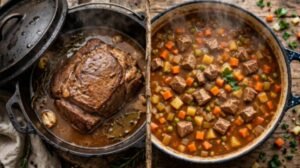
Combination cooking begins with dry heat and finishes with moist heat. These basic cooking techniques turn firm vegetables and connective-tissue-rich meat into tender dishes.
Braising
Braising starts by browning a large piece of food. Add enough liquid to reach partway up its sides, cover the pot, and cook slowly.
The initial sear builds flavor. Low, moist heat then softens the ingredient. Pot roast, short ribs, cabbage, and large beans respond well to this method.
Stewing
Stewing follows the same principle, but ingredients are cut into smaller pieces and usually sit beneath the liquid. Uniform cuts encourage even cooking.
Keep the liquid at a gentle simmer. Vigorous boiling can toughen meat before its connective tissue has time to soften.
A Technique Selection Table
| Method | Heat environment | Best for | Visual cue |
| Sauté | Dry heat with fat | Sliced vegetables, small proteins | Light browning and active sizzling |
| Sear | Intense dry heat | Steaks, tofu, mushrooms | Dark crust releases from pan |
| Roast | Dry oven heat | Meat and vegetables | Brown exterior, tender center |
| Simmer | Gentle liquid heat | Soup, beans, sauces | Small, occasional bubbles |
| Steam | Hot vapor | Vegetables, fish, dumplings | Tender texture and vivid color |
| Poach | Low liquid heat | Eggs, fish, fruit | Nearly still liquid |
| Braise | Dry then moist heat | Large, tough ingredients | Fork-tender result |
| Stew | Dry then moist heat | Small uniform pieces | Thickened liquid and tender pieces |
My Heat-and-Moisture Test
I use mushrooms to demonstrate why technique matters. Place half in a wide, preheated skillet and half in a crowded, lukewarm pan.
The first batch sizzles and browns. The crowded batch releases water and turns pale. The ingredients are identical; heat concentration and evaporation produce different results.
This simple test provides a useful rule: when food refuses to brown, check surface moisture, pan temperature, and spacing before adding more oil. That diagnostic habit makes basic cooking techniques easier to apply across many recipes.
Food Safety Temperatures
Cooking skill must include temperature control. Color alone cannot confirm that meat is safe, so I check the thickest section with a food thermometer. The USDA publishes these minimum temperatures.
| Food | Minimum internal temperature |
| Beef, pork, veal and lamb steaks or roasts | 145°F, plus a 3-minute rest |
| Fish and shellfish | 145°F |
| Ground meat | 160°F |
| Poultry | 165°F |
| Casseroles and leftovers | 165°F |
Common Technique Mistakes
The most common error I see is treating every food with the same heat. High heat supports fast browning, but it can burn thick foods before their centers cook.
Other problems include using a cold pan, crowding ingredients, stirring before a crust forms, and boiling dishes meant to simmer. Poor seasoning timing also creates flat results. Taste at safe stages and adjust gradually.
Do not rely on elapsed time alone. Use sight, smell, texture, temperature, and sound. These signals make basic cooking techniques adaptable to different pans, burners, and ingredient sizes.
Frequently Asked Questions
1. What basic cooking techniques should a beginner learn first?
Start with sautéing, roasting, simmering, steaming, and safe thermometer use.
2. What is the difference between sautéing and frying?
Sautéing uses little fat and quick movement; frying uses more fat and usually longer contact.
3. Should I preheat a pan before adding food?
Usually, yes; preheating supports even cooking and browning, though some delicate foods require a cold start.
4. Is simmering better than boiling for soup?
Yes. A gentle simmer blends flavors while protecting meat, vegetables, and the clarity of the broth.
Stop Collecting Recipes—Start Controlling Heat
Learning basic cooking techniques changed how I use recipes. I now see them as flexible instructions rather than rigid scripts. If food looks pale, I reduce moisture. If it browns too quickly, I lower the heat. If it remains tough, I give it more time at a gentle temperature.
Choose one method this week and repeat it with two ingredients. Quick dinner ideas can help you practice these techniques without spending hours planning a meal. Roast broccoli and potatoes, or sauté mushrooms and zucchini. Repetition trains your senses faster than reading another dozen recipes.