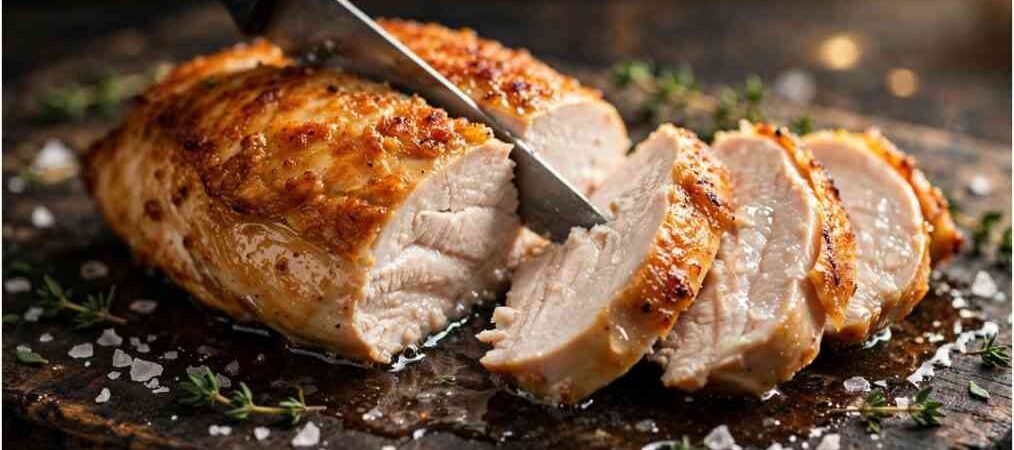
Dry, fibrous poultry happens when cooks rely on arbitrary timers instead of thermal science. Knowing how to cook chicken properly requires managing surface moisture, matching cut types to target temperatures, and respecting carryover heat.
I ruined dozens of chicken breasts over the years by cooking them until they turned chalky white. The minute I switched to internal temperature tracking and stopped treating every cut identically, dry chicken vanished from my kitchen forever.
Step 1: Prep and Sanitize Without Spreading Bacteria
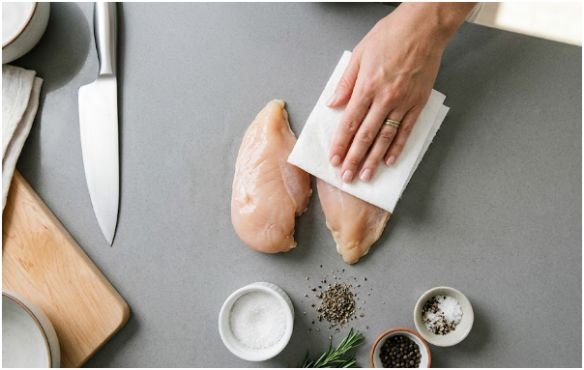
Great texture starts on your prep board long before a skillet touches a burner.
Skip the Kitchen Sink Rinse
Never rinse raw poultry under a faucet. The CDC Food Safety Guidelines warn that washing chicken sprays aerosolized droplets of Salmonella and Campylobacter up to three feet across countertops and dishes. Cooking heat kills surface bacteria entirely; water only contaminates your work area.
Surface Moisture and Seasoning
Moisture is the primary enemy of a deep brown crust. Blot the meat on all sides using paper towels until bone dry. Season the surface with kosher salt directly out of the refrigerator. Cold meat takes on heat just as effectively as room-temperature meat, but skipping the counter rest keeps you safe from foodborne hazards.
Step 2: Match Your Cut to the Right Internal Temperature
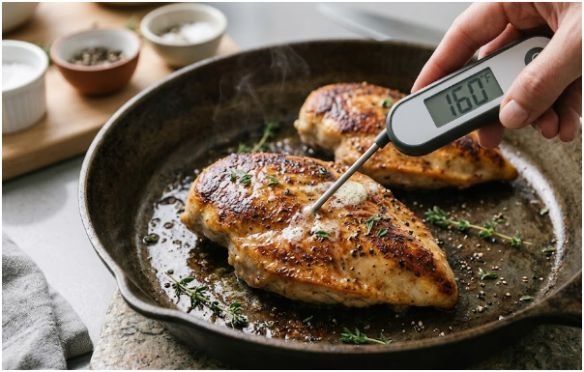
A single target temperature does not work for every piece of poultry. White meat and dark meat possess distinct muscle structures.
Why Dark Meat Demands Higher Heat
Chicken breasts are lean and turn stringy if pushed past their limit. Thighs, drumsticks, and wings contain dense collagen and connective tissues. While the USDA Food Safety and Inspection Service sets the baseline safety threshold at 165°F (74°C), dark meat tastes rubbery at that exact point. Push dark cuts to 175°F–180°F (79°C–82°C) so the collagen melts into unctuous gelatin.
Leveraging Carryover Cooking on White Meat
For boneless chicken breasts, remove them from the pan as soon as an instant-read probe hits 158°F–160°F (70°C–71°C). Residual heat continues warming the interior during the resting phase, effortlessly pushing the core past 165°F.
According to FDA Food Code Guidelines, pasteurization is a function of time and heat together. Chicken held at 158°F for 25 seconds achieves the exact same bacterial reduction as chicken brought to 165°F instantaneously, but it preserves vastly more juice.
Step 3: Choose and Execute Your Cooking Method
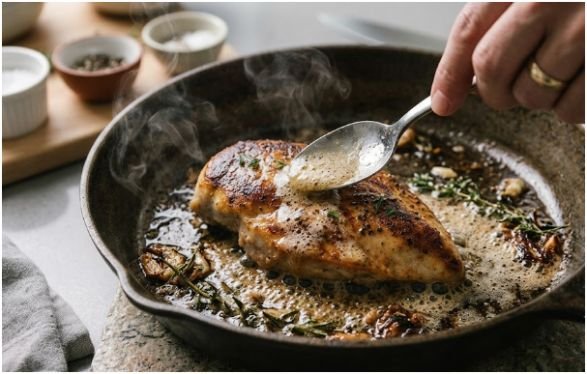
Pick an approach based on the specific cut in your fridge.
The High-Heat Stovetop Pan-Sear
This technique yields optimal results for boneless breasts and skinless thighs.
- Heat one tablespoon of high-smoke-point oil in a heavy stainless or cast-iron skillet over medium-high heat until shimmering.
- Place the seasoned chicken into the pan facing away from you to prevent hot oil splatters.
- Leave the meat undisturbed for five minutes so a deep, golden crust develops.
- Flip the chicken, drop the burner to medium, and toss in butter, smashed garlic, and fresh thyme.
- Baste the foaming butter over the surface for four to five minutes until an instant-read thermometer reads 160°F for breasts or 175°F for thighs.
- Transfer the meat to a warm plate, leaving the flavored fat in the skillet to sauté vegetables for a balanced side dish.
The Even-Heat Oven Roast
Whole birds and bone-in pieces require indirect convection heat to render underlying fat while crisping skin.
- Set your oven rack to the center position and preheat to 400°F (204°C).
- Rub softened butter or olive oil over the skin, seasoning with salt, black pepper, and poultry herbs.
- Position the chicken on an elevated wire rack inside a rimmed sheet pan to allow air circulation underneath.
- Slide a sheet pan on the bottom rack below the chicken to roast vegetables in the rendered drippings.
- Roast a whole bird for roughly 20 minutes per pound, pulling it when the thickest part of the inner thigh reads 165°F–170°F.
The Low-Temperature Poach
Poaching gently yields soft, clean-tasting chicken breasts ideal for shredding, salads, and grain bowls.
- Place raw breasts into a wide saucepan and cover with cool stock, smashed garlic cloves, peppercorns, and lemon peel.
- Bring the broth to a gentle simmer over medium heat until faint bubbles emerge around the rim.
- Cover the pot with a snug lid and immediately turn off the burner.
- Allow the chicken to steep undisturbed in the hot broth for 12 to 15 minutes.
- Check that the internal core has surpassed 160°F before taking the meat out of the liquid.
Step 4: Rest and Carve for Maximum Moisture
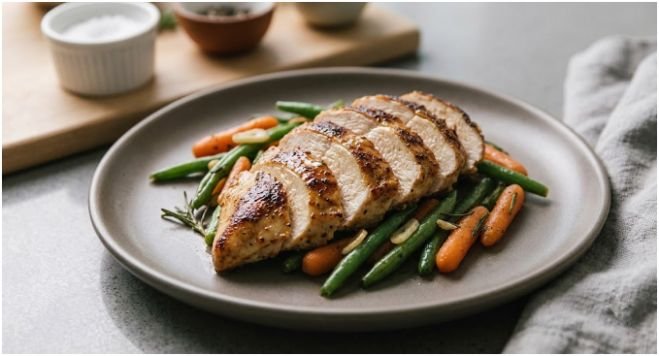
Slicing warm chicken immediately causes internal juices to purge directly onto your cutting board. During cooking, protein fibers tighten and push liquid toward the exterior. Resting allows those fibers to relax, redistributing the moisture evenly throughout the meat.
Give individual pan-seared cutlets five to seven minutes of rest. Allow whole birds and large bone-in roasts 15 to 20 minutes before carving. Always slice against the grain of the meat fibers to guarantee a tender bite.
Frequently Asked Questions
1. Can safely cooked chicken still look slightly pink near the bone?
Yes, hemoglobin in bone marrow frequently discolors adjacent meat even after exceeding safe internal temperatures.
2. What is the best oil for high-heat searing?
Neutral oils with high smoke points, such as avocado, grapeseed, or canola oil, prevent acrid burning during skillet searing.
3. Why do chicken breasts turn rubbery in a slow cooker?
Lean breast tissue lacks collagen, meaning hours of low braising squeezes out bound moisture and tightens muscle proteins.
4. How do I check doneness without a digital thermometer?
Pierce the deepest point of the meat; the juices should run completely clear with zero pink tint, though an instant-read thermometer is far more reliable.
Ditch the Rubber Chicken: Your Next Kitchen Step
You no longer need to sacrifice texture for safety. Grab an instant-read digital probe thermometer, ditch the pre-wash habit, and start pulling white meat earlier to let carryover cooking work in your favor. Head to your kitchen, prep your skillet, and make your next chicken dinner the juiciest one yet.