
I used to think seasonal cooking meant keeping a strict calendar in my head and changing everything on my plate every few months. Then I started paying closer attention to what looked best at the grocery store and farmers’ market. Tomatoes became sweeter, peaches more fragrant, and winter squash suddenly seemed worth bringing home. Meal planning felt easier when I started with ingredients instead of a recipe.
I noticed seasonal recipes rarely need much fuss to taste memorable. A ripe tomato can carry a salad, fresh corn can turn into dinner with a few pantry staples, and roasted squash can make an ordinary evening meal feel comforting. You do not need a perfect farm-to-table routine. You simply need to notice what is abundant and let it influence what you cook.
Why Seasonal Ingredients Make Better Starting Points
Seasonal produce is generally harvested when its flavor and quality are strongest, although exact availability varies by region and growing conditions. Fresh, frozen, canned, and dried produce can all fit into a seasonal approach, making the idea much more practical than it may sound.
Produce also gives meals a natural direction. Crisp vegetables invite salads and quick sautés, while dense roots and squash work beautifully with roasting, soups, and braises. Choose one standout item and build around it with grains, beans, eggs, meat, cheese, herbs, or pantry staples.
Spring Seasonal Recipes Feel Bright and Fresh
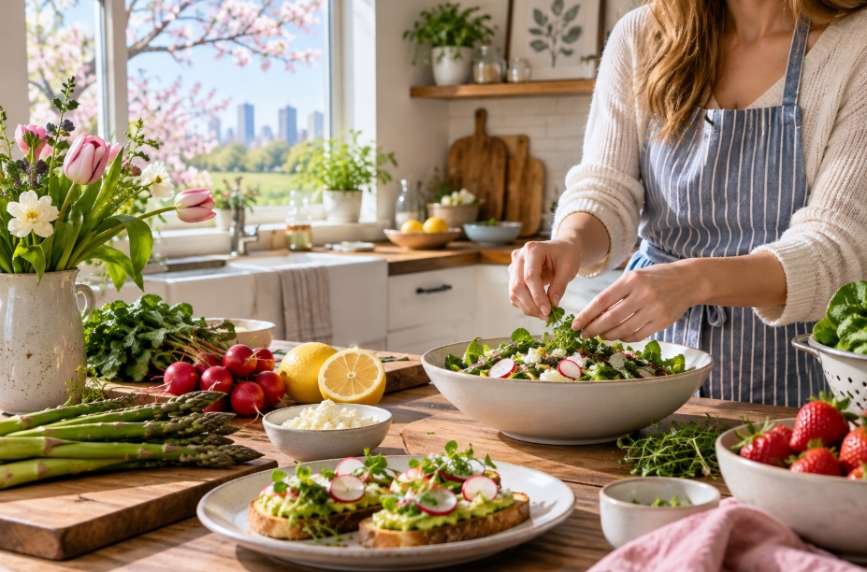
Spring is a good time for meals that lean crisp, green, and lightly seasoned. Asparagus, peas, radishes, spinach, rhubarb, strawberries, and fresh herbs can bring plenty of character without heavy sauces.
A spring dinner might pair roasted asparagus with lemony chicken and farro. Peas can become pasta sauce, while radishes add crunch to tacos, grain bowls, or salads. Strawberries do not have to end up in dessert either. Sliced berries with greens, goat cheese, nuts, and a sharp vinaigrette make an easy lunch.
The trick is restraint. When produce is fresh, too many competing flavors can hide its character.
Summer Is Built for Simple Seasonal Meals
Summer seasonal recipes can be almost effortless. Tomatoes, corn, cucumbers, zucchini, eggplant, peppers, melons, peaches, berries, and herbs give home cooks plenty to work with. Many are excellent raw, grilled, or quickly sautéed, so long cooking is rarely necessary.
A watermelon, feta, and mint salad shows seasonal balance. Sweet fruit, salty cheese, herbs, and citrus create contrast without a complicated recipe. Corn can be grilled and folded into a salad with tomatoes and beans, while zucchini can become a quick skillet side or a sheet-pan dinner component.
Shallots can also add a mild, slightly sweet allium flavour to summer salads, grilled vegetables, and quick skillet dishes. If you’re deciding between shallots and onions, understanding how their flavour, texture, and cooking time differ can help you choose the better option for the dish.
Summer also rewards flexible meals. Grilled vegetables can appear in tacos one night, alongside chicken the next, and over grains for lunch. That overlap saves time and prevents good produce from sitting forgotten in the refrigerator.
Fall Brings Deeper Flavors
When temperatures drop, seasonal cooking shifts toward roasting, baking, simmering, and warm meals. Apples, pears, pumpkin, winter squash, sweet potatoes, Brussels sprouts, kale, mushrooms, and root vegetables become useful building blocks.
Roasted vegetables are an easy starting point. Toss squash, onions, and carrots with oil and spices, then serve them with beans, rice, or roasted chicken. A roasted vegetable chili combines produce with beans, tomatoes, smoked paprika, and chili powder.
Fall is also a useful season for mixing sweet and savory flavors. Apples can brighten a slaw or accompany pork, while roasted pears can work with greens and cheese. These combinations make familiar ingredients feel less predictable without elaborate techniques.
Winter Recipes Can Still Taste Fresh
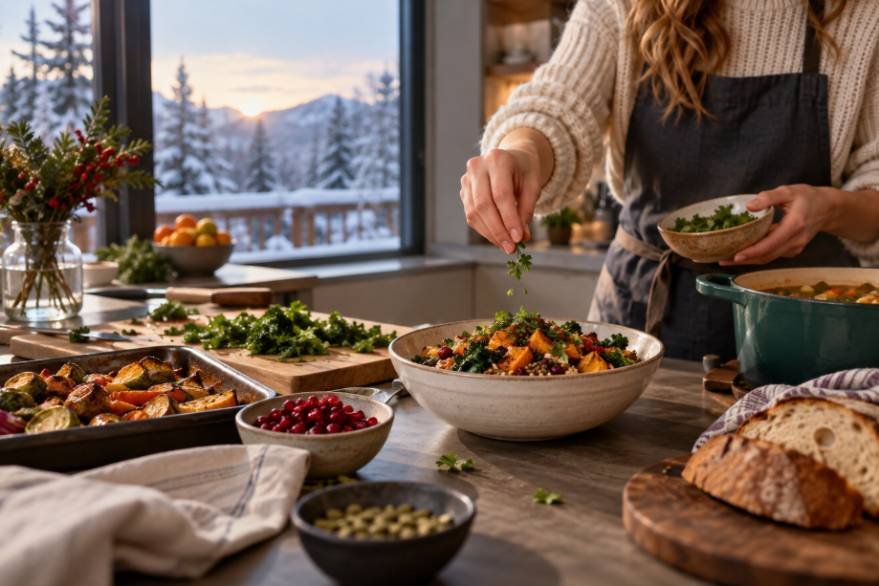
Winter gets associated with heavy comfort food, but seasonal recipes can remain bright. Cabbage, kale, Brussels sprouts, carrots, parsnips, potatoes, beets, citrus, and hearty greens offer plenty of possibilities.
Soups and stews are obvious choices because they make tough or dense vegetables tender while allowing inexpensive pantry ingredients to do more work. Bean and cabbage soup can become a meal with crusty bread. Roasted carrots with citrus and herbs can bring freshness to a dinner built around grains or chicken.
Frozen vegetables, canned tomatoes, dried beans, and preserved foods belong here. Seasonal cooking is about making smart use of what is flavorful, available, practical, and affordable.
How to Make Seasonal Cooking Work Every Week
The easiest approach is to shop flexibly. Pick two or three seasonal ingredients you like, then decide how they can appear across several meals. Check local availability because seasons differ between regions.
A few habits make the system easier:
- Buy ingredients that can serve more than one purpose.
- Keep versatile pantry staples for cooking such as grains, beans, pasta, canned tomatoes, and spices.
- Use substitutions when a recipe calls for something unavailable or expensive.
- Freeze, pickle, roast, or preserve excess produce before it goes bad.
This approach can reduce food waste. If you buy a large bunch of herbs, use some for dinner and blend the rest into a sauce. Extra tomatoes can become salsa, pasta sauce, or soup. The goal is getting more meals from ingredients already in your kitchen.
Frequently Asked Questions
1. What are seasonal recipes?
Seasonal recipes are meals built around fruits, vegetables, herbs, and other ingredients that are naturally available during a particular time of year. Availability varies by region.
2. Are seasonal recipes healthier?
They can make it easier to eat a wider variety of fruits and vegetables. However, a recipe’s overall nutritional value depends on its ingredients and preparation.
3. Can I make seasonal recipes with frozen produce?
Absolutely. Frozen fruits and vegetables can be practical alternatives when fresh options are unavailable, expensive, or out of season.
4. How do I find seasonal ingredients?
Check local farmers markets, grocery-store produce sections, community agriculture programs, and regional seasonal produce guides. Local availability is the best indicator.
The Habit That Makes Seasonal Cooking Last
The real value of seasonal cooking is not following a perfect four-season menu. It is learning to pay attention. When you notice what is abundant, you naturally discover new combinations, waste less food, and stop relying so heavily on recipes that demand one exact set of ingredients. A good seasonal kitchen has room for substitutions, leftovers, pantry staples, and the occasional impulse purchase that simply looks too good to ignore.
Over time, the seasons become a quiet source of inspiration. What is available tells you what might be worth cooking next.