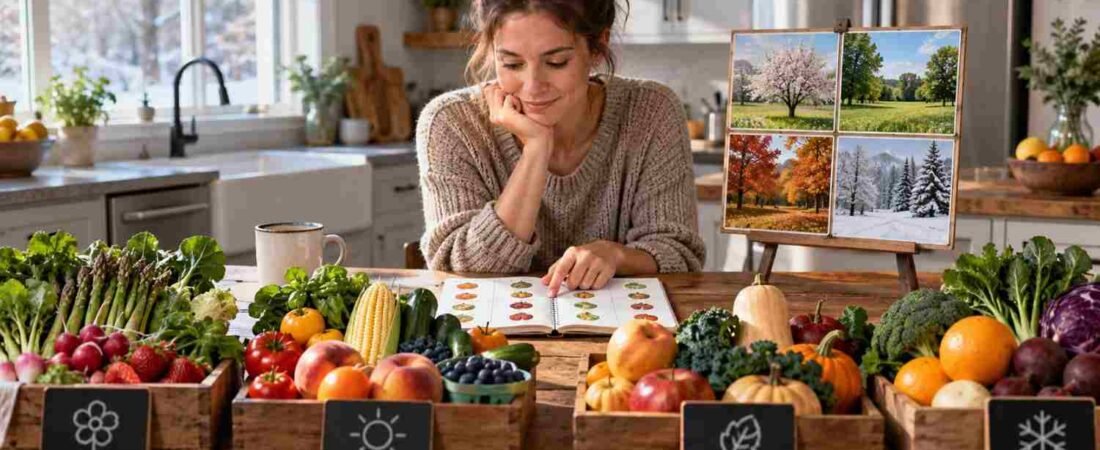
I used to treat the produce aisle as a year-round menu, grabbing the same tomatoes, berries, and greens whenever I wanted them. Over time, I started noticing how different food could taste when I bought it closer to its natural harvest window. A ripe peach in summer felt completely different from a disappointing peach bought months later, and that small difference changed how I planned meals.
I also realized that seasonal shopping can make grocery decisions easier. Instead of asking which fruit or vegetable sounds good in the abstract, I can look at what is abundant, fresh, and reasonably priced right now. That approach does not require a strict farm-to-table lifestyle or expensive specialty shopping. It simply means paying attention to the rhythm of the growing year.
What Makes Produce Seasonal?
Seasonal produce is food that is naturally harvested during a particular part of the year in a given region. Temperature, daylight, rainfall, soil conditions, and crop variety all influence when something reaches peak maturity. A produce calendar helps, but it is not a universal rule.
Grocery stores can stock produce well beyond its local growing season, using other regions, cold storage, greenhouses, or international farms. An item being available in January does not necessarily mean January is its local peak.
The more useful question is: what is likely to be abundant and at its best in your region right now? That mindset makes seasonal shopping flexible rather than restrictive.
What to Buy as the Seasons Change
Spring
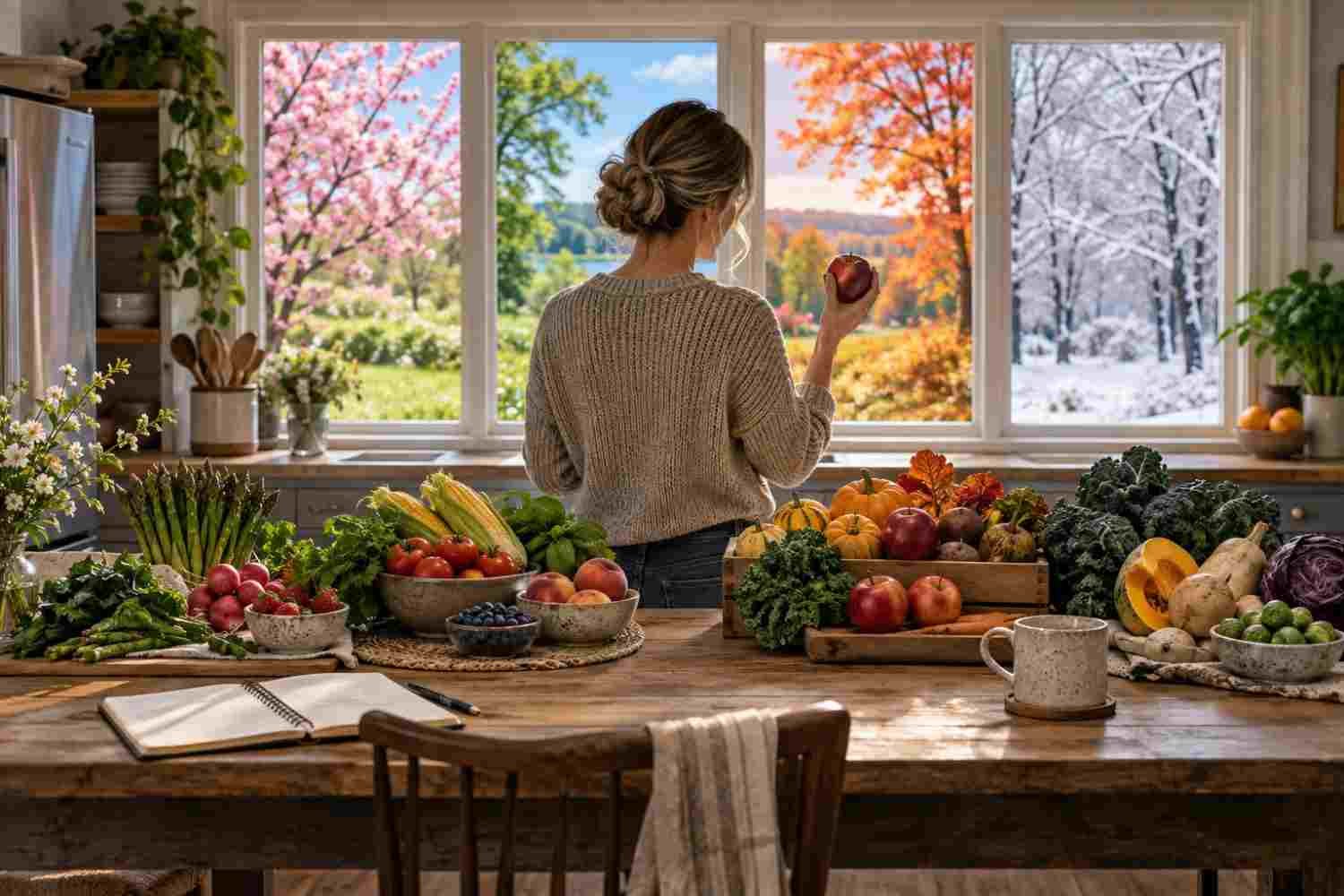
Spring brings tender, fresh crops. Asparagus, snow peas, radishes, leafy greens, and strawberries are natural choices as temperatures rise. They work well in salads, sautés, grain bowls, and lighter pasta dishes.
Spring produce is also a good reminder that vegetables do not need complicated treatment. A bunch of asparagus roasted with olive oil or quickly grilled can be the centerpiece of a meal without much preparation.
Summer
Summer brings remarkable variety. Berries, cherries, grapes, melons, corn, green beans, cucumbers, peppers, tomatoes, and zucchini commonly become plentiful.
This is a season for simple cooking. Sweet corn needs little more than heat and seasoning. Ripe tomatoes can carry a sandwich or salad. Cucumbers and melons bring freshness to hot-weather meals, while peppers and zucchini can move easily between a grill, skillet, and sheet pan.
Fall
Fall brings deeper flavors and sturdier ingredients. Apples, pears, grapes, pumpkin, sweet potatoes, acorn squash, butternut squash, and Brussels sprouts are among the familiar choices.
For shoppers looking for fall vegetables, this is a good time to explore roots and hardy greens. Roasting becomes especially practical because high heat concentrates natural sweetness and gives dense vegetables a satisfying texture.
Winter
Winter can look sparse beside summer, but it still offers plenty. Citrus is a major highlight, including oranges, grapefruit, clementines, and tangerines. Kiwi can also brighten winter meals.
On the vegetable side, cabbage, carrots, kale, parsnips, Brussels sprouts, and other cold-tolerant crops can remain useful staples. Shoppers seeking winter vegetables can build hearty soups, roasted trays, braises, and grain bowls around these ingredients.
Why Seasonal Produce Can Be Worth Buying
Peak-season produce often has better flavor because crops can be harvested at maturity. That does not guarantee every seasonal item will be perfect, but abundance can make it easier to find fruit and vegetables at a satisfying stage of ripeness.
Price can be another advantage. When farms have a large supply of a crop, stores and farmers’ markets may have more competitive prices. Buying what is plentiful can therefore support a grocery budget while adding variety to meals.
Seasonal ingredients also encourage rotation. Instead of repeatedly buying the same five vegetables, shoppers encounter different colors, textures, and flavors throughout the year.
How to Shop Without Memorizing a Calendar

You do not need to memorize harvest dates. Notice what appears in larger quantities at your grocery store or farmers market. Look for firm, vibrant produce without obvious bruising, mold, excessive softness, or signs of dehydration.
Ask where produce was grown when that information is available. Local availability can provide a better clue about true seasonality than a generic national chart. A produce calendar can guide you, but regional conditions should have the final say.
Buy with a meal in mind. If strawberries are abundant, plan breakfast bowls or a simple dessert. If squash is inexpensive, roast a tray for several meals. Shopping gets easier when each ingredient has a purpose.
Make Seasonal Eating Easier
Seasonal eating does not mean everything must be eaten immediately. Store delicate berries properly, refrigerate vegetables that need cold storage, and keep apples, onions, potatoes, and other suitable produce in conditions that extend their quality.
When fresh options are limited, frozen, canned, and dried produce can still be useful. Frozen vegetables can work especially well in soups and stir-fries, while canned tomatoes and fruit can keep familiar ingredients available outside their peak months.
The goal is not perfection. Build a habit that responds to what is available.
FAQs: Seasonal Fruits and Vegetables: What to Buy and When to Buy It
1. What are seasonal fruits and vegetables?
Seasonal fruits and vegetables are crops that naturally reach harvest or peak availability during a particular time of year in a specific region. Exact seasons vary by climate and growing conditions.
2. Is seasonal produce always cheaper?
Not always. Abundant crops can cost less because supply is higher, but prices also depend on transportation, labor, weather, demand, and where the produce was grown.
3. Does seasonal produce taste better?
Often, yes. Produce harvested closer to peak maturity can have stronger flavor and better texture. However, quality still depends on freshness, handling, storage, and the specific crop.
4. How can I find out what is in season locally?
Check a regional seasonal produce calendar, visit a farmers market, or ask grocery staff where produce was grown. Local agricultural extension resources can also provide useful guidance.
Let the Seasons Shape the Grocery Cart
The best part of seasonal eating is becoming observant. When shoppers notice what is abundant, fragrant, colorful, and reasonably priced, grocery shopping starts to feel less repetitive and more connected to the food itself. Seasonal choices can also make meal planning more interesting because the ingredients naturally change as the year moves forward. Most of all, it keeps meals pleasantly varied.
A good produce habit is simple: buy what is thriving, cook it well, and let the next season bring something new.