
Restaurant food does not taste better simply because chefs have expensive equipment. The real advantage is control. Professional cooks prepare before the pan gets hot, understand what heat is doing to food, season throughout the process, and make small corrections before a plate reaches the table.
Learning how to cook like a chef therefore has less to do with memorizing elaborate recipes and more to do with developing repeatable habits. Master preparation, temperature, browning, seasoning, and tasting, and even an ordinary chicken breast or bowl of pasta can become noticeably better.
Professional Cooking Starts Before the Food Hits the Pan
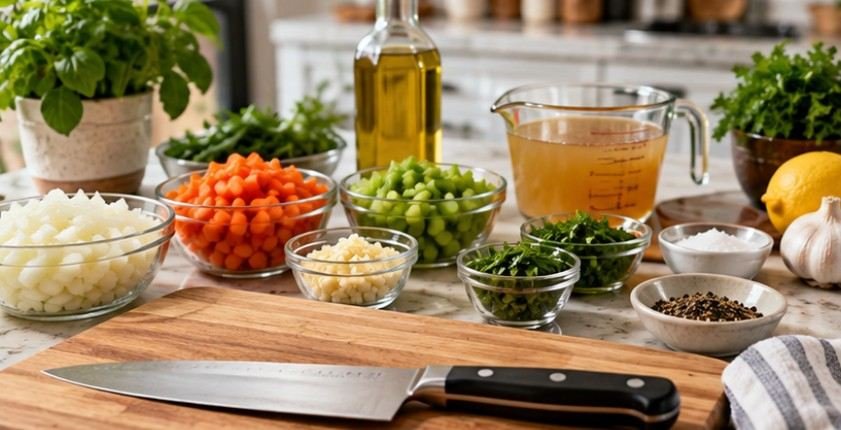
Walk into a functioning restaurant kitchen before service and much of the cooking has already been organized. Vegetables are cut, sauces are portioned, proteins are prepared, and frequently used tools are within reach.
Chefs call this mise en place, meaning roughly “everything in its place.”
Home cooks can use the same idea without covering the counter with dozens of tiny bowls. Read the recipe completely, pull out the ingredients, chop what needs chopping, measure anything that must be added quickly, and identify the correct pan before switching on the burner.
This matters because cooking becomes harder once several things require attention simultaneously. Preparation lets you concentrate on what is happening in the pan rather than searching a cabinet while garlic burns.
Knife Skills Are Really About Consistency
Professional knife work looks impressive, but speed is not its greatest advantage. Uniform pieces cook at similar rates.
If half your carrots are thin coins and the others are thick chunks, some may become mushy while others remain hard. Consistent cutting gives you more predictable results.
The University of Illinois Extension recommends using the correct knife for the task, cutting on a stable surface, keeping fingers away from the blade, and placing a damp towel beneath a cutting board if it tends to move.
Keep your chef’s knife properly maintained rather than trying to imitate television chefs by chopping quickly. Accuracy should come before speed.
Learn What Heat Is Actually Doing
One of the biggest differences between beginner and experienced cooks is how they think about heat.
Beginners often treat burner settings as instructions: low, medium, or high. Chefs treat heat as something they continuously manage.
For a good sear, let a stainless-steel or cast-iron pan preheat before adding the food. Add an appropriate cooking fat, then wait until it is hot enough for the ingredient.
Pat meat and fish dry first. Surface moisture must evaporate before strong browning develops.
Browning Creates Flavor
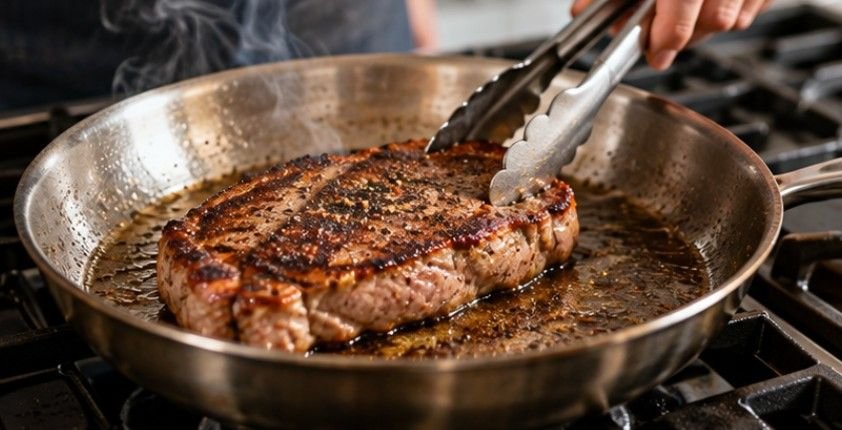
The brown crust on steak, roasted chicken, toasted bread, and many other cooked foods is not merely decorative.
High-temperature cooking encourages chemical reactions that create new aromas, colors, and flavors. UC Davis describes the Maillard reaction as a browning process associated with cooking, roasting, and grilling.
That is why a pale piece of chicken cooked in a crowded skillet tastes different from one that develops a golden crust.
Avoid overcrowding. Adding too much cold food can drop the pan temperature and trap moisture, encouraging steaming instead of browning.
At the same time, do not assume professional cooking means blasting everything over high heat. A chef may sear aggressively and then immediately reduce the burner.
Eggs, delicate fish, butter sauces, onions, and custards often reward gentler heat.
Season Food in Stages
One pinch of salt immediately before serving cannot always replace seasoning during cooking.
Professional cooks usually build flavor as the dish develops. Aromatics may be seasoned while sautéing, the main ingredient adjusted later, and the finished sauce tasted once more before serving.
The advantage is depth rather than simple saltiness.
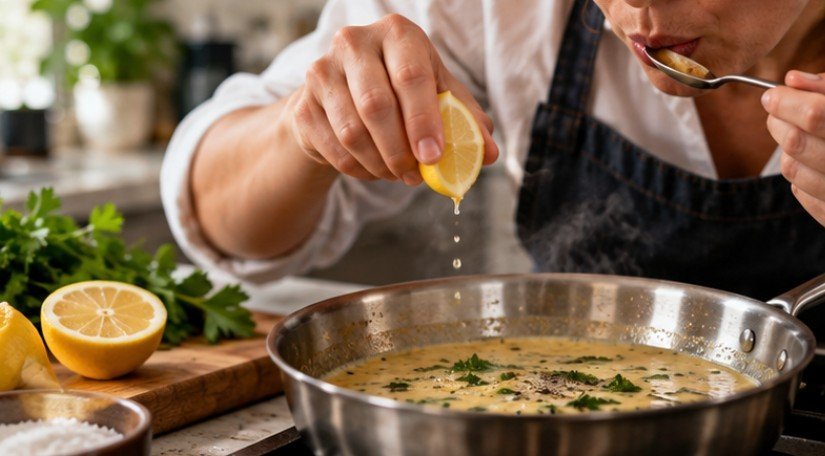
You should also taste before automatically adding more salt. Sometimes the missing element is acidity, sweetness, fat, heat, or aroma.
Colorado State University Extension notes that herbs, citrus, vinegar, and spices can increase flavor while reducing reliance on salt.
A squeeze of lemon can wake up grilled fish. Vinegar can sharpen a rich stew. Fresh herbs can make a buttery sauce feel lighter.
Finish With Fat When It Has a Purpose
Restaurant sauces often have a smooth texture and attractive sheen because chefs understand emulsification.
One technique is finishing a sauce with a small amount of cold butter after reducing the heat. As the butter is whisked into the liquid, it can add richness and help create a glossy texture.
But butter is not a magic fix. It cannot compensate for a poorly seared steak, an excessively salty sauce, or overcooked vegetables.
Professional technique is about using ingredients deliberately.
Use This Five-Point Chef Check Before Serving
Before putting dinner on the table, pause for less than a minute and evaluate five things.
| Check | Question to Ask | Possible Adjustment |
| Seasoning | Does it taste flat? | Add salt gradually and retaste |
| Acidity | Does it feel heavy? | Try lemon juice or vinegar |
| Texture | Is it crisp, tender, juicy, or creamy enough? | Adjust heat, liquid, or cooking time |
| Aroma | Does it smell lively? | Add herbs, zest, toasted spices, or aromatics |
| Temperature | Is the food safely cooked? | Verify with a thermometer |
Make only one or two corrections at a time. Otherwise, you will not know which adjustment improved the food.
This simple habit is one of the most effective ways to practice how to cook like a chef because it teaches you to diagnose food instead of blindly following recipe timings.
Stop Guessing Whether Meat Is Done
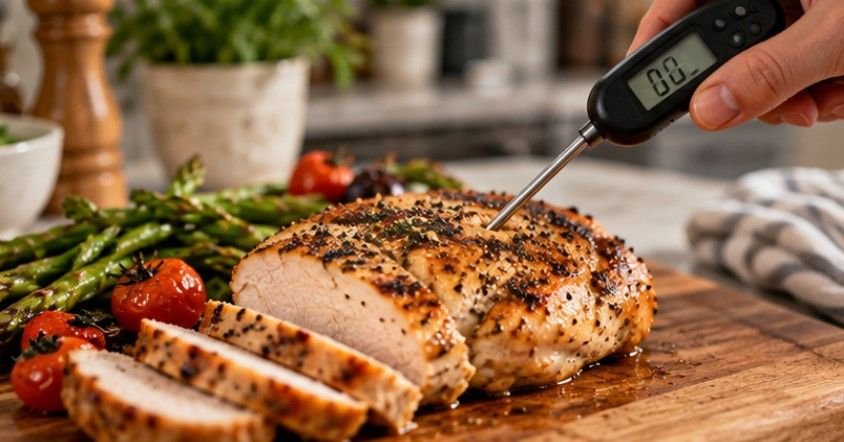
Experienced cooks develop strong visual and tactile instincts, but a food thermometer remains the more dependable safety tool.
The USDA recommends minimum internal temperatures of 145°F plus a three-minute rest for whole cuts of beef, pork, veal, and lamb; 160°F for ground meats; and 165°F for poultry.
Color alone is unreliable. Poultry can sometimes remain pink even after reaching a safe temperature, while meat can appear browned before reaching a safe internal temperature.
Insert an instant-read thermometer into the thickest part while avoiding bone whenever possible.
This is one area where precision matters more than instinct.
Copy Restaurant Systems, Not Restaurant Equipment
You do not need commercial burners, a salamander broiler, twenty sauté pans, or an industrial prep station.
Professional kitchens operate under very different conditions from home kitchens. Restaurant cooks may also prepare components hours before service and work with equipment designed for extremely high output.
Instead, copy the habits that transfer well:
Prepare before cooking. Keep the work surface organized. Use controlled knife cuts. Preheat intelligently. Avoid overcrowding. Taste repeatedly. Adjust seasoning gradually. Clean during natural pauses.
Those habits cost almost nothing.
Practice One Recipe Three Times
Constantly cooking new recipes can actually slow skill development because too many variables change at once.
Choose one dish you already enjoy—roast chicken, scrambled eggs, tomato pasta, steak, soup, or sautéed vegetables.
Cook it once normally.
On the second attempt, concentrate on preparation, knife cuts, and heat.
On the third, pay special attention to seasoning, browning, texture, and the final taste test.
You will quickly notice which decisions affect the result.
Keeping brief notes about pan temperature, cooking time, ingredient amounts, and what you would change next time turns casual cooking into deliberate practice.
What About Cooks With ADHD?
Meal preparation can involve several executive-function tasks simultaneously: planning, sequencing, remembering ingredients, tracking time, and switching attention between pans.
CHADD notes that preparation, time management, decision-making, and following multiple steps can make meal planning and cooking challenging for people with ADHD.
Reducing complexity can help. Prepare ingredients before starting, use visible timers, choose recipes with fewer simultaneous steps, keep frequently used tools accessible, and maintain several dependable low-effort meals for demanding days.
Good kitchen organization is useful professional technique regardless of how someone’s attention works.
Frequently Asked Questions
1. What are the five golden rules of cooking?
There is no official universal five. A practical version is: prepare first, control heat, season gradually, taste repeatedly, and verify safe cooking temperatures.
2. Who cooks for Donald Trump?
White House kitchen staff prepare presidential meals. The White House Historical Association identifies Tommy Kurpradit as the acting White House Executive Chef.
3. How do people with ADHD cook?
Simplifying recipes, preparing ingredients first, using timers and checklists, limiting multitasking, and keeping easy backup meals available can reduce the planning demands involved in cooking.
4. What is the 2 2 2 rule in cooking?
One culinary use is the gravy ratio: 2 tablespoons fat, 2 tablespoons flour, and 2 cups liquid. “2-2-2” can also describe other food-storage rules, so context matters.
The Real Secret Is Paying Attention
The strongest lesson behind how to cook like a chef is surprisingly simple: professional cooks respond to what is happening rather than blindly obeying a recipe.
They notice whether a pan is hot enough, whether food is releasing moisture, whether a sauce needs acidity, and whether a protein has reached the right temperature. Those small decisions accumulate into better food.
Start with one familiar dinner. Prepare everything before cooking, give ingredients enough room to brown, season in stages, taste before serving, and correct what is missing. You do not need to look like a restaurant chef while cooking. You need to start thinking like one.