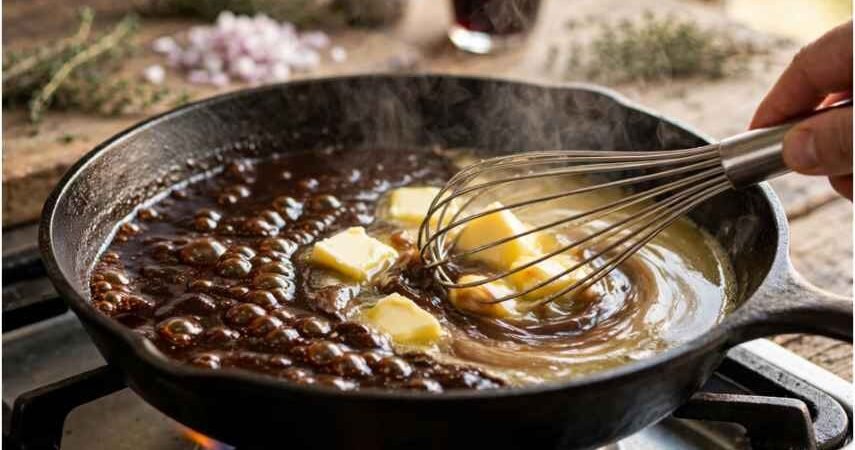
Whenever I pull a seared ribeye or pan-roasted chicken breast out of my cast-iron skillet, I never see a dirty pan. I see concentrated culinary gold. Learning how to make pan sauce is the single fastest way to transform weeknight meals from dry protein into four-star dining. You need no specialty equipment—just a wooden spoon, a few pantry staples, and ten minutes over the flame.
Mastering this method ranks among the most rewarding basic cooking techniques you will ever learn. Once you understand the underlying mechanics of emulsification, you can build a velvety glaze for steak, pork chops, duck, or roasted mushrooms without glancing at a recipe card.
The Chemistry of Fond: Why Brown Bits Equal Pure Flavor
The crusty, golden-brown residue stuck to the bottom of your skillet after searing meat is called fond (the French word for “base” or “foundation”). Fond is not burnt grease. It is the delicious, caramelized byproduct of the Maillard reaction—a chemical interaction between amino acids and reducing sugars that occurs when proteins hit dry, intense heat above 300°F.
Culinary tests by food scientists at Serious Eats show that fond contains hundreds of flavor compounds absent in the raw meat or cooking oil. When you introduce liquid to deglaze a pan, those caramelized proteins dissolve into solution. That concentrated flavor forms the structural backbone of your finished sauce.
[ HIGH-HEAT SEAR ]
│
▼
Fond (Caramelized Bits) + 1 tbsp Rendered Fat
│
▼
[ SAUTÉ ] ── Minced Shallots / Garlic (soften 60s)
│
▼
[ DEGLAZE ] ─ Wine / Stock / Acid (dissolve fond, reduce 50%)
│
▼
[ REDUCE ] ── Rich Stock (rapid simmer to syrupy body)
│
▼
[ MOUNT ] ─── Off-Heat: Whisk Cold Butter (Monter au Beurre)
│
▼
Velvety, High-Gloss Restaurant Pan Sauce
The Universal Skillet Ratio: Ingredients You Need
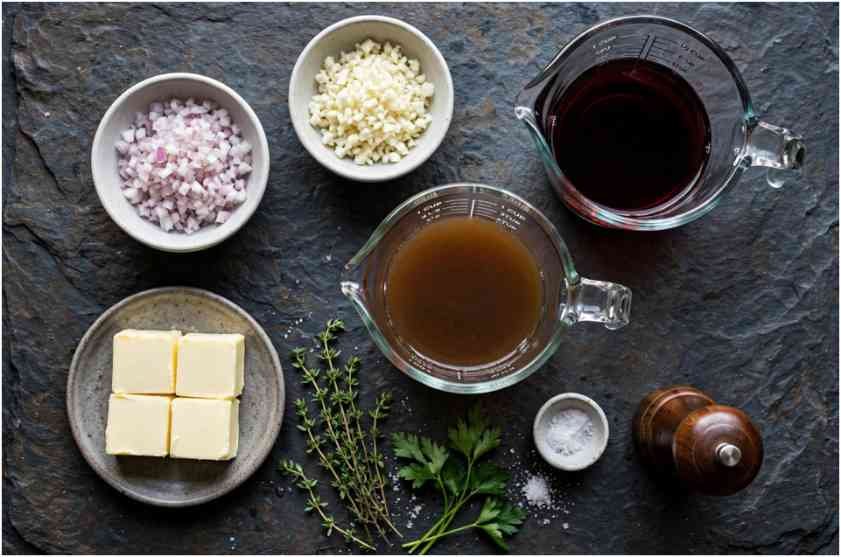
Great sauces rely on balance rather than rigid measurements. Keep this standard 4:1:1 ratio in your head for two to four servings:
- Pan Drippings & Fond: What remains after searing your protein.
- Aromatics: 1 small shallot or 2 garlic cloves, minced fine.
- Deglazing Liquid (1 part): ¼ cup dry wine (white or red), dry sherry, or dry vermouth.
- Rich Stock (3–4 parts): ¾ cup low-sodium chicken, beef, or veal stock.
- Cold Unsalted Butter (1 part): 2 tablespoons, cut into small cubes and kept cold.
- Finishing Herbs: Fresh thyme, minced tarragon, flat-leaf parsley, or chives.
- Seasoning: Flaky sea salt, freshly ground black pepper, and fresh lemon juice.
Deglazing Liquids and Stock Selection
Pair your liquid with your cut. White wine, dry vermouth, and lemon juice shine on chicken, pork, and delicate fish. Red wine, dry port, and dark ale match beef, lamb, and venison. If you avoid alcohol, unsweetened tart cherry juice, apple cider, or stock spiked with a teaspoon of red wine vinegar provide comparable acidity.
Always select gelatin-rich stock. Gelatin gives body to reduced liquids without turning them gummy. Store-bought low-sodium chicken stock works across almost any protein, even steak, because commercial beef broths frequently taste harsh and muddy when reduced.
Fat and Emulsifiers
Butter is not just added for flavor; it is an emulsion of fat, water, and milk solids. When chilled butter incorporates gradually into warm reduction, those milk solids act as an emulsifier, binding water and fat into a lustrous suspension.
How to Make Pan Sauce in Five Precise Steps
Before touching your skillet, transfer your cooked protein to a cutting board to rest. According to guidelines from the USDA Food Safety and Inspection Service, allowing meat to rest stabilizes internal temperatures and lets muscle fibers reabsorb liquid.
Step 1: Manage Your Pan Fat and Sauté Aromatics
Place your hot skillet over medium heat. Tip the pan and pour off excess cooking fat into a heatproof bowl. As culinary editors at Bon Appétit often emphasize, you never want to wipe the pan clean—leave roughly one tablespoon of fat behind.
Toss in your minced shallots or garlic. Cook them for 60 to 90 seconds, stirring constantly with a flat-edged wooden spoon. The aromatics should soften and turn translucent. Do not let them brown or scorch, or your sauce will taste bitter.
Step 2: Deglaze and Scrape the Fond
Pour the ¼ cup of deglazing liquid straight into the hot skillet. The liquid will boil instantly and generate fragrant steam. Use your wooden spoon to firmly scrape the bottom and corners of the pan, loosening every specks of caramelized fond. Simmer the liquid until it reduces by half, which concentrates the aromatics and evaporates harsh raw alcohol notes.
Step 3: Reduce the Stock to Syrupy Body
Pour in your ¾ cup of stock. Increase heat to medium-high to establish a rolling simmer. Allow the mixture to reduce by two-thirds, which typically takes 3 to 5 minutes.
Test the consistency with your spoon: drag the back of a spoon through the liquid. When the reduction lightly coats the metal and leaves a distinct trail, you have achieved the classic nappe consistency. If your sauce appears watery, let it boil for another two minutes.
Step 4: Mount with Cold Butter (The Secret to Gloss)
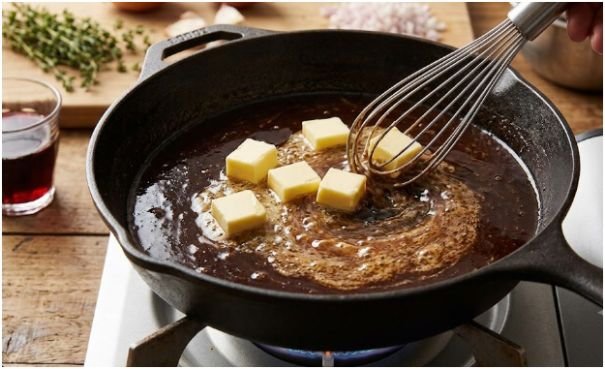
Remove the skillet entirely from the heat source. This classic French technique, called monter au beurre, requires low heat. If your pan remains screaming hot, the butter fat will separate from its milk solids, leaving an oily puddle.
Drop two cubes of refrigerator-cold butter into the liquid. Swirl the skillet clockwise with one hand while whisking with the other. As the cold butter melts slowly, the sauce shifts from translucent broth into an opaque, velvety, and shimmering glaze.
Step 5: Rest Juice Integration and Final Seasoning
Look down at your resting cutting board. Notice the savory red or clear juices pooling around your resting steak or chicken? Pour every drop straight back into your warm skillet. Whisk vigorously to bind those juices into the emulsion.
Stir in your fresh herbs. Taste the sauce with a clean spoon before reaching for the salt cellar. Pan fond concentrates sodium naturally, so taste first. Finish with a twist of black pepper and three drops of fresh lemon juice to cut through the richness.
| Protein | Deglazing Acid | Ideal Stock | Finishing Additions |
| Ribeye / NY Strip | Cabernet Sauvignon or Syrah | Low-sodium beef or chicken stock | Cracked peppercorns, thyme |
| Chicken Thighs / Breast | Dry Sauvignon Blanc | Rich chicken bone broth | Dijon mustard, tarragon, splash of cream |
| Pork Tenderloin | Dry hard cider or dry vermouth | Chicken or vegetable stock | Minced sage, whole grain mustard |
| Seared Salmon | Pinot Grigio and lemon juice | Light chicken or fish stock | Capers, flat-leaf parsley, dill |
Professional Troubleshooting: How to Save a Broken Emulsion
Even seasoned line cooks occasionally break a sauce. If your pan sauce looks greasy, curdled, or separated, the butter got too hot.
Fix it instantly with water and agitation. Pull the skillet off the stove, add one teaspoon of ice-cold water, and whisk furiously for thirty seconds. The cold water drops the emulsion temperature back below its 135°F breaking threshold, allowing the fat droplets to re-suspend.
Frequently Asked Questions About Pan Sauce
1. Can I make a pan sauce in a non-stick skillet?
You can, but non-stick coatings prevent meat proteins from sticking, yielding almost zero fond to flavor your sauce.
2. What can I substitute for wine in a pan sauce?
Combine equal parts low-sodium chicken stock and a splash of apple cider vinegar or freshly squeezed lemon juice.
3. Why is my pan sauce watery instead of glossy?
Your stock did not reduce enough before adding the butter, or you used warm butter instead of refrigerator-cold cubes.
4. Can I reheat leftover pan sauce the next day?
Reheat it gently over low heat while whisking in a splash of warm water so the butter emulsion does not separate.
Put the Sauce Spoon Down (Your Skillet Awaits)
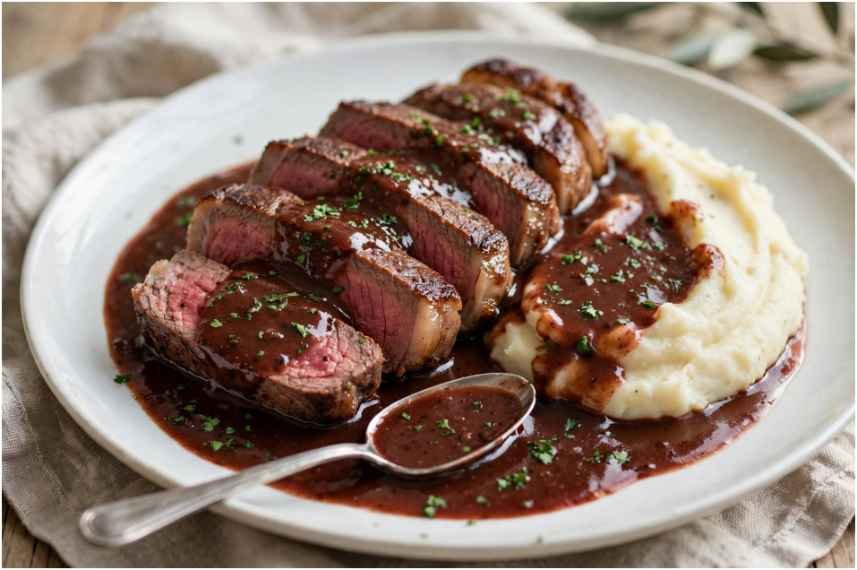
There is no culinary justification for washing flavorful fond down your kitchen sink. The next time you sear meat, leave the pan on the burner, reach for your favorite dry wine, and mount a finish of cold butter. Once that glossy reduction blankets your dinner plate, you will never look at an empty skillet the same way again.