
Americans spend an average of 64 minutes a day preparing food and cleaning up when they cook at home, according to federal time-use data. That translates to more than ten full days per year spent hovering over a stove or scrubbing pans. Unsurprisingly, when fatigue hits after a long workday, door-to-door delivery apps feel like the only reasonable survival strategy.
Yet, relying on takeaway carries a heavy burden: higher costs, excess sodium, and hidden calories. Research from the Johns Hopkins Bloomberg School of Public Health shows that individuals who cook at home six to seven nights a week consume significantly fewer calories, less sugar, and less fat than those who rely on commercial meals.
The solution to this dilemma isn’t spending hours on Sunday making identical meal-prep containers. The real key to sustainable weeknight cooking lies in mastering easy dinner recipes built on smart ingredient shortcuts, streamlined cooking methods, and minimal cleanup.
The Mechanics of a 20-Minute Meal
Cooking quickly without sacrificing taste requires a shift in kitchen strategy. Professional kitchens rely on prep systems to execute complex menus in minutes; home cooks can adopt similar principles on a smaller scale.
1. High-Surface-Area Proteins
Cooking quickly without sacrificing taste requires a shift in kitchen strategy. Professional kitchens rely on prep systems to execute complex menus in minutes; home cooks can adopt similar principles by learning basic cooking techniques on a smaller scale.
2. High-Heat Emulsification
Instead of waiting for a sauce to simmer down over low heat, use high heat combined with starchy cooking liquids or dairy. Pan sauces built with stock, butter, and pasta cooking water bind in under two minutes through rapid evaporation and agitation.
3. Commercial Prep Shortcuts
There is no culinary tax on using pre-chopped, frozen, or canned ingredients. Frozen vegetables are flash-frozen at peak ripeness, preserving nutrients while eliminating washing, peeling, and chopping time.
One-Pan and Skillet Solutions for Minimal Cleanup
Limiting the footprint of your dinner to a single vessel reduces both cooking times and dishwashing load.
[ Heat Pan & Cook Protein ]
│
▼
[ Add Aromatics & Hard Veggies ]
│
▼
[ Pour Liquid + Pasta/Grains Direct to Pan ]
│
▼
[ Simmer Covered → Finish & Serve ]
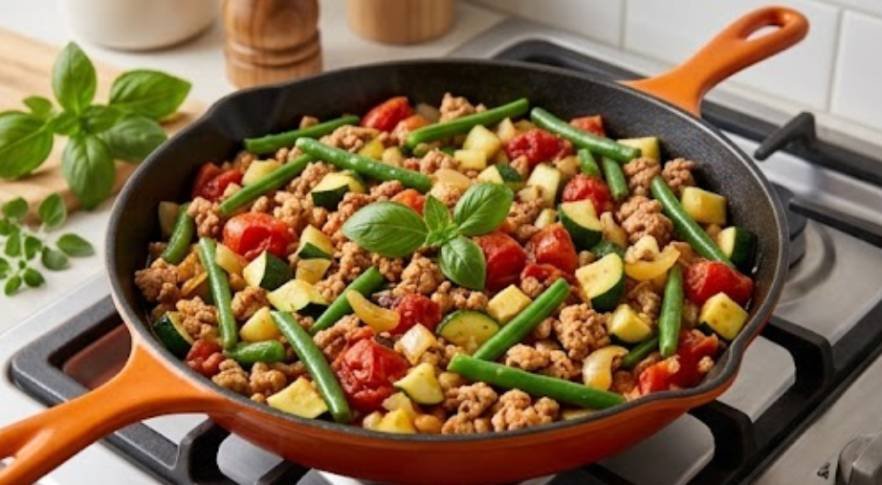
The Ground Turkey and Summer Squash Skillet

A classic weeknight formula pairs lean protein with high-moisture vegetables that soften rapidly.
- Method: Sauté diced yellow onions and ground turkey in olive oil over medium-high heat until browned. Stir in sliced zucchini, green beans, and a can of fire-roasted diced tomatoes along with half a cup of low-sodium chicken broth. Cover and simmer for seven minutes until the squash is tender.
- The Science: The natural acidity of the fire-roasted tomatoes cuts through the richness of the meat, while the zucchini releases mild sweetness as its cell walls collapse under steam.
Skillet Chicken Pot Pasta
Traditional chicken pot pie requires making a pastry dough and baking a filling for nearly an hour. A single-skillet pasta version distills those same comfort-food flavors into a fifteen-minute burner recipe.
Learning restaurant-style pasta techniques can also help you get better texture, sauce consistency, and flavor from quick pasta dishes.
- Method: Melt two tablespoons of butter in a wide skillet, soften diced onions, and whisk in two tablespoons of flour to form a quick roux. Gradually pour in chicken stock and a splash of heavy cream, stirring continuously as the liquid thickens. Toss in dry short pasta (like penne or rotini) directly into the pan along with pre-cooked shredded chicken and frozen peas. Cover and simmer until the pasta reaches al dente texture.
- Why It Works: Starches released directly from the pasta during the boil integrate into the pan liquid, naturally thickening the cream sauce without requiring additional flour or prolonged reduction.
For details on nutritional standards for home cooking, consult the U.S. Department of Agriculture (USDA) guidelines on balanced meal assembly.
Five-Minute Assemblies for Maximum Fatigue
On nights when even a 20-minute skillet feels overwhelming, cooking should transition into high-efficiency assembly.
| Quick Method | Primary Shortcut | Prep Time | Cleanup Level | Key Benefit |
| French Dip Rolls | Canned Consommé & Deli Roast Beef | 5 minutes | Single saucepan | Deli-quality warmth with zero sear time |
| Loaded Crisp Quesadilla | Leftover Protein & Pre-Shredded Cheese | 5 minutes | Single skillet | Repurposes dry protein into a molten core |
| Pantry Bean Bowl | Canned Beans & Jarred Salsa | 4 minutes | Microwave only | High fiber and protein with zero stovetop heat |
The Express French Dip

Using ready-to-eat deli meats eliminates the need to roast or braise beef for hours.
- Method: Warm thin slices of roast beef directly in a small saucepan containing one can of beef consommé mixed with French onion soup. Once steaming, layer the warm beef onto toasted French rolls, top with provolone cheese, and serve with the warm broth as a dipping sauce (au jus).
Stovetop Quesadillas
Tortillas act as a delivery mechanism for leftovers, binding cold ingredients together through melted cheese.
- Method: Place a tortilla in a warm skillet, spread shredded cheese across one half, and add leftover grilled chicken, carnitas, or roasted vegetables. Fold the tortilla over and cook for two minutes per side until the exterior turns golden brown and crisp.
Evaluating Kitchen Shortcuts: Time vs. Flavor Impact
Not all convenience items yield equal results. The framework below helps determine when to buy pre-made vs. when to spend thirty seconds doing it yourself:
HIGH FLAVOR IMPACT
│
[ DO IT YOURSELF ] │ [ WORTH BUYING ]
- Fresh Garlic / Herbs │ • Mirepoix / Diced Onion
- Vinaigrettes │ • Broth / Consommé
│ • Shredded Rotisserie Chicken
────────────────────────┼────────────────────────
[ OPTIONAL ] │ [ SKIP / LOW QUALITY ]
- Pre-washed Greens │ • Pre-cooked Pasta
- Jarred Garlic Paste │ • Pre-seasoned Frozen Meats
│
LOW FLAVOR IMPACT
When Fast-Track Methods Fall Short

While rapid cooking strategies work well for weeknights, they have clear boundaries:
- Tough Cuts of Meat: Chuck roast, pork shoulder, and beef brisket contain high levels of collagen that require low heat over several hours to convert into gelatin. Attempting to quick-cook these cuts results in tough, chewy meat.
- Complex Flavor Layers: Dishes like authentic Indian curries or traditional French stews rely on slow chemical reactions (like the extended Maillard reaction) that cannot be replicated in a ten-minute simmer.
- Sodium Saturation: Relying entirely on canned soups, broths, and pre-packaged spice mixes can quickly push a meal past daily recommended sodium thresholds set by public health authorities like the Centers for Disease Control and Prevention (CDC). Offset convenience items by choosing low-sodium versions and balancing them with fresh, unseasoned produce.
Learn more about managing sodium and long-term cardiovascular wellness through the National Institutes of Health (NIH) dietary resources. For general health strategies regarding home-prepared foods, review recommendations from the World Health Organization (WHO).
Frequently Asked Questions
1. What are the best pantry staples for easy dinner recipes?
Keep canned beans, fire-roasted tomatoes, low-sodium chicken or vegetable broth, dry pasta, canned tuna, jarred marinara, and shelf-stable grains like quinoa or instant rice stocked for quick assembly.
2. How can I make simple dinners healthier without extra prep time?
Incorporate frozen vegetables directly into hot dishes during the final five minutes of cooking. They require no chopping, heat quickly in existing steam or sauce, and add instant dietary fiber.
3. How do I stop ground turkey or chicken from drying out in a skillet?
Avoid overworking the meat in the pan. Allow it to sear briefly before breaking it into pieces, and cook it alongside high-moisture liquids like diced tomatoes or broths to retain internal juices.
Transforming Your Weeknight Routine
Reclaiming your evenings doesn’t require culinary mastery or spending hours over a hot stove; it simply takes an efficient system.
By swapping long prep steps for strategic pantry shortcuts, choosing high-surface-area ingredients, and using single-pan methods, you can cut kitchen time significantly without resorting to takeout.
Start by picking two single-pan strategies this week, stock up on key pantry staples, and trade the stress of weeknight cooking for fast, wholesome meals made on your own terms.