

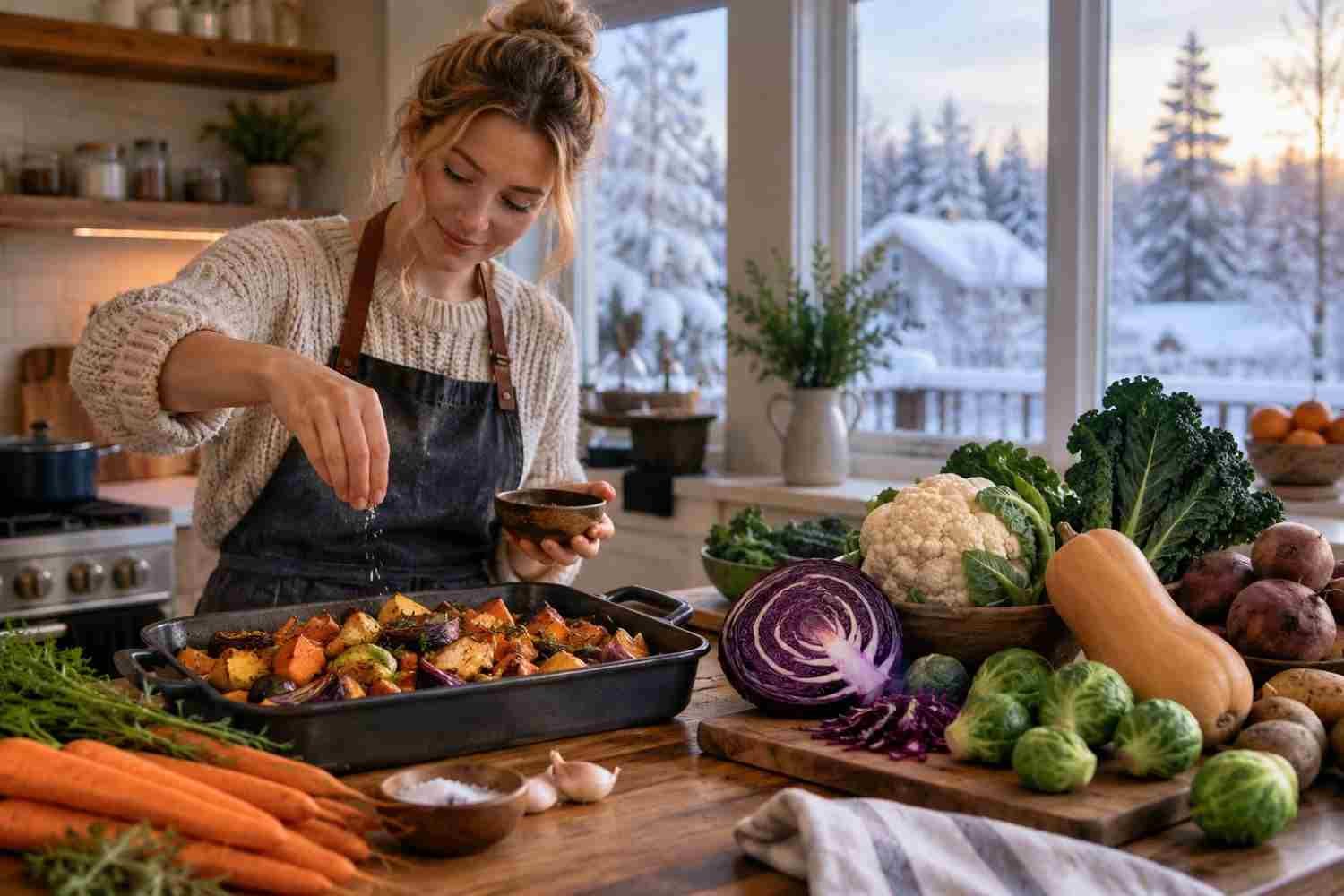
I started paying more attention to winter vegetables when the produce aisle seemed less exciting than it did in summer. Instead of bright tomatoes and peppers, I was seeing sturdy greens, roots, cabbage, and squash, and I realized those ingredients could make dinner feel just as varied.
I found that cold-weather cooking became easier once I stopped treating seasonal produce as a limitation. Winter vegetables bring sweetness, earthy flavors, useful textures, and enough versatility to move from a simple sheet-pan dinner to soup, salad, or a slow weekend braise without much fuss.
Why winter vegetables taste so good in cold weather
Winter vegetables have a practical advantage: many suit cool growing conditions or can be stored for months after harvest. Kale, cabbage, Brussels sprouts, broccoli, and similar crops tolerate cool weather, while carrots, beets, turnips, and winter squash can remain useful staples well beyond their harvest window.
Cold temperatures can also affect flavor. Some cool-season crops develop a sweeter, more appealing taste as temperatures fall. Brussels sprouts are a good example. Their flavor can improve after exposure to cooler weather, which helps explain why they work so well in roasted dishes.
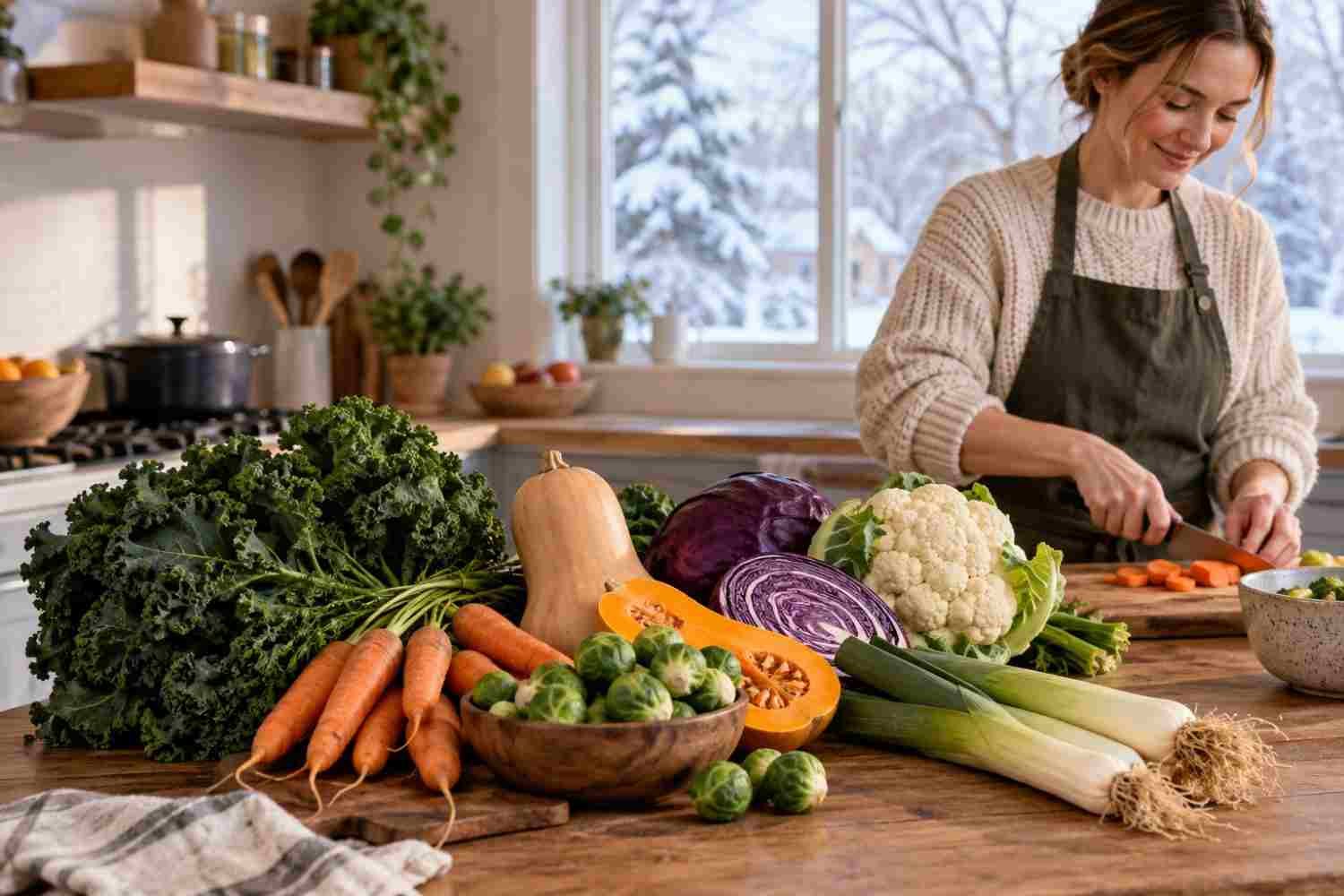
Six winter vegetables worth keeping around
Brussels sprouts
Brussels sprouts deserve another chance if childhood memories involved soggy, overcooked vegetables. Halved and roasted at high heat, they develop browned edges and a tender center, with a savory sweetness that pairs well with garlic, mustard, balsamic vinegar, or crisp bacon.
Kale
Kale is one of the more dependable winter greens. It holds its structure in soups and stews instead of disappearing into the broth, but it can also be sautéed quickly or sliced thin for a hearty salad. Massaging raw leaves with dressing softens their texture and makes them much easier to eat.
Cabbage
Cabbage is inexpensive, durable, and remarkably adaptable. Shred it for a crisp slaw, roast thick wedges until the edges caramelize, or braise it slowly with onions and broth. A head can sit in the refrigerator far longer than many delicate greens, making it a smart winter staple.
If you enjoyed building meals around fall vegetables, cabbage can carry that same seasonal feeling into colder weeks. Its mild flavor also makes it easy to combine with beans, potatoes, sausage, grains, and roasted meats.
Winter squash
Butternut, acorn, delicata, and other winter squash bring natural sweetness and creamy texture to cold-weather meals. Roast cubes for a side dish, blend cooked squash into soup, or use it in grain bowls with greens and toasted nuts. Their storage life also makes them useful when choices feel limited.
Beets
Beets have an earthy sweetness that becomes especially appealing when roasted. They can be sliced into salads, paired with goat cheese, or served alongside roasted meats. The greens are useful too, especially when sautéed with garlic or other sturdy leafy greens.
Leeks
Leeks provide a softer, sweeter onion flavor without dominating a dish. The white and light-green portions are excellent in soups, risottos, gratins, and sautés. Their tougher green tops can add flavor to stocks, helping you get more use from the vegetable.
How to make winter produce work harder

Roasting concentrates sweetness and creates browned edges. Braising turns sturdy vegetables tender and savory. Soups and stews are ideal for combining several vegetables with beans, grains, or meat.
Texture matters, too. A winter meal can become much more interesting when creamy squash is paired with crisp cabbage, tender greens, or toasted seeds. Acid also helps. Lemon juice, vinegar, pickled onions, or a sharp mustard-based dressing can brighten vegetables that otherwise taste heavy.
Storage should influence what you buy. Cabbage, carrots, and winter squash can be especially convenient because they generally keep longer than fragile greens. Proper storage still matters, and local growing conditions determine what is actually available fresh in a given region.
A winter farmers market in the Pacific Northwest will not offer exactly the same selection as one in Arizona or the Northeast. Your local climate, farms, and storage practices shape the seasonal produce available to you. Checking nearby markets can therefore be more useful than following a universal winter vegetable calendar.
Bringing more seasonal variety to winter meals
Seasonal eating does not require every meal to look rustic or heavy. Winter vegetables can work in lighter dishes, too. Thinly sliced cabbage can become a crunchy salad, roasted beets can brighten a grain bowl, and kale can form the base of a lemony lunch salad.
Pick one hearty vegetable, one flavorful accent, and one source of protein or grains. Add herbs, citrus, nuts, cheese, or a punchy dressing, and the meal starts to feel intentional rather than simply practical.
That flexibility is what makes winter produce worth embracing. You are not stuck eating the same soup all season. A few dependable vegetables can support dozens of meals, depending on how they are seasoned and cooked.
FAQs: Winter Vegetables That Make Seasonal Eating More Delicious
1. What vegetables are best for winter?
Kale, cabbage, Brussels sprouts, beets, carrots, turnips, leeks, and winter squash are choices. Availability varies by region and growing conditions.
2. Do winter vegetables taste sweeter?
Some cool-season crops can develop sweeter flavors in colder weather. Brussels sprouts and certain root vegetables are good examples, although flavor depends on variety, growing conditions, and harvest timing.
3. How should winter vegetables be cooked?
Roasting is excellent for browning roots, squash, and Brussels sprouts. Braising works well for cabbage and leeks, while kale and other sturdy greens are useful in soups, sautés, and salads.
4. How can winter vegetables stay fresh longer?
Choose firm, undamaged produce and use appropriate storage conditions. Vegetables differ considerably, so cabbage, carrots, squash, and greens should not all be stored the same way.
Why Seasonal Variety Is Worth Keeping
The best thing about winter vegetables may be how useful they are. They fill the refrigerator with ingredients that can survive busy weeks, adapt to different cooking methods, and bring character to meals without demanding complicated recipes. Once a few dependable choices become familiar, seasonal cooking starts to feel less like a rule and more like a creative rhythm.
Winter does not have to mean settling for less interesting produce. With the right vegetables on hand, cold-weather meals can be colorful, comforting, fresh, and varied.