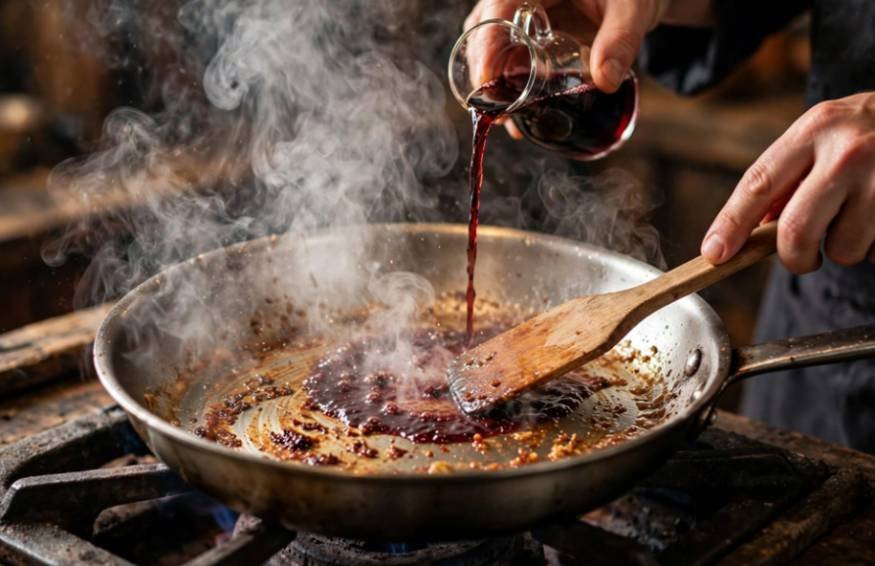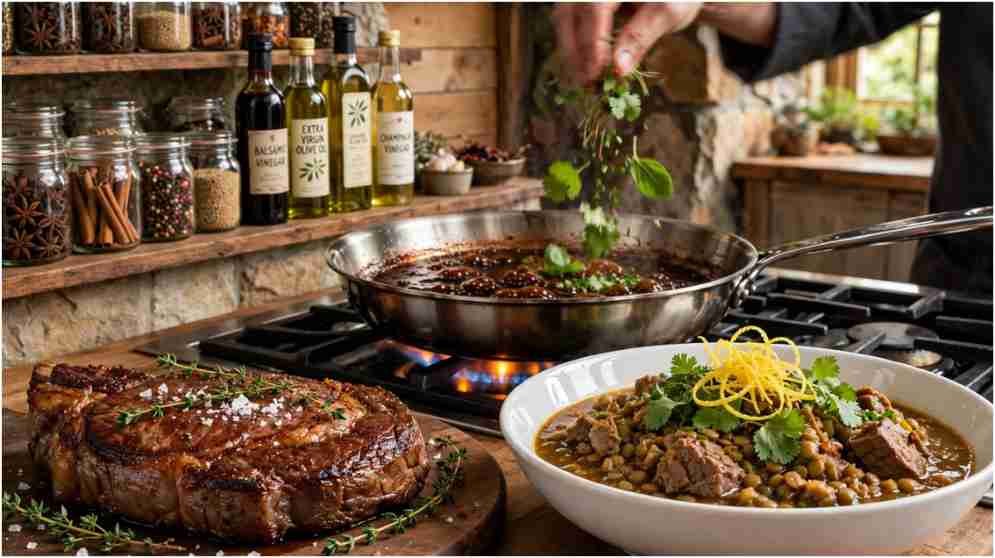

The difference between a flat, uninspiring dinner and a restaurant-caliber meal comes down to one fundamental variable: learning how to season food properly. When I worked commercial hot lines, green cooks often dumped salt from a handheld shaker at the very end of service, wondering why their reductions tasted bitter and their steaks tasted hollow.
Seasoning does not mean salting food until it tastes like seawater. Proper seasoning enhances intrinsic flavors, draws out moisture, breaks down tough fibers, and balances acidity, sweetness, and fat.
The Mechanics: Elevation, Surface Area, and Pinch Control
Most kitchen mishaps happen before heat hits the pan. If your spice distribution is uneven, one bite shocks the tongue with pure sodium while the next tastes dull.
The Altitude Technique
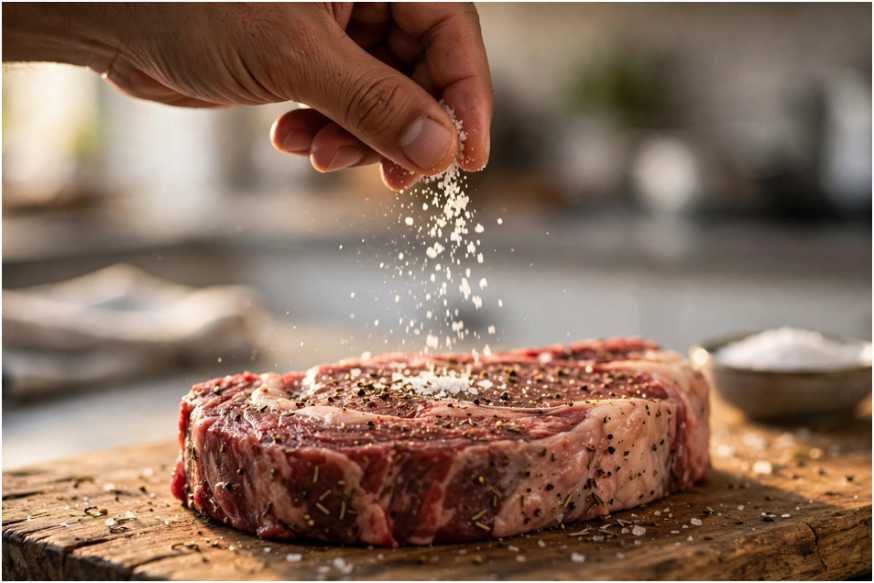
Hold your hand 8 to 12 inches above the ingredient when sprinkling seasonings. Dropping salt or spice blends close to the food creates concentrated clusters that cling to damp surfaces. Releasing seasonings from a high vantage point creates a wider dispersion arc, allowing gravity to scatter the crystals evenly across the entire surface.
Three Fingers vs. The Shaker
Shakers prevent physical control. Table salt flows through pre-drilled holes at unpredictable velocities, and its small cubic grains pack tightly together.
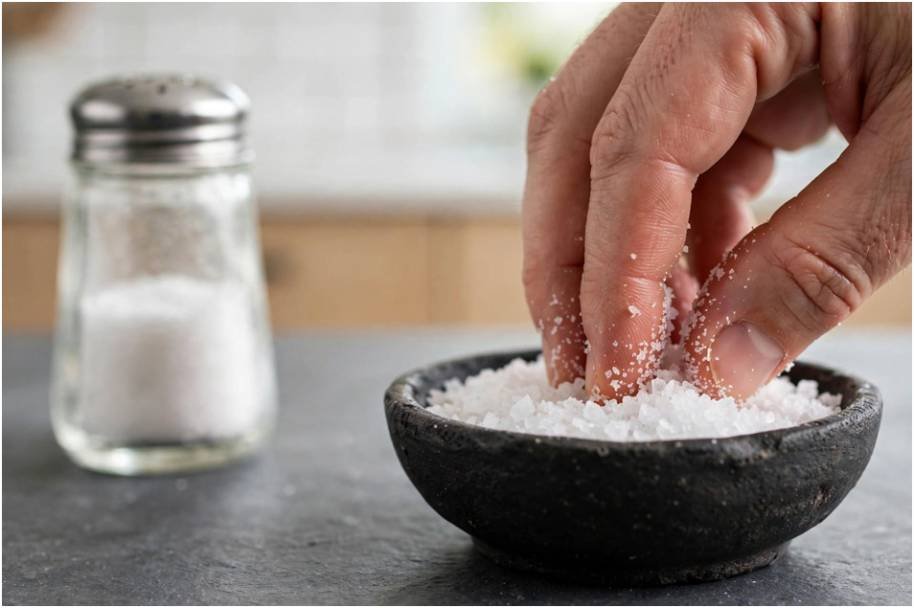
I keep a wide, open pinch bowl beside my cutting board filled with coarse kosher salt. Professional culinary schools like The Culinary Institute of America train cooks to rely on tactile feedback. Use a three-finger pinch (thumb, index, and middle finger) for kosher salt. This gives you direct control over grain count. Use a tighter two-finger pinch for concentrated, fiery spices like cayenne, ground white pepper, or clove.
Mastering Osmotic Timing Across Different Ingredients
Timing dictates moisture migration. Salt is an osmotic agent that pulls moisture outward before dissolving into an ambient brine.
OSMOTIC DRY-BRINE TIMELINE (THICK PROTEINS)
┌──────────────────────────────────────────────────────────┐
│ Min 0-10: Surface moisture drawn out via osmosis │
│ Min 15-30: Salt dissolves into concentrated surface bead │
│ Min 45+: Protein structures relax; brine reabsorbed deep │
└──────────────────────────────────────────────────────────┘
Red Meat and Poultry: The Science of Dry Brining
Thick proteins need advance preparation. When you salt a two-inch ribeye right before throwing it onto cast iron, the salt extracts internal water that sits on the exterior. That liquid flashes into steam, destroying your sear.
Salt thick proteins at least 1 to 24 hours ahead of time on a wire rack inside your refrigerator. The initial moisture drawn out dissolves the salt, transforming it into a surface brine. Over the next hour, muscle proteins loosen, reabsorbing that seasoned liquid deep into the core. Food scientists at Serious Eats have demonstrated that this resting window produces higher moisture retention and deeper flavor penetration throughout the meat. Follow safe refrigeration storage practices highlighted by the USDA Food Safety and Inspection Service while letting raw proteins rest.
Vegetables: Searing vs. Sweating
Vegetables behave according to moisture management:
- For a deep sear (mushrooms, broccoli, zucchini): Cook in hot oil without salt first. Once the edges caramelize and brown, finish with salt. Salting too early leaches cell water into the pan, causing your vegetables to boil rather than brown.
- For sweating and softening (diced mirepoix, aromatics, onions): Add salt immediately upon entering the pan. The salt breaks down cellular walls, releasing liquid and accelerating softening without picking up unwanted color.
Soups, Sauces, and Stews: Layering vs. Reduction
Never dump all your seasoning into a simmering pot at the end to make pan sauce. Build flavor in layers:
- Season the aromatics during the initial sweat.
- Season the braising liquids or stock when deglazing.
- Finish with a final micro-adjustment right before serving.
Keep reduction in mind. As liquids evaporate over low heat, the relative concentration of sodium climbs. If you salt a braising liquid to perfection at hour one, it will taste aggressively salty by hour three. Keep early liquid stages lightly seasoned, reserving final balance adjustments for the finished volume.
Spices and Aromatics: Blooming in Fat
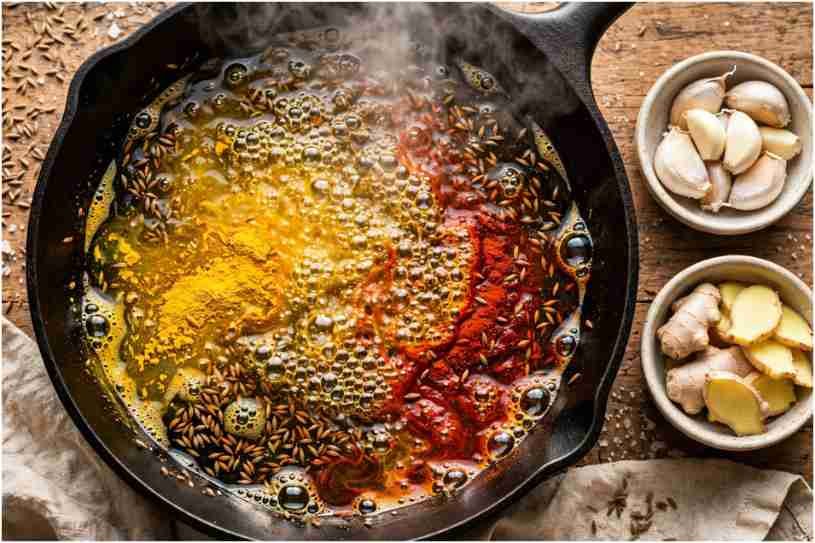
Raw ground spices taste chalky and muted when stirred straight into cold water or finished sauces. Flavor compounds in spices like cumin, coriander, turmeric, and paprika are fat-soluble, not water-soluble.
Always “bloom” ground spices by cooking them in warm oil, butter, or rendered animal fat for 30 to 60 seconds over medium heat until fragrant. The heated fat extracts the essential oils, rounds out astringent edges, and distributes the spice evenly across the cooking medium. Add delicate fresh herbs (parsley, basil, chives) off the heat at the very end to protect their volatile, fresh aromatic oils.
The Spoon Test: Diagnosing Seasoning Without Ruining the Pot
Recipes frequently call on you to “season to taste,” yet few explain how to decode what your palate is registering. When a hot soup or sauce tastes incomplete, home cooks often toss in extra salt blindly, ruining hours of work.
THE SPOON CALIBRATION TEST
│
Take 1 spoonful of warm sauce or broth
│
Add 2-3 grains of salt to the spoon
│
Taste the calibrated bite
│
┌───────────────┴───────────────┐
▼ ▼
TASTES BRIGHTER TASTES HARSH
Pot lacks salt; adjust in Pot has enough salt; adjust
half-teaspoon increments with acid or fat instead
If the spoon test makes the bite taste harsh, your dish does not need sodium. It needs structural balance:
- Lacks brightness? Add an acid (a squeeze of lemon juice, a splash of raw apple cider vinegar, or a splash of dry wine). Acid activates salivary glands similarly to salt, illuminating underlying flavors.
- Tastes overly sharp or acidic? Whisk in cold butter, heavy cream, or olive oil to coat the tongue and soften the finish.
- Tastes thin or shallow? Add an umami driver like a dash of tamari, a melted anchovy, or a simmered parmesan rind to provide body.
The Master Balanced House Blend
To speed up weeknight dinners, mix a dependable all-purpose house seasoning blend. Keep this stored in an airtight glass jar away from direct heat:
- 2 tablespoons coarse kosher salt
- 1 tablespoon granulated garlic powder
- 1 tablespoon granulated onion powder
- 2 teaspoons freshly ground black pepper
- 2 teaspoons sweet smoked paprika
- 1 teaspoon dried Mexican oregano (crushed fine between fingers)
This balanced ratio works across chicken thighs, roasted root vegetables, pork tenderloins, and pan-seared white fish without scorching.Integrating these fundamentals into your routine sharpens your basic cooking techniques.
Frequently Asked Questions About Seasoning
1. Can I substitute table salt for kosher salt at a 1:1 ratio?
No, table salt grains are smaller and denser, meaning one tablespoon of table salt contains nearly twice the sodium by weight of coarse kosher salt.
2. When should I salt pasta water?
Add salt right after the water reaches a rolling boil, just before dropping the pasta, using roughly one tablespoon per gallon of water.
3. How do I fix a dish that is already too salty?
Dilute the dish by adding unsalted liquid, cream, or extra unsalted main ingredients; potatoes do not absorb excess salt.
4. Why do recipes call for unsalted butter?
Unsalted butter lets you control the precise sodium levels of your dish without compounding variance between dairy brands.
Put Down the Shaker: Taste, Calibrate, and Fire
Great seasoning requires trusting your tongue over a timer. Pull a small tasting spoon out every time your pan changes state—after blooming your spices, after simmering your aromatics, and right before plating. Start with light pinches, give the salt crystals time to dissolve, and balance flat profiles with acid or fat before reaching for extra sodium.