
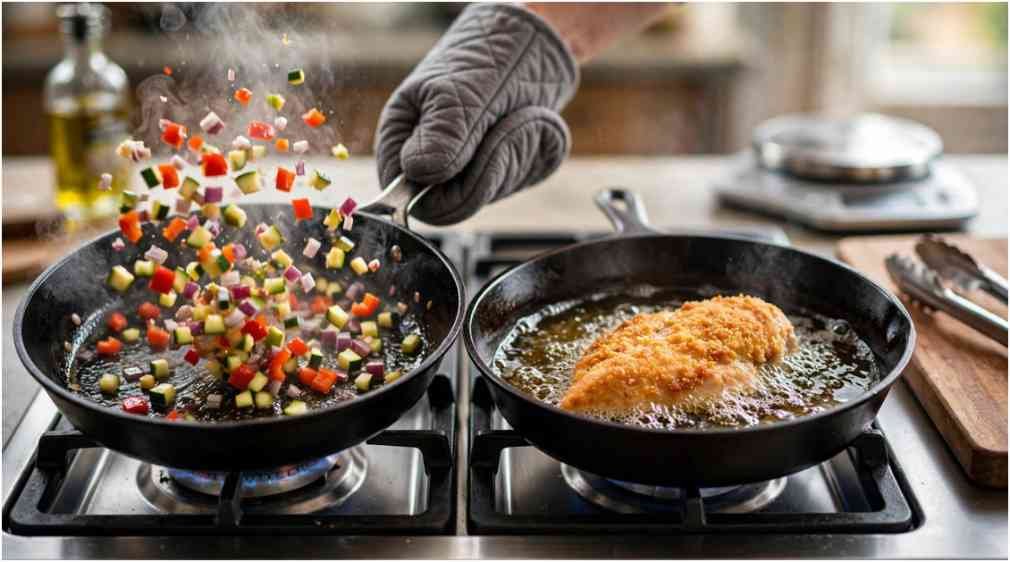
Pouring cold cooking oil into an unheated skillet ruins dinner faster than almost anything else in the kitchen. When deciding between sautéing vs frying, home cooks often assume the only difference is the amount of oil in the pan. That assumption leaves you with soggy, oil-logged vegetables or unevenly cooked meat with a pale exterior.
After years on line stations and testing commercial cookware, I treat these two methods as distinct thermodynamic systems. Sautéing uses high conductive heat and constant kinetic motion to cook small ingredients rapidly.
Frying uses hot oil as an immersive fluid medium to transfer convective heat across larger items. Understanding the mechanics of sautéing vs frying ensures you never turn a crisp stir-fry into an unintended braise.
SAUTÉING FRYING
[ Minimal Oil Film ] [ Deep Oil Layer ]
│ │
Direct Pan Conduction Fluid Convection Medium
Rapid Steam Escape Continuous Moisture Shield
│ │
Result: Crisp-Tender Browning Result: Dehydrated, Crunchy Crust
The Core Distinction: Pan Conduction vs. Oil Convection
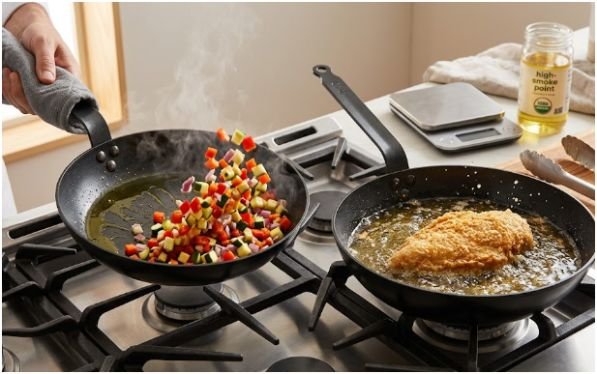
The fundamental difference between these two culinary techniques lies in the primary cooking medium. When you sauté, the metal surface of the pan transfers heat directly through conduction; the cooking fat serves primarily as an anti-stick lubricant and heat bridge.
When you fry, the heated lipid pool acts as the true cooking medium. According to professional cooking standards at The Culinary Institute of America, both belong to the dry-heat cooking family, yet their heat transfer rates and surface reactions diverge drastically.
HEAT TRANSFER PROFILE
┌───────────────────────┬──────────────────────────┬──────────────────────────┐
│ Factor │ Sautéing │ Frying │
├───────────────────────┼──────────────────────────┼──────────────────────────┤
│ Primary Heat Vehicle │ Pan surface (Conduction) │ Hot oil (Convection) │
│ Oil Volume │ 1 to 2 tablespoons │ 1/2 inch to fully submerged│
│ Ingredient Size │ Uniform, bite-sized cuts │ Whole cuts or large fillets│
│ Agitation Level │ Continuous flipping │ Stationary / periodic turn│
│ Moisture Evaporation │ Rapid open release │ Violent initial bubble-off│
└───────────────────────┴──────────────────────────┴──────────────────────────┘
Sautéing: Direct Kinetic Energy and Rapid Evaporation
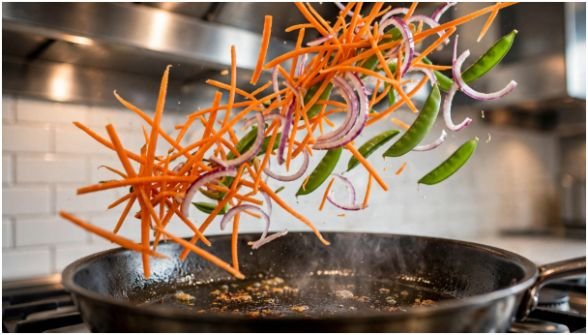
The word sauté originates from the French verb sauter, meaning “to jump.” That translation describes the operational demand of the method. You cut ingredients into small, uniform pieces, heat a thin sheen of oil until shimmering, and move the food across the metal surface continuously.
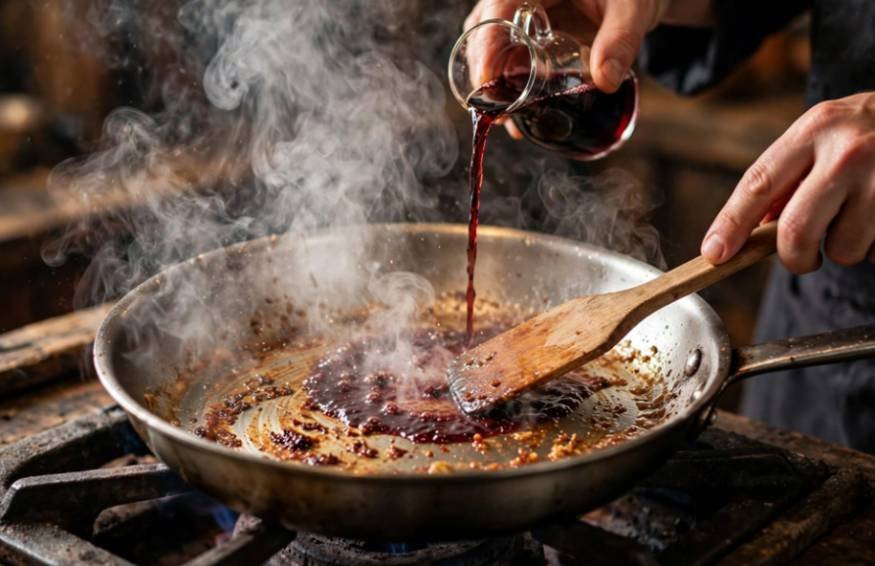
Because the pan stays hot and the food moves constantly, surface moisture flashes off as steam immediately. That instantaneous evaporation prevents water from collecting in the pan. Without pooling water, the surface temperature surpasses the 285°F to 330°F threshold required for the Maillard reaction. Sugars and amino acids break down and recombine, giving diced aromatics, tender asparagus, or sliced flank steak an amber sear while preserving their crisp interior bite.
Frying: Oil-Submerged Heat Transfer and Crust Formation
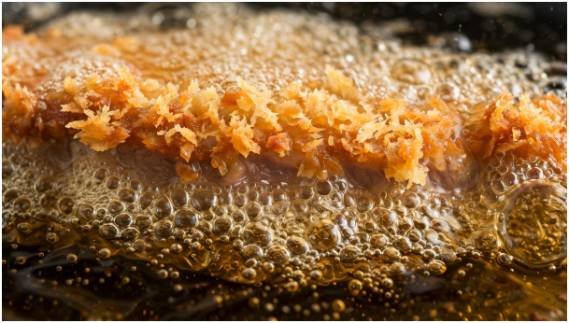
Frying encompasses pan-frying, shallow-frying, and deep-frying. Unlike sautéing, frying treats cooking oil as an enveloping bath. You place larger cuts of food—like bone-in pork chops, breaded cutlets, or raw potatoes—into hot oil heated between 325°F and 375°F.
When wet food enters that oil, the exterior water boils instantly, escaping as millions of violent steam bubbles. This outward steam pressure keeps the cooking oil from penetrating deeply into the food. Food science authority Serious Eats emphasizes that this violent moisture loss dehydrates the exterior surface into an exceptionally rigid, brittle shell. While that shell browns, internal conduction cooks the dense center gently without scorching the outer layer.
Cookware Geometry: Skillets vs. Straight-Sided Sauté Pans
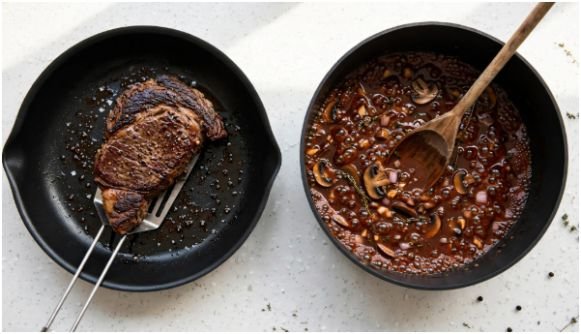
Your choice of pan determines whether your ingredients brown or boil in their own juices. Many people call every wide, flat cooking vessel a frying pan, but commercial cookware catalogs distinguish sharply between a skillet and a sauté pan.
FRYING PAN (SKILLET) SAUTÉ PAN
Sloped sides allow steam escape Straight, vertical sides
and quick spatula work contain tossing food
\ / | |
\ / | |
\_________________/ |_____________________|
- The Frying Pan (Skillet): Features flared, sloped sidewalls. The low, angled perimeter allows moisture and steam to vent out into the room immediately, keeping the pan environment dry. The angled sides let you slide a thin fish spatula beneath delicate fillets or flip fried eggs without breaking their yolks.
- The Sauté Pan: Features tall, perpendicular walls meeting the flat base at a sharp 90-degree angle. These vertical walls hold food securely inside when you snap your wrist to jump the ingredients. The straight perimeter also contains foaming sauces and stock when you deglaze browned fond from the pan floor.
Oil Volume and Temperature Control in Practice
Selecting the wrong oil volume or cooking temperature ruins the texture of your dinner. Controlling pan heat requires distinct tactics depending on your chosen technique.
How to Sauté Vegetables Without Boiling Them
Overcrowding the pan is the most frequent home cooking error. When learning to sauté vegetables, cut every item into identical, bite-sized dimensions. Place your skillet over medium-high heat until hot, then add a light film of oil with a high smoke point, like avocado or refined olive oil.
Drop the cut vegetables into the pan in a single layer. If you pile mushrooms or sliced zucchini three layers deep, escaping steam traps underneath the top layers. The temperature drops below 212°F, the pan floods with extracted vegetable water, and your food boils into a grey, limp mush. Give the pan a dynamic shake every thirty seconds to redistribute the pieces across the hot metal floor until they show localized charred edges.
Frying to Cook Chicken Properly with Maximum Crispness
When you cook chicken properly using shallow- or pan-frying, patience matters far more than agility. Unlike sautéing, moving food around in a fry pan disrupts crust formation.
- Heat neutral oil to 350°F (monitor with an infrared or probe thermometer).
- Pat meat dry with paper towels to eliminate surface moisture before dropping.
- Lower pieces gently into the oil, angling the meat away from you to prevent splashback.
- Leave pieces undisturbed for 4 to 6 minutes so proteins crosslink into a crisp barrier.
- Flip once, monitoring internal temperature via meat probe.
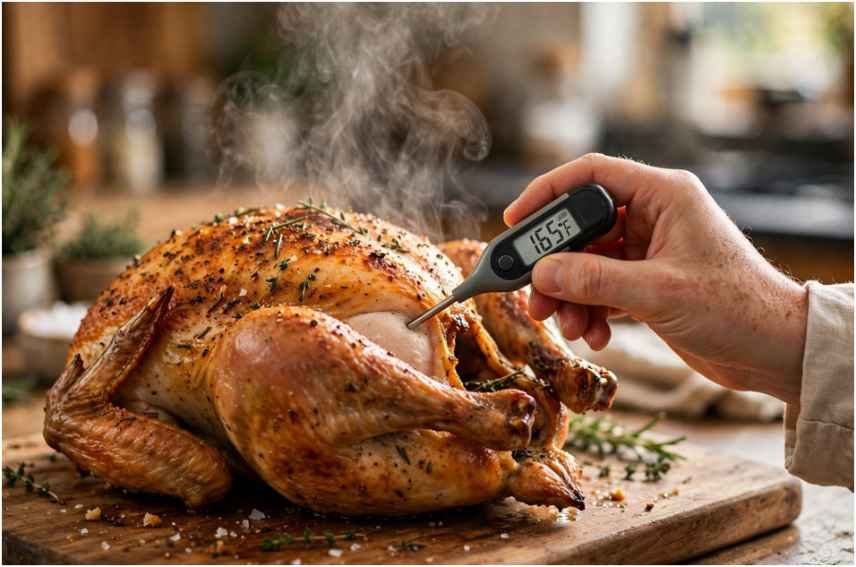
To guarantee both a crunchy exterior and biological safety, check internal temperatures. The USDA Food Safety and Inspection Service recommends an internal minimum temperature of 165°F for poultry. Pulling the cutlet out too early yields unsafe food; leaving it submerged too long exhausts internal juices and burns the batter.
Quick Comparison: Sautéing vs Frying Metrics
| Variable | Sautéing | Pan-Frying | Deep-Frying |
| Typical Temperature | 350°F to 425°F | 325°F to 375°F | 350°F to 375°F |
| Fat Ratio | 1–2 tsp per serving | Covers lower half of food | Submerges food completely |
| Ingredient Cut | Minced, julienned, diced | Steaks, chops, fillets | Whole potatoes, battered items |
| Cook Time | 2 to 5 minutes | 8 to 20 minutes | 4 to 12 minutes |
| Finished Texture | Crisp-tender, vibrant | Thick crunch, juicy core | Shatteringly brittle, aerated crust |
Stop Steaming Your Food: Final Kitchen Rules
Achieving restaurant-grade results comes down to choosing the right tool for your specific cut of food. If your ingredients are small, tender, and quick to cook, grab a skillet, use a bare teaspoon of oil, and keep your wrist moving. If your ingredients are thick, dense, or coated in starches, warm up a steady pool of oil, drop the heat slightly, and leave the pieces undisturbed until a golden crust sets.
Match the physical volume of your pan to the portion size on your cutting board. When in doubt, cook your food in two small batches rather than jamming everything into one pan. Mastering heat transfer turns ordinary weeknight staples into crisp, deeply browned dishes.
Frequently Asked Questions
1. Can I sauté food in a deep frying pan?
Yes, provided the pan provides a broad flat surface and you avoid crowding the ingredients.
2. Why does my sautéed food get watery and limp?
The pan was either overcrowded or insufficiently hot, trapping steam and boiling the ingredients in their own moisture.
3. Which cooking method is healthier: sautéing or frying?
Sautéing is significantly lower in calories because it requires only a light coating of oil rather than submersion.
4. Can butter be used for both sautéing and frying?
Whole butter burns at high frying heat, so use clarified butter or ghee if cooking over 350°F.